

· AFX Research
The Duhig Rule and Mineral Interests That Were Overconveyed
Two perfectly ordinary deeds written decades apart can promise more minerals than ever existed. The rule decides who absorbs the shortfall, and it is usually not the buyer.
Table of Contents
Mineral fractions are conveyed and reserved so freely that over a long chain they stop reconciling. A quarter here, a half there, a reservation in 1948 that nobody carried forward into the next deed, and eventually the instruments in the chain purport to convey more of the mineral estate than the whole of it.
Courts have had to decide who comes up short when that happens. The best known answer is the Duhig rule, named for a 1940 Texas case, and it produces an outcome that regularly surprises the party on the losing end of it.
How the fractions stop adding up
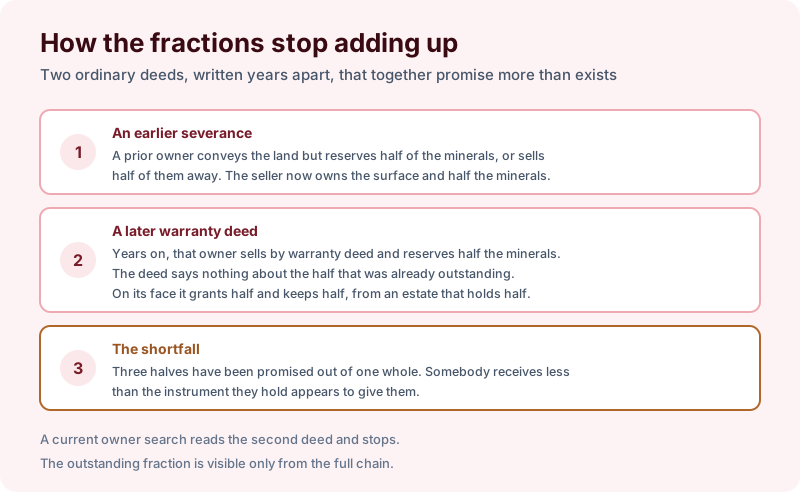
The classic pattern needs only two deeds.
An early owner sells the land and reserves half the minerals, or sells half of them to somebody else. The remaining owner now holds the surface and half of the mineral estate, which is an entirely normal position described in net mineral acres and fractional interests.
Years later that owner sells by warranty deed and reserves half the minerals. The deed is silent about the half already outstanding. Read alone it is unremarkable, and read against the earlier severance it promises a half interest to the buyer while keeping a half interest back, out of an estate that only contains a half.
One of the three halves cannot be delivered.
What the rule does with the shortfall
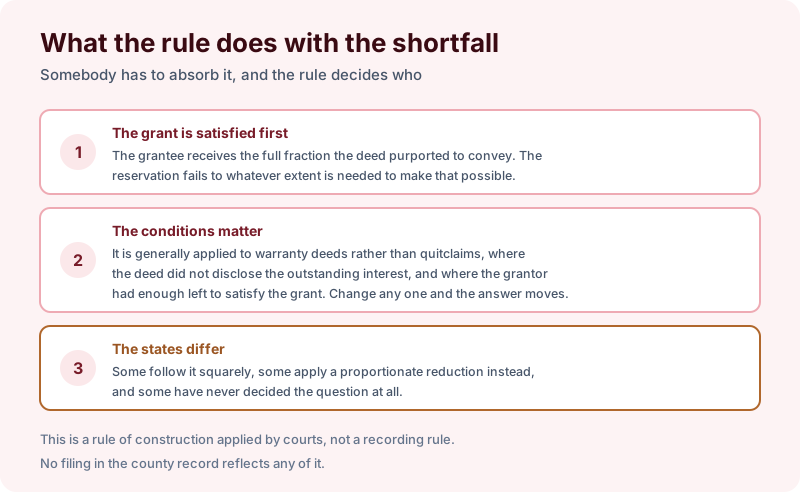
The rule gives the grant priority over the reservation. The buyer receives the full fraction the deed appeared to convey, and the seller’s reservation fails to whatever extent is necessary to make that happen. In the two deed example the buyer takes the half that was left, and the seller keeps nothing.
The reasoning is a warranty one. A seller who warrants title to an interest and then cannot deliver it would ordinarily owe damages, and the courts short circuit that by simply treating the reservation as yielding first.
Several conditions matter. It is generally applied to warranty deeds and not to quitclaims, because a quitclaim warrants nothing. It is generally not applied where the deed disclosed the outstanding interest, because the buyer then knew what was being conveyed. And it requires the grantor to have held enough to satisfy the grant in the first place.
States also differ. Some apply it squarely, some use a proportionate reduction approach that splits the shortfall rather than loading it entirely on the grantor, and some have never squarely decided. Which rule governs is a matter of the law of the state where the land sits, in the same way that reservation clauses in old deeds are read differently from one jurisdiction to the next.
Finding it in the record
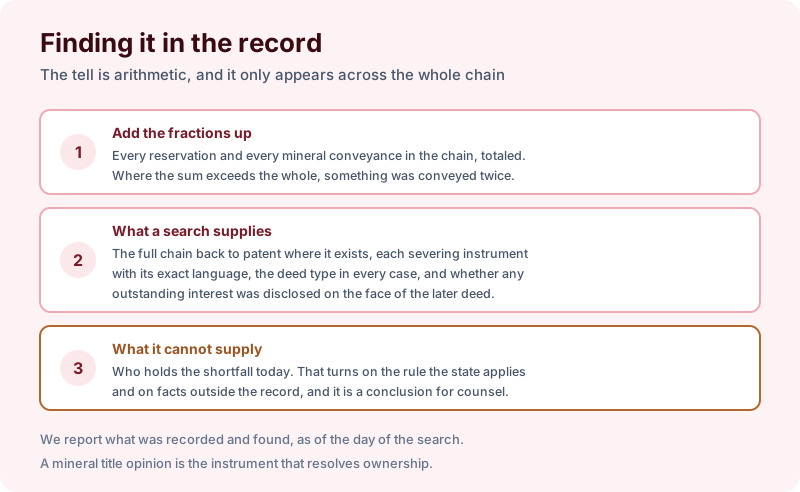
The tell is arithmetic and it is not subtle once the work is done. Total every reservation and every mineral conveyance in the chain. Where the total exceeds the whole, something has been conveyed twice.
Doing that requires the full chain, which is the practical reason these get missed. A current owner search reads the most recent deed, reports a half interest reserved, and is accurate about that document while being silent about the one that makes it impossible. The distinction is the same one drawn in mineral title opinion versus records search.
What we supply is each severing instrument with its exact language, the deed type in every case, and whether an outstanding interest was disclosed. Who ends up owning the shortfall is a legal conclusion that depends on the state rule and on facts that may sit outside the record entirely.
Where it shows up in practice
Three situations bring it to the surface, usually long after the deeds were signed.
A leasing campaign is the most common. A landman runs title across a township, the fractions on one tract do not close, and an interest somebody has been treated as owning for forty years turns out to have been cut off by a deed in 1962. Division orders become the point of conflict, because the operator will not pay on an interest it cannot defend.
A sale is the second. A buyer totals the chain and finds the seller conveying something the seller may not hold, which is one of the checks in selling your mineral rights, what to check.
In both cases the documents have been sitting in the county record, legible and undisturbed, for decades. Nobody added them up.
The takeaway
An overconveyance is not a defect in any single document. It is a contradiction between documents, it appears only when the whole chain is totaled, and the rule that resolves it generally protects the buyer at the seller’s expense.
If the fractions in your chain do not reconcile, the instruments are the place to start. Tell us the tract or order a mineral records search.