

· AFX Research
Mineral Title Opinions, and Where the Records Search Fits In
What a mineral title opinion is, who writes one, how the abstract from a records search feeds it, and why present ownership is a conclusion the search itself cannot reach.
Table of Contents
Ask who owns the minerals under a tract and two different professionals will answer two different questions. One reports what is in the county record. The other says what it means.
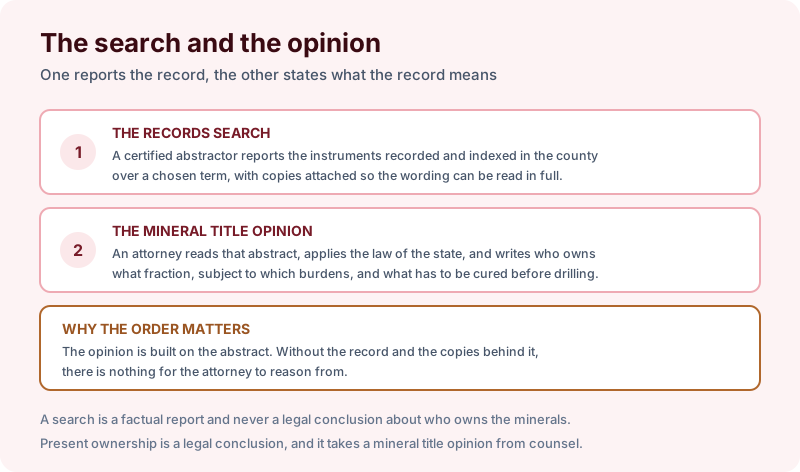
A records search is a factual report. A mineral title opinion is a written legal conclusion about ownership, drawn from that report and from the law of the state where the land sits. Operators will not drill on the first alone, and if you are trying to settle ownership, neither should you.
What a records search produces
A certified abstractor goes to the county where the land sits and searches the grantor and grantee indexes and the deed, lease and miscellaneous books over a chosen term. What comes back is a report of the instruments recorded and indexed in that term, with copies attached so the wording can be read in full.
For a mineral question that usually means the severing instrument, later mineral and royalty conveyances with their fractions, leases and assignments, pooling filings, releases, liens, and any recorded probate or affidavit. Our search terms run 20, 30 and 50 years so the depth can match the era the severance probably happened in, and the process page describes what arrives. Turnaround is 2 to 3 business days.
What the opinion adds
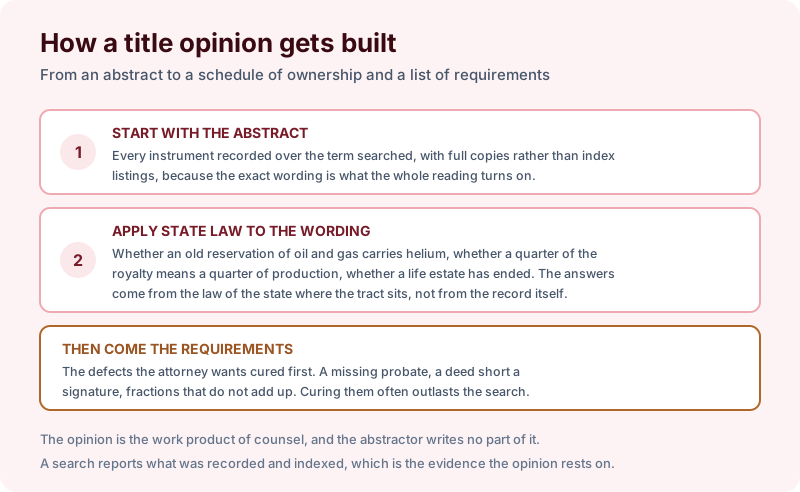
An attorney takes that abstract, reads every instrument, applies the law of the state, and writes an opinion stating who owns what fraction of the mineral estate, subject to which burdens. It usually runs to a schedule of ownership plus a list of requirements, the defects the attorney wants cured before anybody spends money.
Requirements are the part people underestimate. A missing probate in the state where an owner died, a deed short a signature, fractions that do not add up, an old lease with no release of record. Each becomes a task, and curing them can outlast the search and the opinion combined.
The attorney also interprets wording a search can only reproduce. Whether a reservation of oil and gas carries helium, whether a quarter of the royalty means what it seems to, whether a life estate has ended. Those are questions of law, the same division of labor that runs through reservation clauses in old deeds.
The kinds of opinion you will hear named
A drilling title opinion comes before a well is drilled and covers the whole tract or unit, because the operator is about to spend real money. A division order title opinion follows production and sets out who is paid what decimal, which is what the division order you are asked to sign is built from. A supplemental opinion updates an earlier one after curative work or a new conveyance.
Most surface owners and heirs never commission one. They see the consequence instead, usually a decimal somebody else calculated. If it looks wrong, the opinion and the records behind it are what get re-examined.
What to send, and what stays open
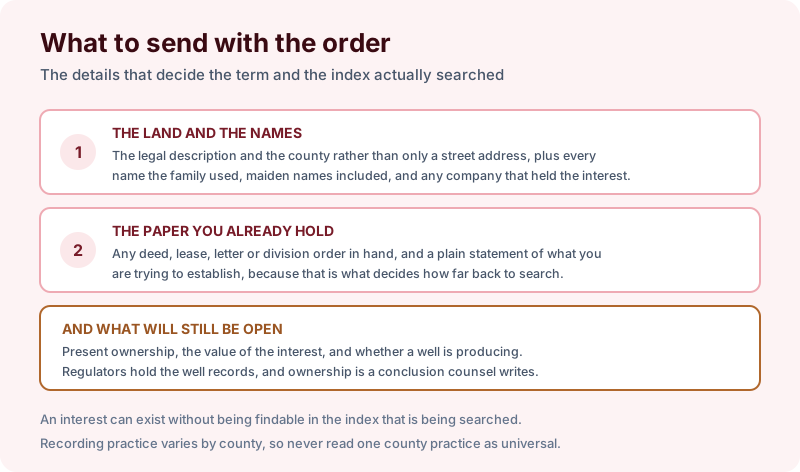
Send the legal description and the county rather than only a street address, because the mineral record is indexed to land and to names, not to mailboxes. Send every name the family has used, maiden names included, and any company that dissolved. Send any deed, lease or letter you hold, and say what you are trying to establish, since that decides the term.
Then be clear about the boundary. A search reports what was recorded and indexed in the county over the term searched, as of its date. It cannot establish who owns the minerals today, because interests pass at death with nothing filed locally and the last grantee named is not necessarily the present owner. It does not report well permits or production, which the state oil and gas regulator holds rather than the recorder, and it does not value anything. Recording practice varies by county, and an interest can exist without being findable in the index being searched. Present ownership is a legal conclusion, a mineral title opinion written by counsel, and the search is the evidence that opinion rests on.
The takeaway
The search and the opinion are not competing products. One is the raw material and the other the conclusion, and skipping the first makes the second slow and expensive. If you are an heir working out what you hold, or a buyer looking at a tract with a severed mineral estate, start with the record over a term long enough to reach the severance, get full copies rather than index listings, and take those to a mineral title attorney.
Start the order online, or send us the address and the county and we will tell you which term fits and what a search of that scope would and would not cover before anything is ordered.