

· AFX Research
Net Mineral Acres: How Fractional Interests Are Measured
Gross acres, net mineral acres, and net royalty acres are three different numbers. How a fraction shrinks through a chain, and what the record can support.
Table of Contents
Somebody tells you the family owns forty acres of minerals, and the leasing agent quotes a decimal with seven places after the point. Both statements can describe the same interest, and neither one tells you much on its own. Sizing a mineral interest means separating three numbers that get used interchangeably in conversation, then tracing the fractions through the instruments that created them. It starts where our note on reservation clauses leaves off.
Three numbers, often confused
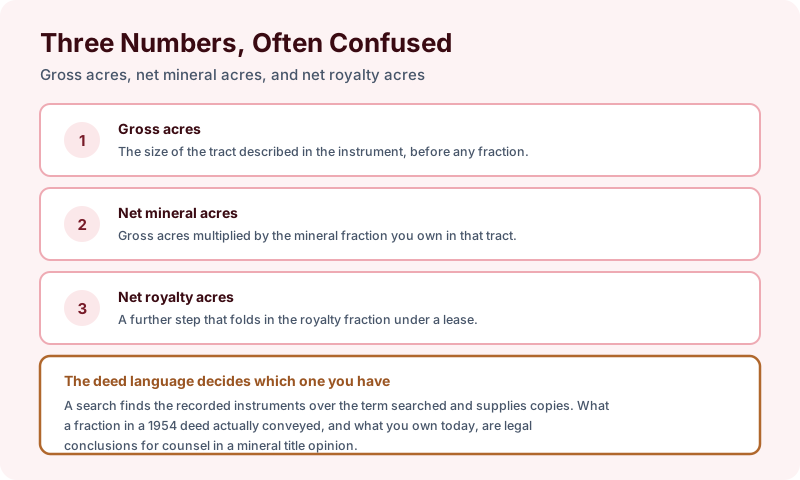
Gross acres is the size of the tract described in the instrument. A quarter section is 160 gross acres whether you own all of the minerals under it or a sixteenth.
Net mineral acres is the gross acreage multiplied by the mineral fraction you own in that tract. Own an undivided quarter of the minerals under 160 acres and you hold 40 net mineral acres. This is the number the industry uses when it talks about size, and it is the number a purchase offer is usually built on.
Net royalty acres goes one step further and folds in a royalty fraction under a lease, standardized to a stated royalty. It is the number that most often causes confusion in an offer, because an offer quoted per net royalty acre and one quoted per net mineral acre are not comparable.
Which number your deed gives you depends on its wording, and that wording is the whole question in our note on royalty interest versus mineral interest.
How the fraction gets small
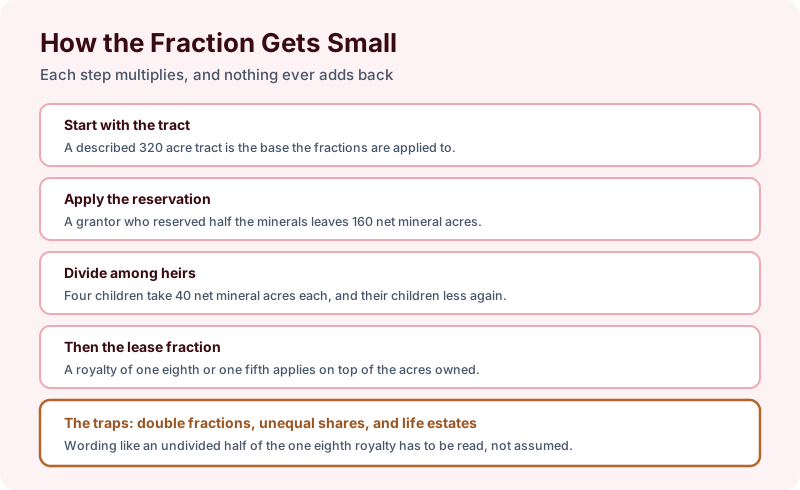
The arithmetic itself is simple multiplication, and it only ever goes one direction. Start with a described 320 acre tract. A grantor who reserved half the minerals in 1954 leaves 160 net mineral acres in the reserved estate. Four children inherit equally, so each holds 40. Their children divide again. Two generations after the reservation, an interest that began as half of a large ranch is a few net mineral acres spread among a dozen people, which is the fragmentation described in our note on inherited mineral rights.
Three traps make the math wrong more often than the multiplication does. Double fractions, where wording like an undivided one half of the one eighth royalty means something quite specific and is frequently misread. Unequal shares, where a will divided interests unevenly or a spouse took a statutory portion. And life estates, where one person holds the income for life and the remainder belongs to someone else entirely, so the person receiving checks today is not the owner tomorrow.
What the record can support
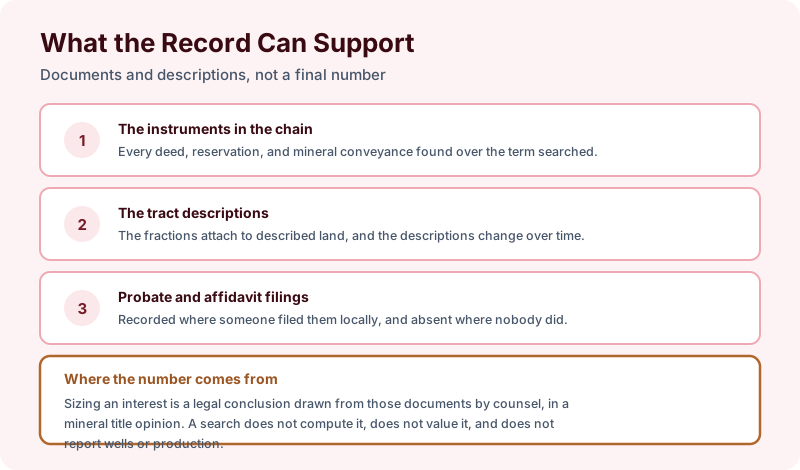
A county search supplies the raw material. Every deed, reservation, and mineral conveyance found of record over the term searched, with copies attached so the fractions can be read in their own words. The tract descriptions those fractions attach to, which matter because a fraction of one described tract is not a fraction of a later, differently described one. And probate filings, affidavits of heirship, and decrees where somebody recorded them locally.
Depth is what makes this work, so a term deep enough to reach the original reservation is the right ask. Our search terms run 20, 30, and 50 years, and turnaround is 2 to 3 business days.
What a search does not do is compute the number. Sizing an interest is a legal conclusion drawn from those documents, set out in a mineral title opinion written by counsel, and it cannot establish who owns the minerals today, because interests pass at death and change hands with nothing filed in that county. The search also does not report wells or production, which state regulators hold rather than the recorder, and it does not value an interest. Recording practice varies by county, and an empty result reflects the record rather than proving anything about ownership.
One habit is worth adopting whatever the numbers turn out to be. Write down, for each tract, the gross acreage, the fraction you believe you hold, and the instrument that fraction came from, by date and recording reference. Offers and division orders can then be checked against a document rather than against a memory.
The takeaway
Before you accept a number from anyone, find out which number it is and which instruments it came from. Gather the recorded chain first, then let counsel do the arithmetic that the documents actually support. Start the order online, or send us the address and the county and we will tell you which term fits and what a search of that scope would and would not cover before anything is ordered.