When it comes to real estate, understanding mineral rights is essential for property owners, buyers, and real estate professionals. Mineral rights can significantly affect property value and use, because they determine who owns and can reach the resources underground. AFX Research searches the county land records against your parcel and reports the mineral conveyances, reservations, and leases found of record, with a copy of every recorded instrument attached.
Mineral rights are ownership of resources such as oil, natural gas, coal, precious metals, and other minerals found beneath the surface of a property. These rights can be distinct from surface ownership, which means you might own the land itself but not the resources below it, or the reverse.
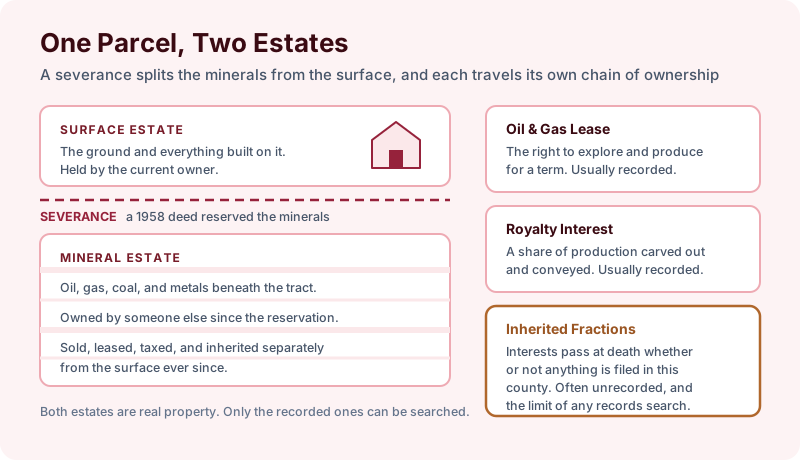
The split happens through a severance: a deed that conveys the minerals to someone else, or one that sells the surface while reserving the minerals for the seller. Once that happens, the two estates travel through separate chains of ownership, and they can be sold, leased, and inherited independently for generations.
A severance is created by a document recorded in the county land records. That is what a mineral rights search reads.
Every report is drawn from the county land records by a certified abstractor and returned with the recorded instruments attached, so the reserving language itself is in front of you rather than somebody's summary of it.
Specialized Title Searches for Mineral Rights
A certified abstractor searches the county land records against the parcel and reports the mineral conveyances, reservations, and leases found of record over the term you select, with a copy of each recorded instrument attached so you can read the granting language yourself.
Mineral Rights Ownership Verification
Where a deed reserved the minerals or conveyed them away, we look for the instrument that did it, so the question of whether the minerals travelled with the surface can be answered from the record rather than from assumption.
Historical Property Research
Copies of the recorded deeds, reservations, leases, and assignments referenced in the report, pulled from the county record so the exact language and the recording date are in front of you.
Know What You Are Looking At
Types of Mineral Rights
Subsurface ownership divides first into the mineral estate and the surface estate, and then into the interests carved out of the minerals. These four come up in almost every search.
The Mineral Estate
The mineral estate is ownership of the oil, gas, coal, metals, and other substances beneath a tract. It is real property in its own right, and it can be owned, sold, leased, taxed, and inherited entirely separately from the ground above it.
Severed Mineral Rights
A severance is the act that splits the minerals from the surface, either by a deed conveying the minerals to someone else or by a deed that sells the surface while reserving the minerals for the seller.
Surface Rights
Surface rights are ownership of the ground and everything built on it. Where the minerals have been severed, the surface owner holds their tract subject to the mineral owner’s right to get at what they own.
Oil and Gas Leasehold Interest
An oil and gas lease gives an operator the right to explore for and produce minerals for a term, in exchange for a bonus payment and a royalty. It creates an interest in the land, not merely a contract.
Why Choose AFX Research for Mineral Rights Searches?
AFX Research is a trusted leader in property records and title document research, searching land records nationwide since 1995. Three decades of practice, attention to detail, and a commitment to getting the record right are what set us apart.
Years of Expertise
With nearly three decades in the industry, our abstractors know how mineral reservations get buried in the granting clause of an ordinary warranty deed, how separate mineral indexes work where counties keep them, and how recording practice differs from one county to the next.
Thorough Investigations
We go into the county and municipal records rather than querying a national database, because mineral instruments are frequently indexed under individual grantor names rather than against the parcel.
Customized Solutions
Whether you need a 20, 30, or 50 year term, you pick the window that fits the parcel and the question, rather than paying for depth you do not need.
Certified, Documented Reports
Every instrument we report carries its recording date, book, and page, with a copy attached. Nothing in the report asks you to take our word for it.
What turns up in a typical report
Deed reservations that kept the minerals with a past seller when the surface was sold.
Mineral deeds conveying the subsurface estate away from the surface owner.
Oil and gas leases of record, with their recording dates and stated terms.
Royalty and non-participating royalty interests carved out of the mineral estate.
The recording date, book, and page for every instrument found, with the document attached.
Delivery performance
Researching property records nationwide since 1995
1995Researching property records nationwide since 1995
States covered, with abstractors searching records on the ground
50States covered, with abstractors searching records on the ground
Business days for a standard mineral rights search, rush service available
2–3Business days for a standard mineral rights search, rush service available
Year search terms, so the report reaches as far back as the matter needs
20–50Year search terms, so the report reaches as far back as the matter needs
How to Order
Ordering a Mineral Rights Search
Ordering online takes a few minutes. Here is how it works.
01
Give Us the Property
Enter the street address, city, county, and state. An APN (Assessor's Parcel Number) is not required, but it removes any ambiguity about which parcel to search, and it helps most in rural counties where tracts are described by metes and bounds rather than by lot number.
02
Choose the Length of the Search
Pick a 20, 30, or 50 year term. The longer terms matter more here than on almost any other search, because a mineral severance written into a deed decades ago still controls who owns the minerals today.
03
Place the Order
Submit the form and a certified abstractor begins the search. Standard mineral rights searches are completed in 2 to 3 business days, and rush service is available when a closing or a lease deadline is close.
04
Read the Instruments Yourself
Your report lists what was found of record with recording dates, books, and pages, and it comes with copies of the recorded instruments attached, so you can read the reserving or granting language rather than a summary of it.
If the tract is large, described by metes and bounds, or the question is narrower than a standard term search, tell us what you are trying to establish and we will scope a custom search before anything is ordered.
The report covers what was recorded against the parcel in the term you select. Mineral interests fractionalize through inheritance, and an heir's interest often is never filed in the county where the land sits. A clean report means nothing was found of record in that window, not that the minerals are unsevered. Determining who owns them today is a legal conclusion for an attorney.
Common Questions
Mineral Rights Search FAQ
What are mineral rights?
Mineral rights are ownership of the oil, natural gas, coal, precious metals, and other substances beneath the surface of a property. They are real property in their own right, which means they can be sold, leased, taxed, and inherited entirely separately from the ground above them. Where they have been separated, one person can own the land while another owns everything under it.
What does an AFX mineral rights search show?
A certified abstractor searches the county land records against the parcel over the term you select and reports the mineral conveyances, reservations, and leases found of record, each with its recording date, book, and page, plus a copy of the recorded instrument. The report tells you what was recorded against that parcel in that window. It is a records search, not a title opinion, and it does not decide who owns the minerals today.
How long does a mineral rights search take?
A standard mineral rights search is completed in 2 to 3 business days. Rush service is available when a closing or a leasing deadline is close. Call 877-848-5337 ext. 138 before you order and we will confirm the timeline for the specific county.
Which search term should I order: 20, 30, or 50 years?
Term length matters more on a mineral rights search than on most others, because severances are often very old. A 20 year search suits a recent lease, sale, or reservation. A 30 year search reaches back into an earlier drilling and leasing cycle. A 50 year search is the right choice when the minerals are believed to have been severed generations ago or when nobody can say who owns what below the surface. If you are not sure, call us with the address and we will tell you which term fits.
Will the search tell me who owns the minerals today?
It reports what was found of record in the county land records for the term searched, which is the evidence that question is answered from. It is not the answer itself. Mineral interests fractionalize through inheritance, and when an owner dies the interest passes whether or not anything is ever filed in the county where the land sits, often because probate was opened in the state where that person lived. Determining present ownership is a legal conclusion that belongs to an attorney, usually in the form of a mineral title opinion.
Does a clean report mean the minerals were never severed?
No. It means no severance or transfer was found of record in the term that was searched. A reservation written into a 1948 deed will not appear in a 20 year search, and recording and indexing practice varies from one county to the next. If the question is whether the minerals have ever been severed, the longer terms exist for exactly that reason.
Can you tell me whether there is a producing well or what a royalty is worth?
No. Production status, well permits, and completion records are held by state oil and gas regulators rather than by the county recorder, and valuation is an appraisal question. What we provide is the recorded chain: who conveyed or reserved what, when it was recorded, and the document itself.
Do you search outside my state?
Yes. We search property records in all 50 states, with abstractors working in the county offices where the records actually live. Recording and indexing practice varies from county to county, which is one reason a search performed against the local record is more reliable than a national database lookup.
Start Your Mineral Rights Search Today
Certified abstractors search the county land records against your parcel and report the mineral conveyances, reservations, and leases found of record, with a copy of every recorded instrument attached. Order online in minutes, or tell us about the parcel and we will help you pick the search term.