

· AFX Research
Reservation Clauses: How Minerals Got Severed in Old Deeds
Most severed mineral estates start with one sentence in one deed. How reservation clauses work, what to read them for, and how to trace one through the chain.
Table of Contents
If the minerals under your land belong to someone else, there is almost certainly a single sentence somewhere in the chain of title that made it so. It may be one line in a 1931 warranty deed, phrased in language that assumed everyone involved understood it. Nothing in the deed you signed at closing has to mention it, and often nothing does. That is why the question of who owns the mineral rights so often has to be answered by reading old instruments rather than recent ones.
Three ways the split happens
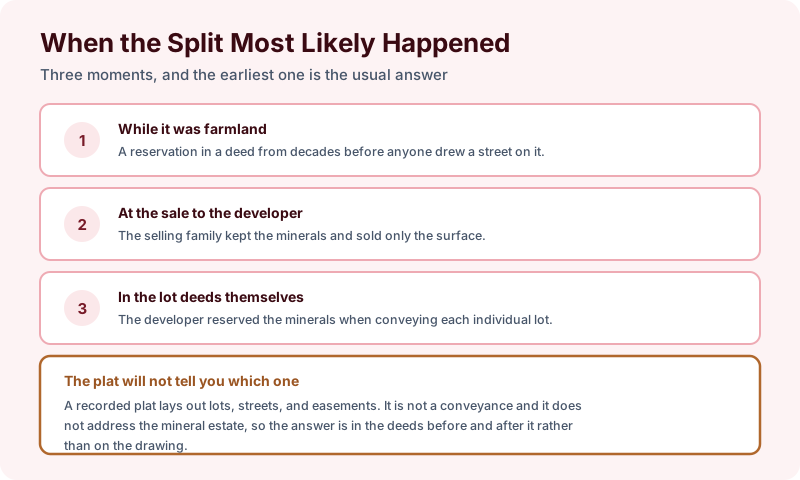
A reservation is the most common. The grantor conveys the land and holds back the minerals, keeping them while the surface moves on to the buyer. Farm and ranch conveyances in the first half of the twentieth century did this routinely, sometimes at the suggestion of a lawyer who expected an oil boom that never arrived.
A separate mineral deed does the reverse. The owner sells the minerals alone, leaving the surface where it was, which is the distinction covered in our note on mineral rights versus surface rights.
A will, a decree, or a partition can split them too. An estate leaves the surface to one child and the minerals to another, or a court divides interests among heirs, and the resulting fractions get smaller with each generation.
Reading the clause itself
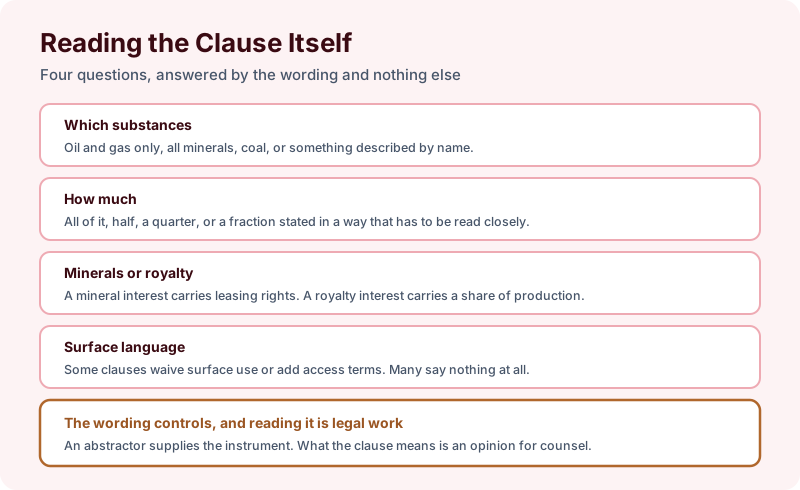
Four questions matter, and all four are answered by the wording rather than by the label on the document.
Which substances are named? A clause reserving oil, gas, and other minerals reaches differently than one reserving coal, and the phrase other minerals has generated a great deal of litigation in several states.
How much is held back? All of it, a half, a quarter, or a fraction expressed in a way that has to be read closely against the tract described.
Is it minerals or royalty? A mineral interest generally carries the right to lease. A royalty interest carries a share of production without that right, a difference our note on royalty interest versus mineral interest works through in detail.
Does it say anything about the surface? Some clauses waive surface use or add access terms. Many say nothing, which leaves the default rules of that state to fill the gap.
What the clause means is a legal question. An abstractor can find the instrument and hand you a copy of it; interpreting it is work for a lawyer in that state.
Tracing it through the chain
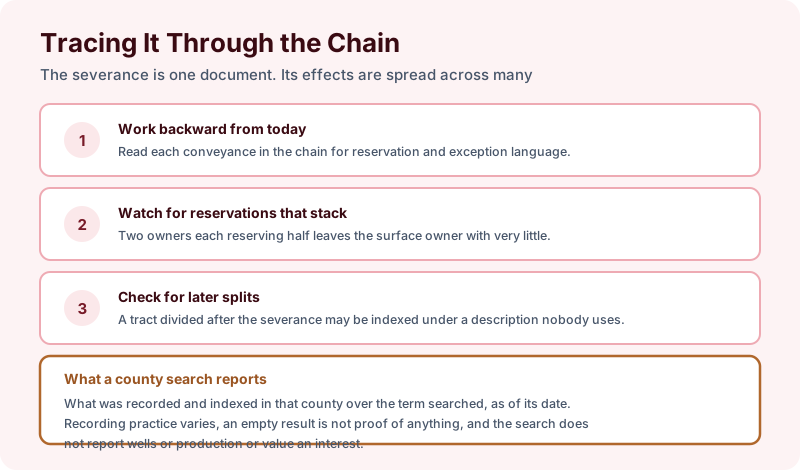
The severance is one document, and its consequences are spread across every conveyance that follows. Working backward from the current deed, each instrument gets read for reservation and exception language, because a later deed may repeat, enlarge, or fail to mention what an earlier one did.
Two patterns are worth watching for. Reservations stack: if one owner reserved half the minerals in 1946 and a later owner reserved half of what remained in 1978, the present surface owner may hold a quarter. And parcels get divided. A tract split after the severance is often indexed under a description nobody uses anymore, which is one of the ordinary reasons an old reservation goes unnoticed until a leasing letter arrives.
Depth is therefore the variable that matters most when ordering. Our search terms run 20, 30, and 50 years so the term can be matched to the era the severance probably happened in, and our process page describes what the report includes. Turnaround is 2 to 3 business days.
What the search reports is what was recorded and indexed in that county over the term searched, as of its date, with copies of the instruments attached. It cannot establish who owns the minerals today, because interests pass at death and change hands with nothing filed locally, so the last grantee named is not necessarily the present owner. Present ownership is a legal conclusion, set out in a mineral title opinion written by counsel. The search does not report well permits or production, which state regulators hold rather than the recorder, and it does not value an interest. Recording practice varies by county, and an empty result reflects the record rather than proving no severance exists.
The takeaway
Find the sentence. Whether you are buying rural land, inheriting a family tract, or answering a letter from a leasing agent, the reservation clause is the document that decides what you own, and it is usually decades old and easy to miss. Start the order online, or send us the address and the county and we will tell you which term fits and what a search of that scope would and would not cover before anything is ordered.