

· AFX Research
Mineral Rights Under a Subdivision Lot: What the Plat Hides
Suburban lots sit on land that was once a farm, and the minerals were often severed before the plat was drawn. What the record shows about a lot you own outright.
Table of Contents
A letter arrives offering to lease the mineral rights under a quarter acre lot in a subdivision built in 1994. The owner reads it twice, checks the deed, finds nothing about minerals, and concludes it must be a scam. It usually is not. Suburban and small city lots sit on ground that was farmland, ranchland, or timber before it was platted, and the mineral estate was frequently severed while it was still one large tract. The severance survived the plat, and it survived every lot sale after it. Our note on mineral rights versus surface rights covers the basic split; this is what it looks like under a driveway.
When the split most likely happened
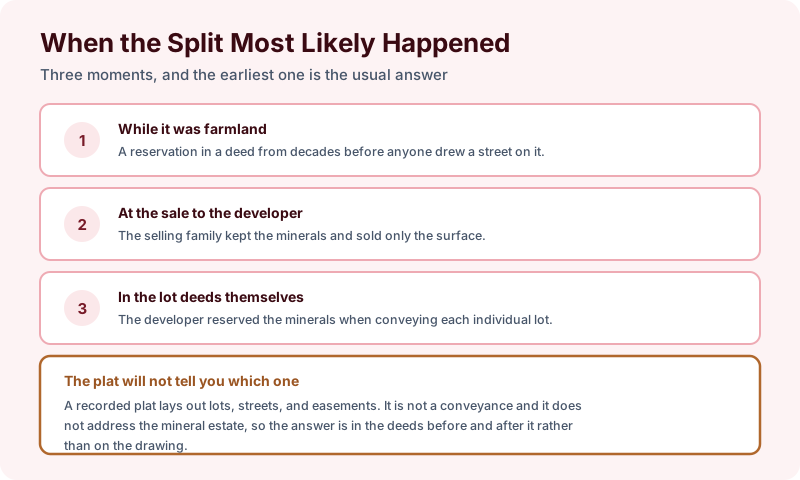
Three moments account for nearly all of these, and the earliest is the most common. A reservation in a deed from decades before anyone drew a street. A sale to the developer in which the selling family kept the minerals and conveyed only the surface. Or a reservation written into the lot deeds themselves by the developer.
The recorded plat will not tell you which. A plat lays out lots, streets, and easements, and it is not a conveyance of anything. It does not address the mineral estate at all, so the answer lives in the deeds before and after it, which is why the exact wording matters as much here as in our note on reservation clauses in old deeds.
Why nobody ever mentioned it
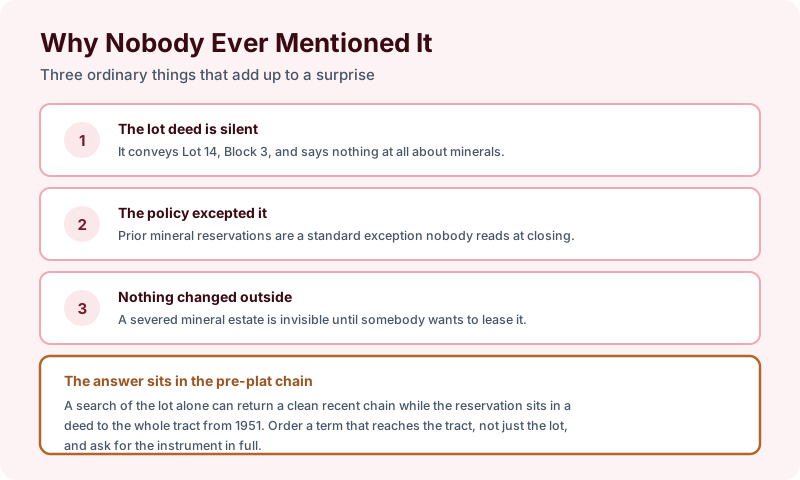
Three ordinary things combine into a surprise. The lot deed conveys Lot 14, Block 3, and says nothing about minerals, because it does not have to. The title policy issued at closing excepted prior mineral reservations, which is standard and which almost nobody reads. And a severed mineral estate changes nothing visible about the property, so it stays invisible until somebody wants to lease it.
The practical consequence for a search is specific. A search of the lot alone can return a clean recent chain while the reservation sits in a deed to the whole tract recorded in 1951. Order a term long enough to reach the tract, not merely the lot, and ask for the severing instrument in full rather than a note that one exists.
Why the letter arrived
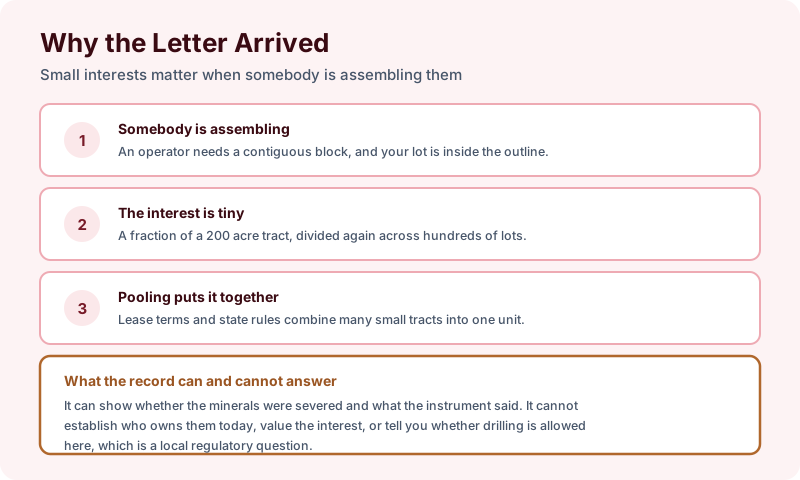
Somebody is assembling. An operator needs a contiguous block and your lot falls inside the outline they have drawn, so every owner within it gets a letter regardless of how small the individual interest is.
The interest usually is very small. A fraction of a 200 acre tract, divided again across several hundred lots, produces numbers that look almost pointless in isolation. What makes them worth gathering is pooling, which combines many small tracts into a single unit under the lease terms and the state’s rules, a mechanism our note on pooling and unitization explains. The arithmetic itself is covered in our note on net mineral acres and fractional interests.
What a search shows and does not
It reports what was recorded and indexed over the term searched, with copies: the severing instrument and its wording, the conveyance history of the tract and then of the lot, the plat, and any recorded lease, royalty deed, or pooling designation. Choose a search term that reaches the pre-plat chain. Turnaround is 2 to 3 business days.
It cannot establish who owns the minerals today, because interests pass at death with nothing filed locally and the last grantee named is not necessarily the present owner. Present ownership is a legal conclusion belonging in a mineral title opinion written by counsel. It does not value the interest, it does not report well permits or production, which state regulators hold rather than recorders, and it cannot tell you whether drilling is permitted where you live, which is a local regulatory question entirely separate from ownership. Recording practice varies by county, so a clean result reflects the record rather than proving nothing was severed.
The takeaway
Before responding to a leasing letter, find out whether the minerals were actually severed and what the instrument said, which means searching the tract rather than the lot. Start the order online, or send us the address and the county and we will tell you which term fits and what a search of that scope would and would not cover before anything is ordered.