

· AFX Research
Pooling and Unitization: Why Your Acreage Sits in a Unit
Why operators combine tracts into units, how that changes what a royalty owner is paid, and which records describe the unit your acreage was placed in.
Table of Contents
A royalty check arrives, or a division order does, and the acreage described is far larger than anything the family owns. The well is not on your ground. Somebody has placed your tract inside a unit, and your share is now a fraction of a fraction. This is normal, it is how modern drilling works, and it is worth understanding before signing anything or concluding that a mistake has been made. It builds on the difference between a lease and a mineral deed, because pooling authority usually comes from the lease.
Why units exist at all
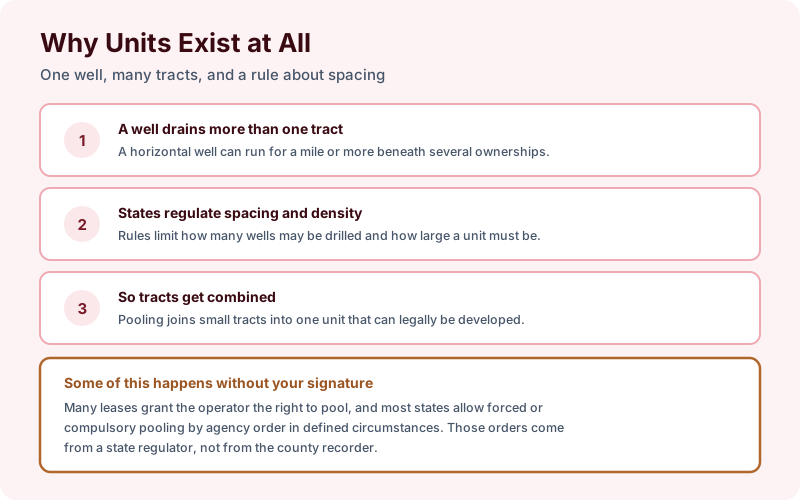
A horizontal well can run for a mile or more beneath several different ownerships, draining hydrocarbons from all of them regardless of where the surface hole sits. States regulate how many wells may be drilled and how large an area each one is allotted, so an operator with a patchwork of small tracts cannot simply drill wherever the leases happen to line up.
Pooling solves that by combining tracts into a single unit that can legally be developed as one. Unitization, in the stricter sense, usually refers to combining a larger area for coordinated development of a reservoir, sometimes across many leases and operators. In everyday use the words get blurred, and the practical effect on a small owner is similar either way.
Some of it happens without your signature. Most leases grant the operator the right to pool the acreage, and most states allow compulsory or forced pooling by agency order in defined circumstances, so that one holdout cannot block development of an entire unit. Those orders come from a state regulator rather than from the county recorder.
What a unit does to your share
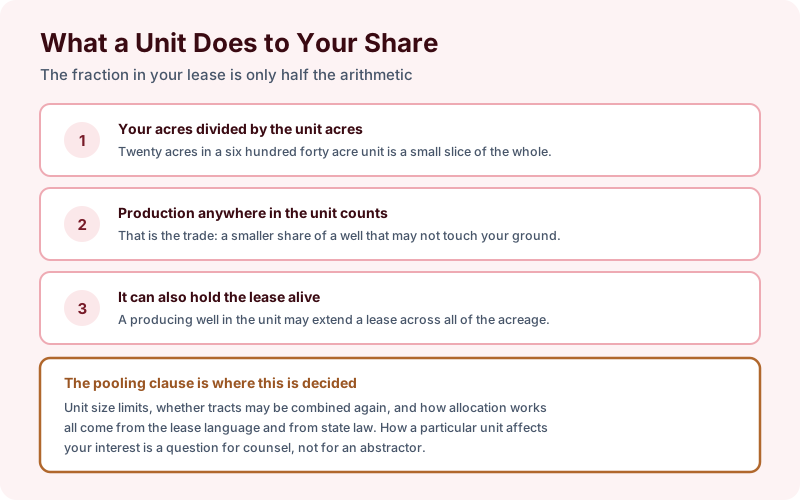
The arithmetic is the part people find surprising. Your payment is generally the royalty fraction applied to the share your acreage bears to the whole unit. Twenty acres inside a six hundred forty acre unit is a small slice, and a royalty fraction that looked healthy in the lease produces a modest number once it is multiplied through.
The trade runs the other way too. Production anywhere in the unit counts, so you may be paid on a well that never touches your ground and that you would have had no way to cause on your own.
Division orders are where most owners first meet the numbers. The decimal on that document is the operator’s calculation of your share, and it is worth checking against the recorded instruments rather than accepted on faith.
Two consequences follow. A producing well inside the unit can hold the lease alive across all of the pooled acreage, well past the primary term. And once acreage is committed to a unit, the ability to negotiate separately over it is largely gone. Whether a particular unit was properly formed, and how allocation works, are questions of lease language and state law for counsel rather than for an abstractor.
Where the unit information lives
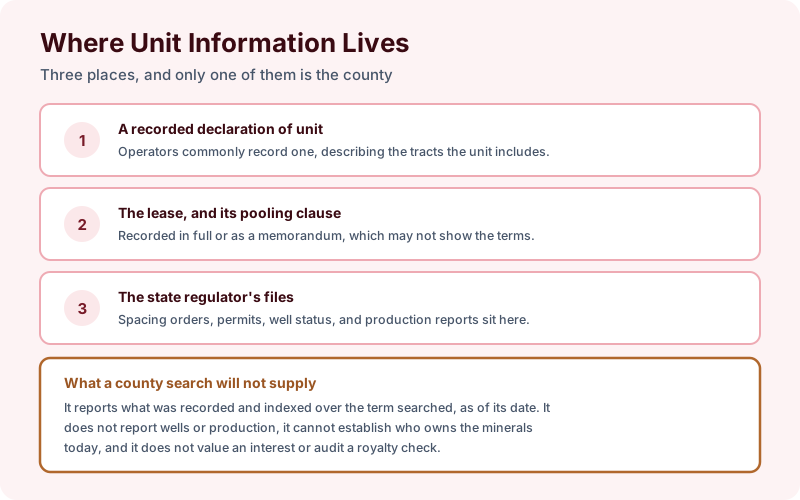
Three places, and they answer different questions. Operators commonly record a declaration or designation of unit in the county, describing the tracts included, which is exactly the kind of instrument a records search finds. The lease and its pooling clause may be recorded in full or only as a memorandum, and a memorandum often will not show the terms. The state regulator’s files hold spacing orders, drilling permits, well status, and production reports.
A county search reports what was recorded and indexed over the term searched, as of its date, with copies attached. It does not report wells or production, it cannot establish who owns the minerals today because interests pass at death with nothing filed locally, and it does not value an interest or audit a royalty check. Present ownership is a mineral title opinion written by counsel, and recording practice varies by county. Our search terms let the depth match the tract, and turnaround is 2 to 3 business days.
The takeaway
If the acreage on your statement looks wrong, the likely explanation is a unit rather than an error. Get the recorded declaration and your lease, then take both to a lawyer who can tell you whether the allocation matches what the documents require. Start the order online, or send us the address and the county and we will tell you which term fits and what a search of that scope would and would not cover before anything is ordered.