

· AFX Research
Mineral Rights vs Surface Rights: What Each Owner Controls
How one tract becomes two estates, what each owner may and may not do, why the mineral estate is usually dominant, and what the recorded instruments actually establish.
Table of Contents
Most people buy a property assuming they own it from the fence line down. Where the minerals have been separated from the surface, that is not what happened, and the two owners hold genuinely different rights over the same piece of ground. Understanding which rights sit on which side is the difference between a surprise and a negotiation. If you are still working out whether your parcel is affected, start with who owns the mineral rights to your property.
One tract, two estates
Before anything is separated, a single owner holds the whole column: the ground, the buildings, and everything underneath. That is the united estate, and nothing distinct shows up in the record.
A severance splits it in two. From then on there is a surface estate and a mineral estate, each its own piece of real property, each able to be sold, mortgaged, leased, taxed, and inherited without the other one moving. Neither owner needs the other’s permission to sell what they hold.
Why the mineral estate is usually dominant
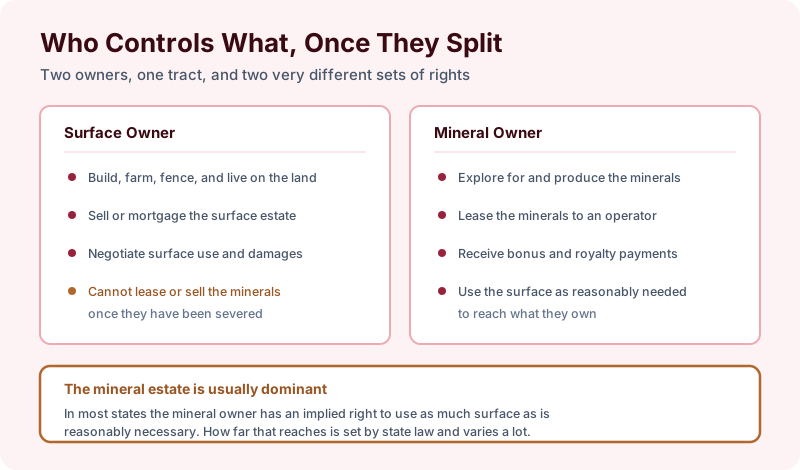
Here is the part that surprises people. In most states the mineral estate is the dominant estate and the surface estate is servient to it. The reasoning is practical: a mineral estate nobody could reach would be worth nothing, so the law implies a right to use as much surface as is reasonably necessary to develop it.
In plain terms, the mineral owner or their lessee can generally enter to drill without buying the surface first, and without the surface owner’s consent.
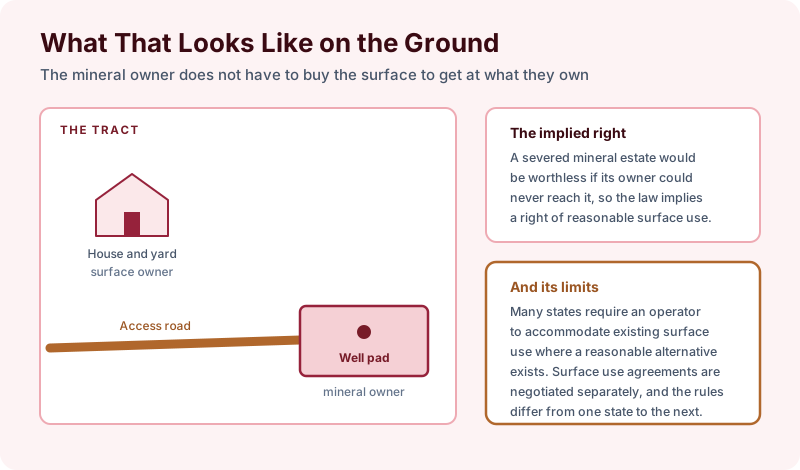
That right is not unlimited. “Reasonably necessary” is a real constraint, and many states apply an accommodation doctrine requiring an operator to work around established surface uses where a reasonable alternative exists. Surface use agreements covering placement, access, and damages are common. What this means in a specific case is set by that state’s law and varies considerably, which makes it a question for an attorney licensed there rather than one an abstractor answers.
What the surface owner still controls
The surface owner is not a bystander. They build, farm, fence, and live on the land, sell or mortgage the surface, and negotiate surface use and damages when development is proposed. What they cannot do, once the minerals are severed, is lease or sell what they no longer own, or collect the bonus and royalty that go with it.
That last point matters when a landman calls. Signing a lease for minerals you do not own does not create rights you do not have, and knowing which estate you hold before that conversation is worth more than anything you can say during it.
Where the split is written down
All of this traces back to one recorded instrument: a mineral deed conveying the subsurface away, or a reservation in a deed that sells the surface and keeps the minerals for the seller. The second form is far more common and far easier to miss, because it is a clause inside an ordinary deed rather than a document of its own.
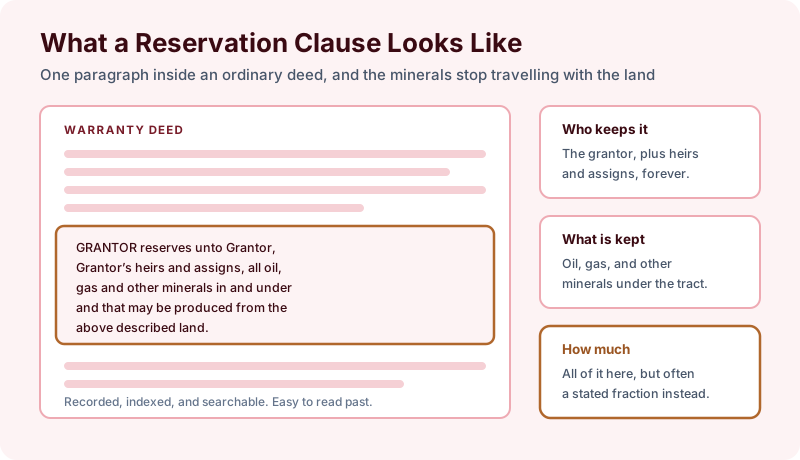
Read the clause and you learn who kept the interest, what substances it covers, and how much was kept, which is often a fraction rather than all of it. That is why our reports attach the recorded instruments instead of summarising them: the wording is the substance. The types of mineral rights page covers the other interests carved out of the mineral estate, including leases, royalties, and executive rights.
What a search can and cannot establish
A mineral rights search reports what was recorded against the parcel over the term searched, with the recording date, book, and page for each instrument. It can show you that a severance happened, when, and in what words.
It cannot tell you who owns the minerals today. Interests pass at death whether or not anything is filed in the county where the land sits, so the last grantee named is not necessarily the present owner. It does not report well permits or production, which state regulators hold rather than the county recorder, and it does not value an interest. Present ownership is a legal conclusion, normally a mineral title opinion written by counsel from the kind of record a search assembles.
The takeaway
Two estates, one tract, and a set of rights that tilts toward the mineral owner in most states, bounded by reasonableness and by whatever accommodation that state’s law requires. Which side of the line you are on was decided by an instrument recorded long before you owned the place.
Start the order online, or send us the address and the county and we will tell you which term fits and what a search of that scope would and would not cover before anything is ordered.