

· AFX Research
A Mineral Leasing Letter Arrived: What to Check Before You Sign
A leasing offer in the mail is a signal, not a settled fact. What the letter tells you, the three clauses that decide the deal, and why ownership comes first.
Table of Contents
An envelope arrives from a company nobody in the family has heard of, offering to lease mineral rights under a description that may or may not match anything you thought you owned. There is a deadline in the letter and a signature block at the bottom. The single most useful thing to know is that the letter is the beginning of a negotiation rather than the end of an inquiry, and that the facts you need to negotiate with are in the county record. Start with who owns the mineral rights to your property if you are not certain the interest is yours.
What the letter actually tells you
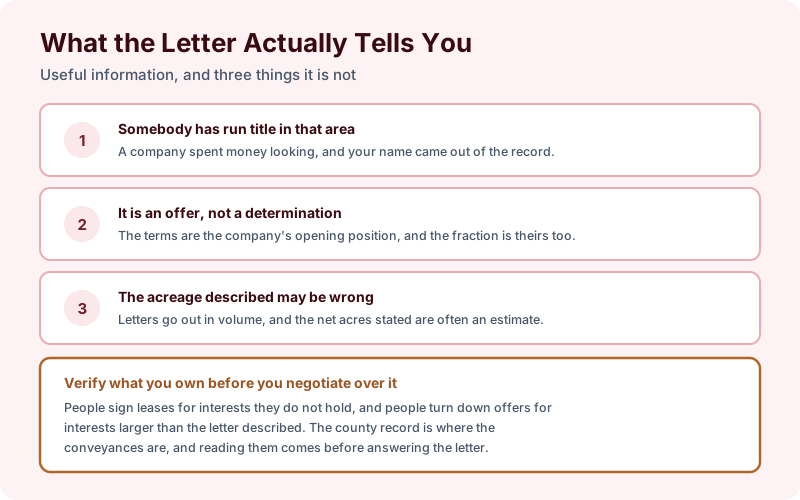
It tells you somebody has been running title in that area and your name came out of the record. That is genuinely useful information, and it is often the first indication a family has that an interest exists at all.
It does not tell you the terms are fair, because the royalty fraction and the bonus in the letter are the company’s opening position. And it does not tell you the acreage is right. These letters go out in volume, the net acres stated are frequently an estimate, and the description may cover a tract in which your actual interest is larger or smaller than the offer assumes.
Both errors happen in both directions. People sign leases for interests they do not hold, and people ignore offers on interests worth considerably more than the letter described.
Three clauses that decide the deal
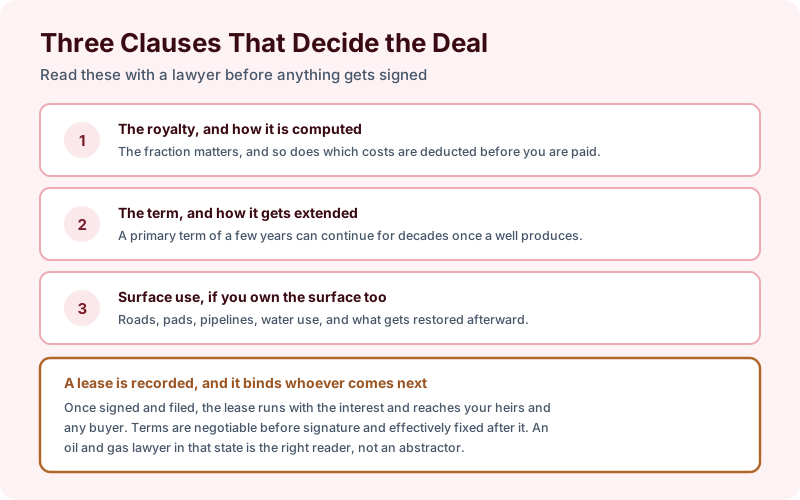
The royalty and how it is computed. The fraction is the headline, and the deductions are the fine print. Whether post production costs such as gathering, compression, and processing come off before your share is calculated can matter as much as the fraction itself.
The term and how it continues. A primary term of a few years is not the real duration. Once a well produces, or in some leases once operations begin, the lease can continue for as long as production does, which may be decades.
Surface use, if you own the surface too. Roads, pads, pipelines, water use, fencing, and restoration obligations belong in the document rather than in a conversation. Where the minerals were severed long ago and you hold only the surface, the dominant estate rules govern instead, and that is a different problem.
A recorded lease binds whoever comes next, including your heirs and any buyer, so everything is negotiable before signature and effectively fixed after it. An oil and gas attorney in that state is the right reader for the document. An abstractor’s job is to establish what the record says about the interest.
One more practical note about the deadline. Leasing letters often carry a short response window, and the urgency is a negotiating device more than a hard limit. A company that has spent money running title on a tract is rarely willing to walk away because an owner took three weeks to verify what they own. Records work moves faster than most people expect anyway.
Who else may hold a piece
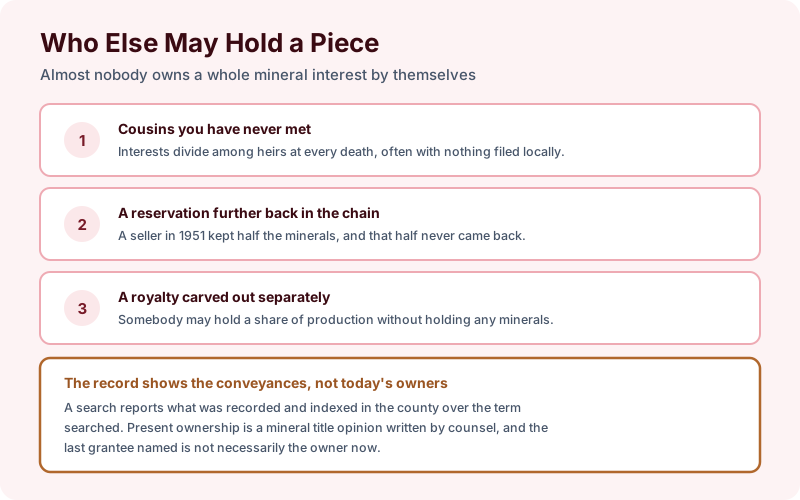
Almost nobody holds a whole mineral interest alone. Interests divide among heirs at every death, frequently with nothing filed in the county where the minerals sit, which is the pattern described in our note on inherited mineral rights. A seller further back in the chain may have kept half the minerals in a reservation that never came back. And someone may hold a royalty interest carved out separately, entitling them to a share of production with no right to lease at all.
A search reports what was recorded and indexed in the county over the term searched, as of its date, with copies of the instruments attached. It cannot establish who owns the minerals today, it does not report wells or production, which state regulators hold rather than the recorder, and it does not value an interest. Present ownership is a mineral title opinion written by counsel. Recording practice varies by county. Our search terms let the depth match the tract, and turnaround is 2 to 3 business days.
The takeaway
Answer the letter second. Establish what the record says you hold, then take the offer and the record to a lawyer who leases minerals for a living. Start the order online, or send us the address and the county and we will tell you which term fits and what a search of that scope would and would not cover before anything is ordered.