

· AFX Research
A Royalty Interest Versus a Mineral Interest: What You Hold
Why one owner signs the lease and another only cashes the checks, how a royalty gets created, and how to tell the two apart in the recorded instruments.
Table of Contents
Two people can own an interest in the same tract of minerals and hold completely different things. One decides whether a well gets drilled and collects the money for signing. The other receives a share of production and has no vote at all. Both are real property interests, both are recorded, and the paperwork frequently does not announce which is which. If you are still working out whether your family holds anything under a given tract, start with who owns the mineral rights to your property.
A mineral interest is a bundle
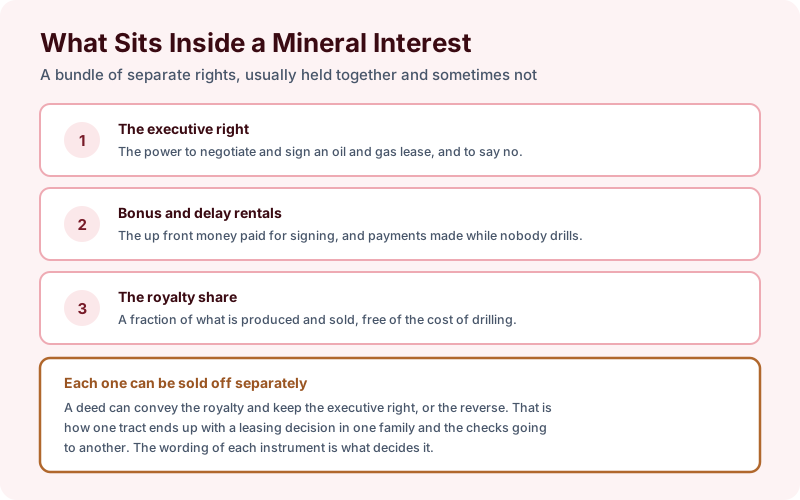
Owning the minerals means owning several distinct rights at once. The executive right is the power to negotiate and sign an oil and gas lease, including the power to refuse. The bonus is the up front payment for signing, and delay rentals are payments made while a lease is in force and nobody has drilled. The royalty is a fraction of what is produced and sold, free of drilling cost.
Held together, those rights make an ordinary mineral owner. The complication is that they can be separated. A single deed can convey the royalty while keeping the executive right, or convey the minerals while reserving a royalty, and once that happens the tract has two owners with two different stakes in the same decision.
Three ways a royalty comes into existence
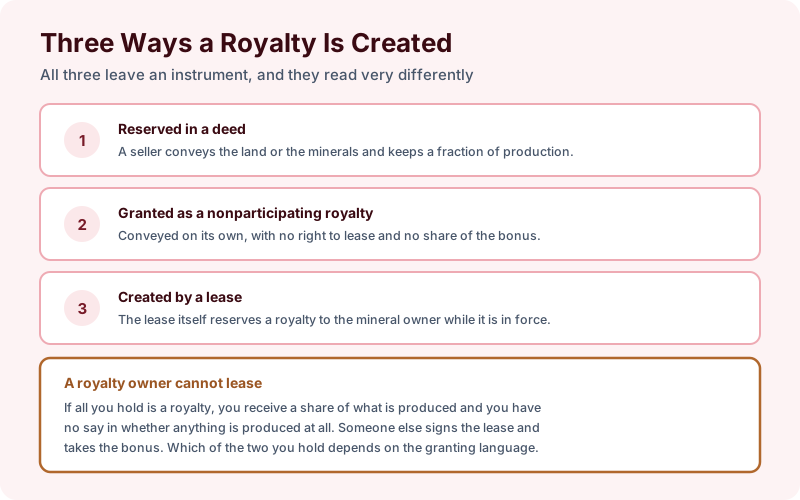
The most common route is a reservation. Someone sold the land or the minerals decades ago and kept a fraction of production, which is exactly the kind of clause that turns up when a reservation is traced back through the chain.
The second is an outright grant of a nonparticipating royalty, usually shortened to NPRI. It is conveyed on its own, and the name describes the limitation: the holder does not participate in leasing or in bonus money.
The third is created by the lease itself. When a mineral owner signs an oil and gas lease, the lease reserves a royalty to that owner for as long as it stays in force, which is one of the differences that separates a lease from a mineral deed.
Why the distinction decides the money
The practical consequences fall into a short list, and each of them has surprised somebody.
Only the executive right holder can sign a lease, so a royalty owner cannot cause development and cannot stop it. Bonus money follows the executive right rather than the royalty, which means the person who negotiates may collect a payment the royalty owner never shares in. And the fractions almost never match, because a royalty carved out generations ago sits on top of whatever fraction the mineral owner now holds.
There is a further wrinkle worth knowing. Where the executive right and the royalty are held by different people, courts in some states have recognized duties the executive owes the royalty owner in how a lease is negotiated. That is a question of state law and counsel’s territory, but it explains why the split matters beyond arithmetic.
Telling them apart in the record
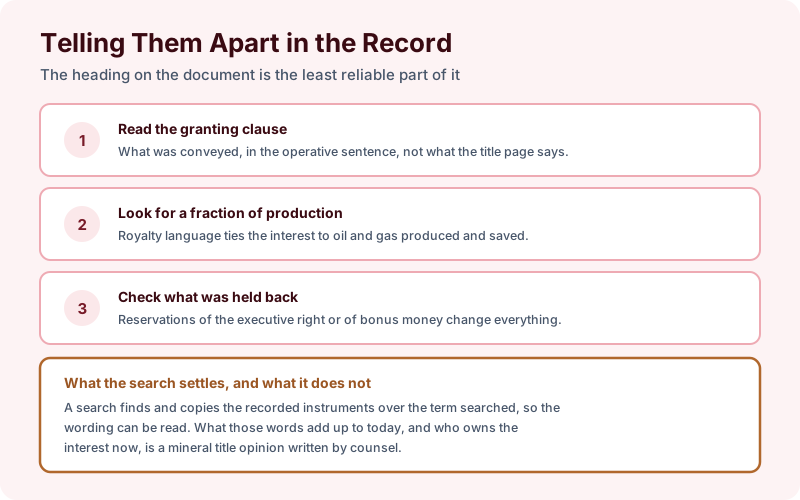
Read the granting clause rather than the heading, because instruments are titled loosely and the operative sentence is what conveys. Royalty language ties the interest to oil and gas produced and saved. Mineral language conveys the substances themselves along with the rights that come with them. Then look at what was held back, since a reservation of the executive right or of bonus money changes the character of everything that moved.
A search of the county records reports the instruments recorded and indexed over the term searched, as of its date, with copies attached so the wording can be read. It cannot establish who owns the interest today, because interests pass at death with nothing filed locally, and it does not report wells or production, which state regulators hold rather than the recorder. Present ownership and the effect of a given clause are a mineral title opinion written by counsel. Our search terms exist so the depth can match the tract, and turnaround is 2 to 3 business days.
The takeaway
Find the instrument that created your interest and read what it actually conveyed, because that sentence decides whether you hold a vote, a check, or both. Start the order online, or send us the address and the county and we will tell you which term fits and what a search of that scope would and would not cover before anything is ordered.