

· AFX Research
Inherited Mineral Rights: How to Trace What You Actually Own
A letter arrives about minerals in a county you have never visited. How interests pass at death, why the county record often shows nothing, and what to assemble before a search.
Table of Contents
Inherited mineral interests usually announce themselves in one of two ways: a letter from a company wanting to lease, or a small check that arrives with no explanation. Both raise the same question, and it is harder to answer than it sounds. The interest may have been created eighty years ago and divided among heirs three times since, and the county where the ground sits may have no idea any of that happened. Working out what you hold starts with understanding who owns the mineral rights to a property in the first place.
How minerals move at death
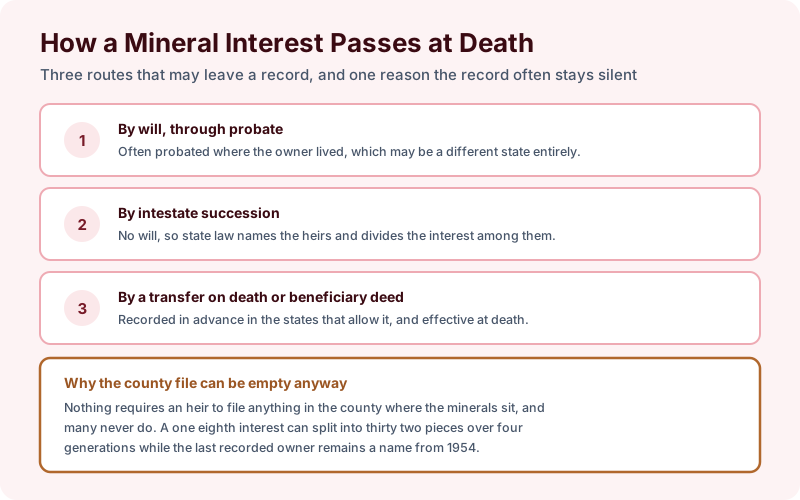
A mineral interest is real property, so it passes the way real property passes: under a will through probate, under state intestacy law where there is no will, or through a transfer on death deed in the states that allow one.
The complication is where that gets recorded, or does not. Probate is normally opened where the person lived, which is frequently a different state from where the minerals are. Nothing compels an heir to file anything in the mineral county, and many heirs never learn there is anything to file. So the last recorded owner of a tract can be a name from 1954 while the actual interest has divided into thirty two pieces across four generations, none of them noted locally.
That is why a search of the county record can come back showing a severance, a fraction, and a grantee who died before you were born. The record is not wrong. It simply stopped being updated.
There is a second reason the trail goes cold. Mineral interests are cheap to hold and easy to forget, since an unleased interest generates no bills, no tax notice in many counties, and no correspondence at all. Decades can pass with nobody having any reason to touch the paperwork, and then a leasing campaign arrives and everyone starts looking at once.
What to assemble first
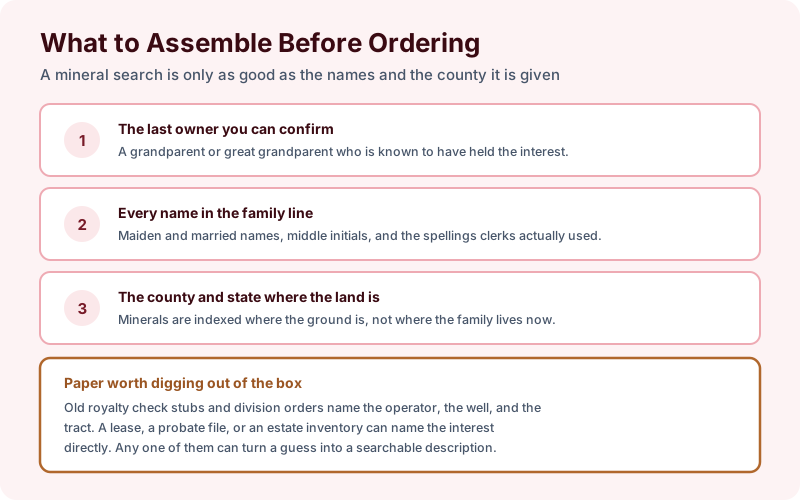
Three inputs decide whether a search finds anything useful.
The last owner you can confirm. A grandparent or great grandparent known to have held the interest gives the search a place to start.
Every name in the family line. Maiden and married names, middle initials, and the spellings a clerk actually typed. Mineral records are indexed by name, and one variant can hide a conveyance completely.
The county and state. Minerals are indexed where the ground is, not where the family lives. If you only know the state, the old paperwork usually narrows it, and an operator’s letter almost always names the county and the tract outright.
That paperwork is worth an afternoon in the storage box. Royalty check stubs and division orders name the operator, the well, and the tract. An old lease, a probate file, or an estate inventory can describe the interest directly. Any one of them can turn a family story into a searchable legal description.
What the search establishes
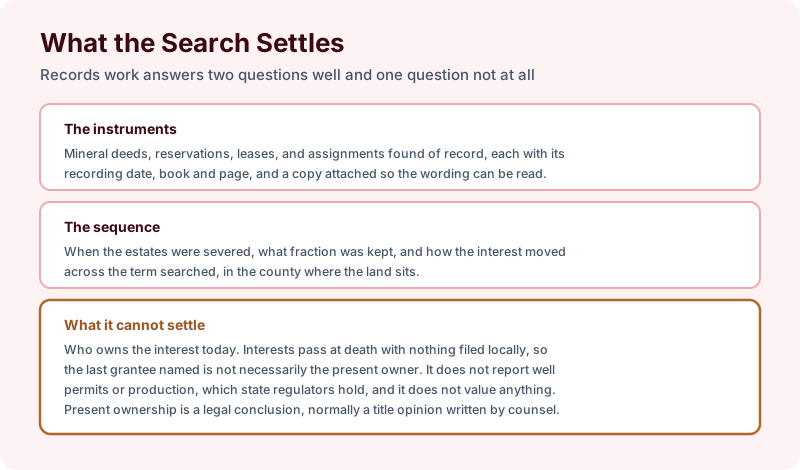
A mineral rights search returns the instruments found of record with their recording dates, books, and pages, and copies attached, plus the sequence: when the estates were severed, what fraction was reserved, and how the interest moved over the term searched. On inherited interests the depth matters, because the severance is often the oldest document in the file and a short term will not reach it. Our process page explains how the term is set.
What it cannot do is tell you who owns the interest today. Interests pass at death whether or not anything is filed, so the last grantee named is not necessarily the current owner. A search does not report well permits or production, which state regulators hold rather than the county recorder, and it does not value anything. Present ownership is a legal conclusion, normally a mineral title opinion written by an attorney from exactly the kind of record a search assembles. The types of mineral rights page covers the interests that can be carved out along the way.
The takeaway
Start with the names and the county, dig out the old check stubs before you order anything, and expect the record to end at an ancestor rather than at you. That is normal, and the documented chain is what an attorney needs to close the gap. Start the order online, or send us the names and the county and we will tell you which term fits and what a search of that scope would and would not cover before anything is ordered.