

· AFX Research
Who Owns the Mineral Rights to My Property? How to Find Out
Why your deed rarely answers the question, where subsurface ownership is actually written down, how far back a search has to reach, and what the record cannot settle.
Table of Contents
Owning a house or a tract of land does not automatically mean owning what is underneath it. In much of the country the two are separate pieces of property, and they can be sold, leased, taxed, and inherited independently for generations. If you are asking who owns the minerals under your parcel, the honest answer is that the county land records hold the evidence, and the deed you signed at closing is usually the least useful document in the pile.
Your deed probably does not say
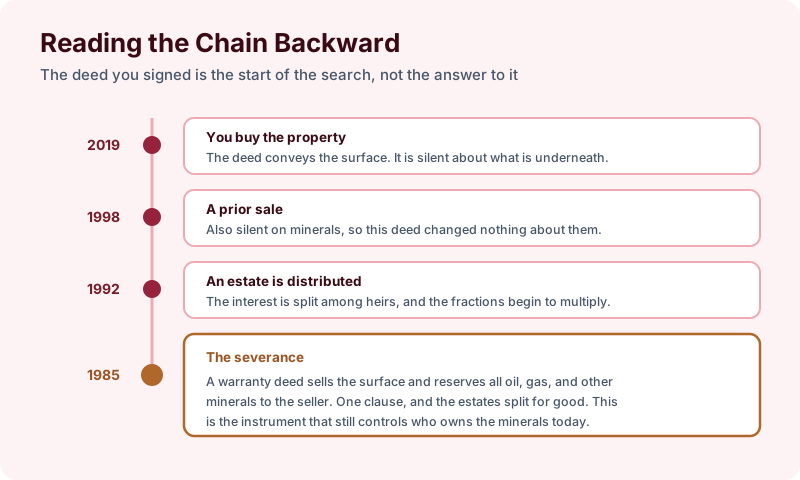
The instrument that conveyed the property to you almost certainly transferred the surface. Whether it also transferred the minerals depends on what a previous owner did decades before you arrived, and a deed is not required to mention interests that were separated in some earlier transaction. Silence in your deed is not evidence that the minerals came with the land. It is usually just silence.
That is why the search starts with your vesting deed and works backward: the current document anchors the chain, and everything that answers the mineral question sits behind it.
What you are looking for is a severance
The event that matters is the severance: the moment the minerals stopped travelling with the surface. It happens one of two ways. A deed conveys the minerals to someone else, or a deed sells the surface and reserves the minerals for the seller. Either way it is a recorded instrument, and once it exists the two estates go their separate ways.
A severance is rarely a dramatic document. It is far more often a single clause inside an ordinary warranty deed, sitting between the legal description and the signature block. Read quickly, it is invisible. Read carefully, it is the whole answer.
Why the online lookup usually fails
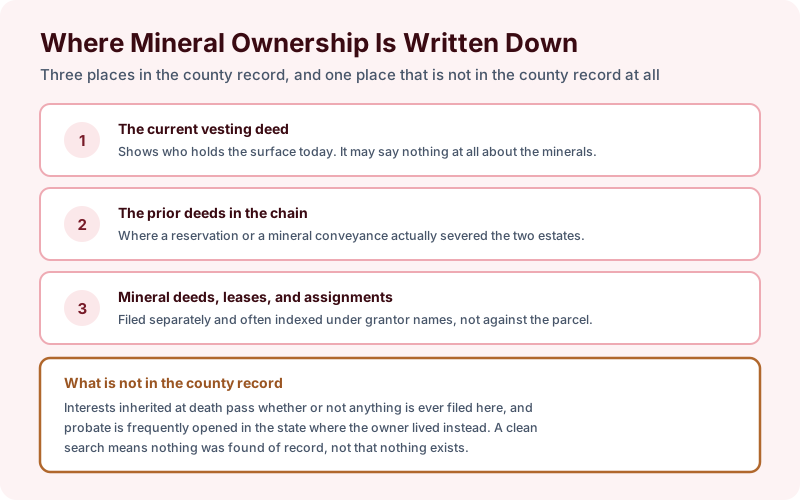
People reasonably start with the county’s website, and on a mineral question it tends to disappoint. Mineral deeds, leases, and assignments are frequently filed as their own documents and indexed under the names of the people who signed them rather than against the parcel, so a search keyed to your street address never surfaces them. Older books may not be digitized at all. Recording and indexing practice varies from one county to the next, so a technique that works in one place returns nothing in the county next door.
Reading those indexes is the work, and it is why our abstractors search in the county offices rather than querying an aggregated national dataset. Our process walks through what that involves.
How far back the search has to reach
Because severances tend to be old, the term you select decides what the report can tell you. A 20 year search on a parcel severed in the 1950s comes back with nothing found, and that would be exactly the wrong conclusion to draw.
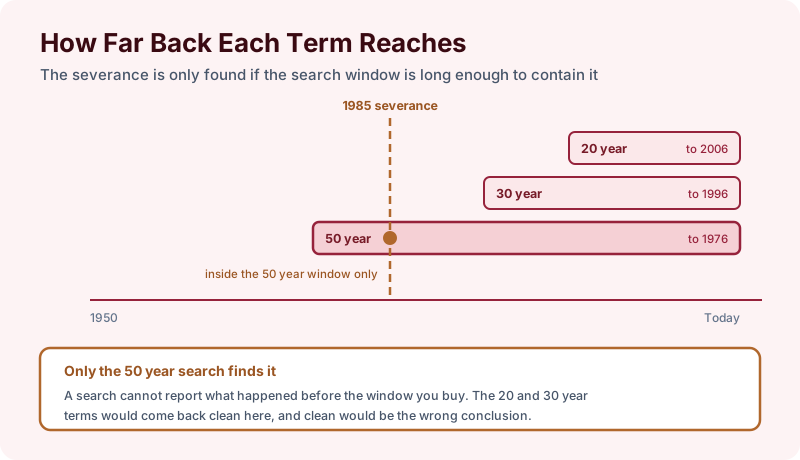
When the question is whether the minerals were ever severed at all, the 50 year term answers it. When you know the recent history and are checking a specific lease or sale, a shorter term is enough. Compare the search packages to see what each window covers.
What the record cannot settle
A records search reports what was recorded. It does not decide who owns the minerals today, and on this lane that gap is real rather than a formality. Mineral interests fractionalize through inheritance, and when an owner dies the interest passes whether or not anything is ever filed in the county where the land sits. Probate is frequently opened in the state where that person lived instead. A tract severed eighty years ago can have dozens of undivided fractional owners, many of whom have never recorded a thing locally.
So a clean report means no severance or transfer was found of record in the term searched. Turning that chain into a conclusion about present ownership is a legal judgment, usually a mineral title opinion written by an attorney licensed in that state. Our job is to put the documented chain in front of them, with the instruments attached. The types of mineral rights page sets out which interests reliably appear in the record and which do not.
The takeaway
Your deed is where the search begins, not where it ends. The answer lives in the prior instruments, it is usually older than people expect, and it is indexed in ways that defeat a casual online lookup. Pick a term long enough to contain the severance, read the instruments themselves, and treat a clean result as the absence of a recorded finding rather than proof the minerals are intact.
Start the order online, or send us the address and the county and we will tell you which term fits and what a search of that scope would and would not cover before anything is ordered.