

· AFX Research
Federal Split Estate: When the Government Owns the Minerals
Millions of acres carry a surface in private hands and a mineral estate reserved to the United States. What the county record proves, and what sits with the agency.
Table of Contents
Across the western states there are parcels where the deed looks ordinary and the mineral estate belongs to the federal government. The pattern comes from the patents that put the land in private hands in the first place, many of which conveyed the surface and reserved the minerals. Nothing was hidden and nothing went wrong. The surface simply became private property while the minerals never did, and a buyer who never read the patent finds out when a leasing notice arrives. The mechanics are the same severance our note on mineral rights versus surface rights describes, with a different owner on the other side.
What a split estate is
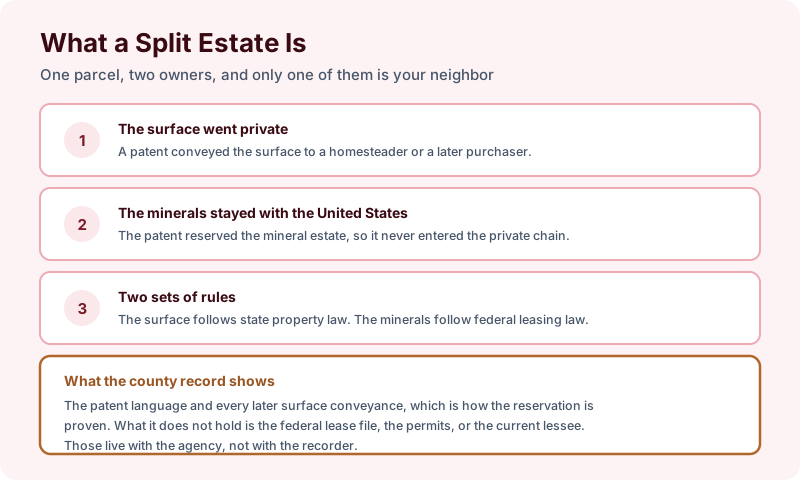
The surface went private. A patent conveyed it to a homesteader or a purchaser, and it has passed through ordinary deeds ever since.
The minerals stayed with the United States. The patent reserved the mineral estate, which means it never entered the private chain of title at all. There is no mineral deed to find because there was never a mineral conveyance.
Two sets of rules apply. The surface follows state property law, recorded in the county. The mineral estate is administered under federal leasing law, and that file is held by the agency rather than by the recorder.
The mineral estate is generally the dominant one here, as it is in a private severance, which is the doctrine our note on reservation clauses in old deeds walks through.
How it reaches the surface owner
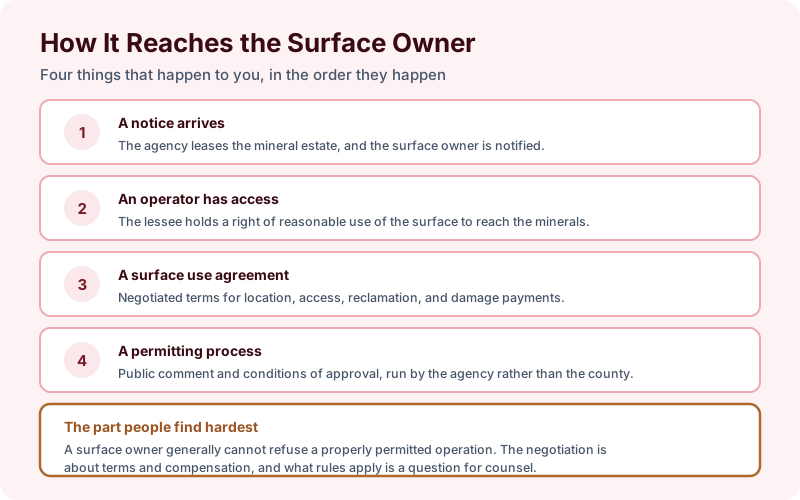
Four things happen, roughly in order. The agency leases the mineral estate and the surface owner gets notified. The lessee then holds a right of reasonable use of the surface to reach what it leased, which is the part that lands hardest. A surface use agreement follows, covering location, access roads, reclamation, and damage payments, and that negotiation is where a surface owner has real leverage over terms. Then comes a permitting process with public comment and conditions of approval, run by the agency.
The uncomfortable fact is that a surface owner generally cannot refuse a properly permitted operation. What is negotiable is where it goes, how it is built, and what gets paid, and that is the same ground covered in our note on surface use agreements and damage payments. Which protections apply, and how strong they are, varies by state and by program, and those are questions for counsel rather than for an abstractor.
Why buyers miss it
Two reasons, and both are ordinary rather than negligent. The first is that a modern warranty deed does not repeat the patent. It conveys what the grantor holds, and where the minerals were reserved a century ago, the deed can be silent and still be accurate. Nothing in the document says the minerals are gone.
The second is the tax roll. Assessors bill the surface owner for the parcel, and a bill that describes the whole acreage reads to most people as proof of whole ownership. It is not, and it is the same false comfort described in our note on who owns the mineral rights to my property. The only place the answer lives is the chain of title, starting at the patent.
What a county search contributes
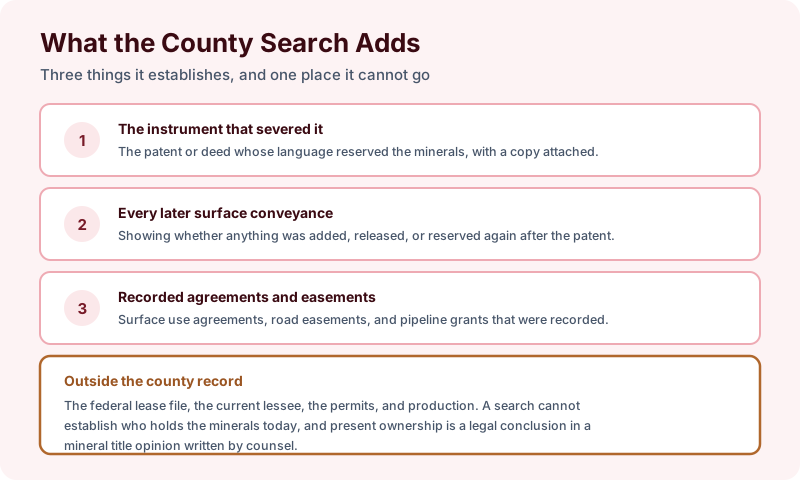
Three things, and they are the things people most often lack. First, the instrument that severed the estate, with a copy, since the patent language is the proof and it is frequently quoted secondhand and wrongly. Second, every later surface conveyance, showing whether anything was added, released, or reserved again after the patent, because a parcel can carry a federal reservation and a private reservation at the same time. Third, any recorded surface use agreements, road easements, and pipeline grants affecting the ground.
Send the legal description and the county rather than only the address, and choose a search term long enough to reach the patent. Turnaround is 2 to 3 business days.
What sits outside the county record is the federal lease file, the current lessee, the permits, and production. A search reports what was recorded and indexed over the term searched, as of its date. It cannot establish who owns the minerals today, since interests pass at death with nothing filed locally, and present ownership is a legal conclusion in a mineral title opinion written by counsel. Recording practice varies by county.
The takeaway
Get the patent language in hand before you accept anybody’s summary of it, then work the surface use agreement, which is where the outcome is actually decided. Start the order online, or send us the address and the county and we will tell you which term fits and what a search of that scope would and would not cover before anything is ordered.