

· AFX Research
Surface Use Agreements and Damage Payments: What to Check
What a surface use agreement covers, who the parties really are, and which recorded documents to pull before a surface owner signs one with an operator.
If someone else owns the minerals under your land, the day an operator decides to drill is the day you learn what a surface use agreement is. It is a separate document from the oil and gas lease, it is negotiated with the surface owner rather than the mineral owner, and it deals with the physical footprint: where the pad goes, what the roads look like, what gets paid for, and what the place looks like when the work is done. Our note on mineral rights versus surface rights covers why the two estates are separate in the first place.
What the agreement sets
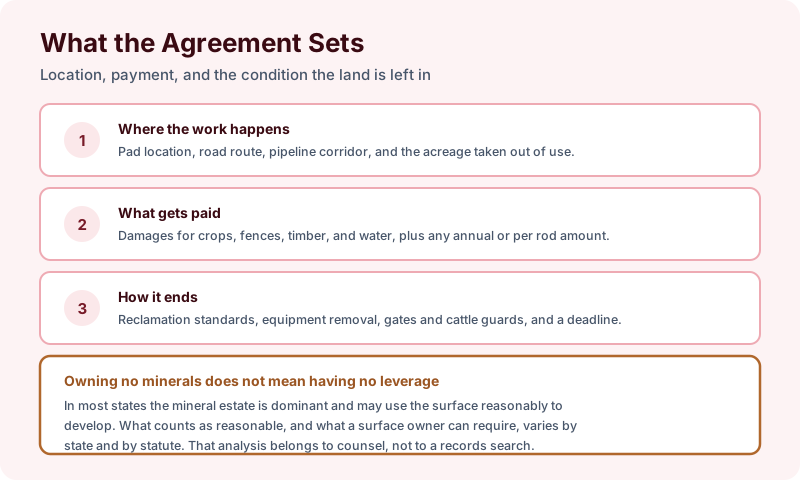
Three categories carry most of the value. Location comes first, because the pad, the access road, and any pipeline corridor decide how much of the tract stays usable. Moving a road two hundred feet at the planning stage costs nothing, and moving it after construction costs a great deal.
Payment is the part most owners focus on, and it usually breaks into damages for crops, fences, timber, and water, plus an annual or per rod amount for the road or line. Termination is the part most owners overlook: reclamation standards, a deadline for equipment removal, gates and cattle guards, and what happens if the operator walks away or sells the lease.
One point of orientation matters here. In most states the mineral estate is dominant, which means the mineral owner or lessee may use the surface reasonably to develop the minerals. That does not leave a surface owner with nothing to negotiate over, but what counts as reasonable, and what a state statute may require, is a legal question for counsel rather than a records question.
Who is actually at the table
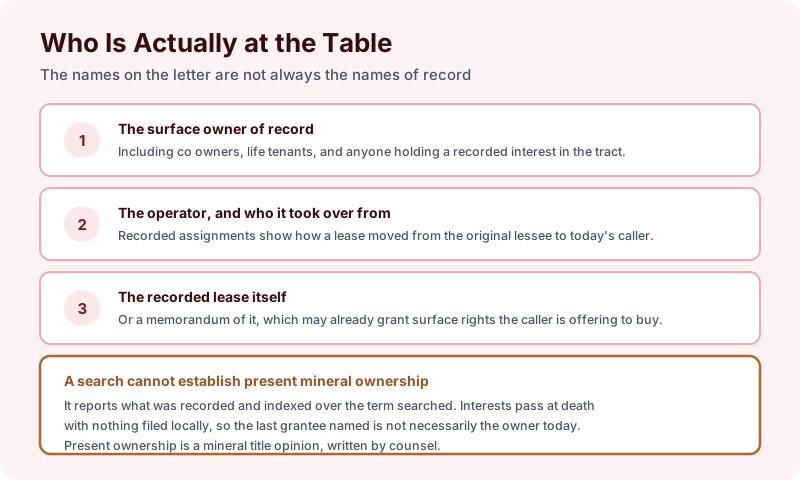
The names on the letter are not always the names in the record. On the owner side, the tract may have co owners, a life tenant, or an heir who never appeared in a deed, and every recorded interest holder is potentially a required signature. On the operator side, the company calling you may hold the lease by assignment from someone else, and the recorded assignment chain shows how it got there. Our note on the oil and gas lease versus the mineral deed explains what each instrument does.
The recorded lease itself is worth reading before you negotiate. Many leases already grant the lessee rights to build roads, lay lines, and use water, which means part of what you are being asked to sign may be something the operator can already do. That changes the conversation considerably.
What the record cannot do is establish who owns the minerals today. A search reports what was recorded and indexed over the term searched, interests pass at death with nothing filed locally, and the last grantee named is not necessarily the present owner. Present ownership is a mineral title opinion, and it is written by counsel.
What to pull first
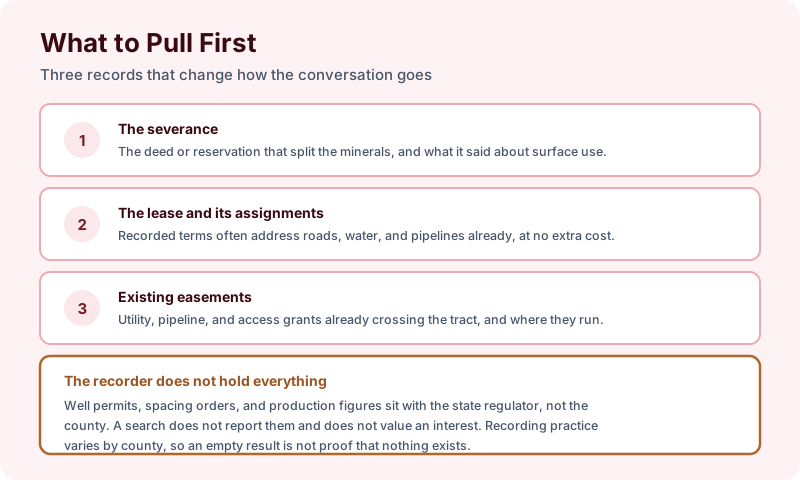
Start with the severance, meaning the deed or reservation that split the minerals from the surface, since older instruments sometimes say something specific about surface use, water, or the location of operations. Our note on reservation clauses in old deeds covers how much variation those clauses carry.
Then the lease and its assignments, then the easements already crossing the tract, because a pipeline corridor granted in 1968 may be the cheapest route for the operator and the worst route for you. Our search packages run 20, 30, and 50 years, and on a tract with an old severance the longer terms are what reach the documents that matter. Our process describes what arrives in the report.
Two limits, stated plainly. Well permits, spacing orders, and production figures are held by the state regulator, not the county recorder, so a records search does not report them and does not value an interest. And recording practice varies by county, so an empty result is not proof that nothing exists.
The takeaway
A surface use agreement is a one time negotiation with long consequences, and the documents that shape it are already recorded. Get the severance, the lease, the assignments, and the existing easements in front of you and your attorney before the first meeting, so the discussion is about terms rather than about facts.
Start the order online, or send us the address and the county and we will tell you which term fits and what a search of that scope would and would not cover before anything is ordered.