

· AFX Research
Who Gets Notice When a Well Is Permitted Near Your Property
Notice runs off the operator filing and the county index, so an interest that never reached the index becomes an owner nobody tells. How the gap opens and what closes it.
Table of Contents
A family in west Texas learns about a well from a neighbor, months after the permit issued, and discovers the unit includes acreage their grandfather severed in 1961. Nobody notified them. That is not usually anyone hiding anything. State agencies build their notice lists from what the operator filed and what the county index shows, and a fractional interest that passed through three deaths with nothing recorded is invisible to both. The gap in the notice is a downstream consequence of the gap in the record, which is the mechanism described in inherited mineral rights.
Who gets told about a permit
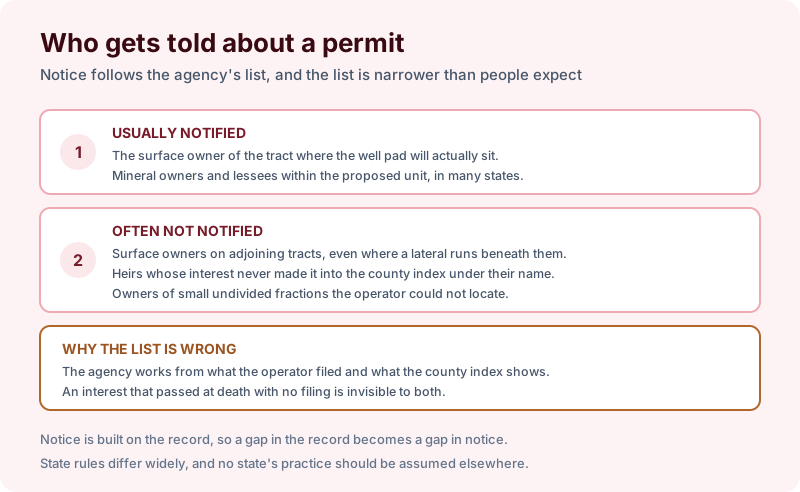
The surface owner of the tract where the pad will physically sit is almost always notified, because that is the party whose land is about to have equipment on it. Mineral owners and lessees inside the proposed unit are notified in many states, though the rules vary considerably in how far the obligation extends.
Who often is not notified is the more useful list. Surface owners on adjoining tracts, even where a horizontal lateral will run beneath them. Heirs whose interest never made it into the county index under their own name. Owners of small undivided fractions the operator searched for and could not locate.
The list is built on the record, so a gap in the record becomes a gap in the notice. An interest that passed at death with nothing filed locally is not on the index, so the operator’s title runsheet does not show it, so the agency’s service list does not include it. Each step is reasonable and the result is an owner nobody told. Where state law allows, an operator in that position may use a compulsory pooling or unknown-owner process instead, covered in pooling and unitization.
What notice lets you do
It is worth being realistic about what notice is actually for, because people frequently expect it to do work it cannot do.
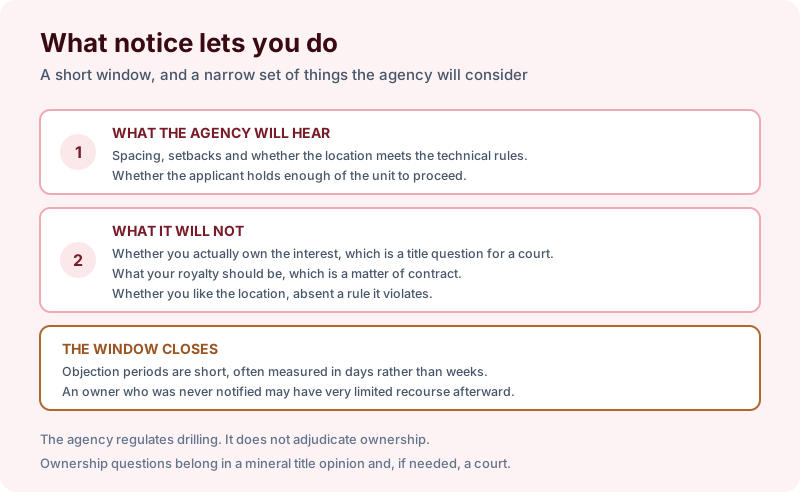
A state oil and gas agency will hear objections about spacing, setbacks and whether the proposed location complies with the technical rules, and about whether the applicant controls enough of the unit to proceed. Those are its statutory job.
It will not hear that you own the interest and somebody else claims it, which is a title question for a court. It will not set your royalty, which is contract. And it will not entertain an objection that amounts to disliking the location absent a rule the location breaks.
The window is short, frequently measured in days rather than weeks, and an owner who was never notified may find the recourse afterward quite limited. The agency regulates drilling. It does not adjudicate ownership, and treating a permit hearing as the place to resolve a title dispute is a common and expensive mistake.
How an owner closes the gap
The practical remedy is unglamorous and it works. Get the interest correctly into the county index under the current owner’s name. Recorded affidavits of heirship where the state recognizes them, probate instruments filed in the county where the land lies rather than only where the decedent died, and corrective deeds resolving fractional confusion all move an invisible interest onto the index that every operator runs.
That is also what makes a royalty check arrive rather than sit in suspense, which is the same underlying problem as unclaimed royalties and suspended funds. One filing solves both.
Scoping the search
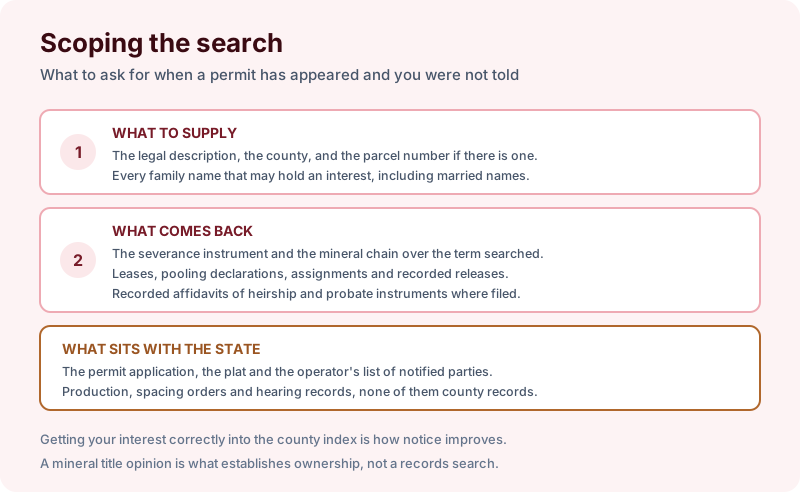
Give us the legal description, the county, the parcel number if there is one, and every family name that may hold an interest including married names. What comes back is the severance instrument, the mineral chain over the term searched, the leases, pooling declarations, assignments and recorded releases, and any recorded affidavits of heirship or probate instruments.
What sits with the state is the permit application, the plat, the operator’s list of notified parties, and the production, spacing and hearing records. None of those are county records, and a search reports what was recorded and indexed in the county over the term searched rather than what the regulator holds. Present mineral ownership remains a legal conclusion, written up as a mineral title opinion by counsel.
The takeaway
Notice is only as good as the index it is built from, and the fastest way to be told about the next well is to make sure the county record says who you are. A search shows you exactly where your interest stands in that record today. Start the order online, or send us the address and the county and we will tell you which term fits and what a search of that scope would and would not cover before anything is ordered.