

· AFX Research
Unclaimed Royalties and Suspended Funds: Where to Look Next
When royalty payments stop or never start, the cause is usually a gap in the recorded chain. Where the money sits, and how the record gets it released.
Two versions of the same call come in regularly. Payments used to arrive and then stopped. Or a relative believes the family should be receiving something and nothing has ever come. In both cases the money is frequently real and sitting somewhere, held back not because anyone is being difficult but because the payor cannot satisfy itself who is entitled to it. That is a title question, and it gets solved with documents. This is the enforcement side of our note on division orders.
Why the money stops
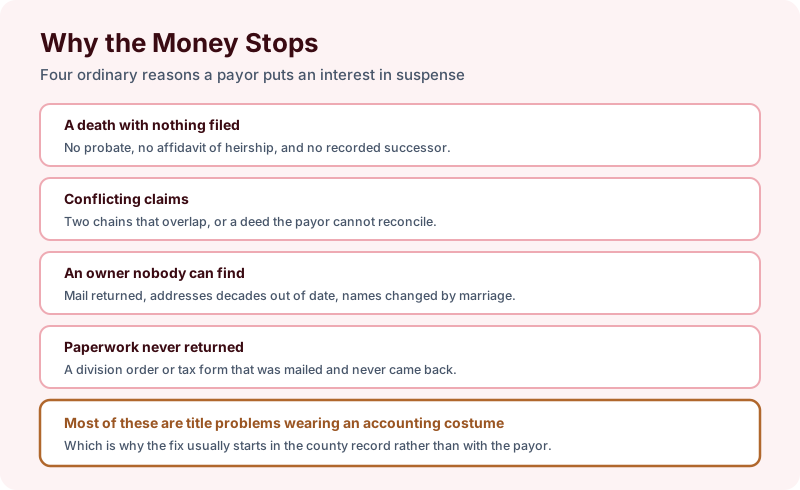
A death with nothing filed is the most common cause by a wide margin. An interest owner dies, no probate is opened in the county where the minerals sit, no affidavit of heirship is recorded, and the payor has no recorded successor to pay. Our note on inherited mineral rights covers how those interests move.
Conflicting claims are second: two chains that overlap, a deed the payor cannot reconcile, or a fraction that does not add up across the owners of a tract.
An owner nobody can find accounts for a great deal of it. Mail returns, addresses go stale over decades, and names change with marriage.
Paperwork never returned is the mundane one. A division order or a tax form was mailed and never came back, and nothing moves until it does.
Almost all of these are title problems wearing an accounting costume, which is why the fix usually starts in the county record rather than with a phone call to the operator.
Where the money actually sits
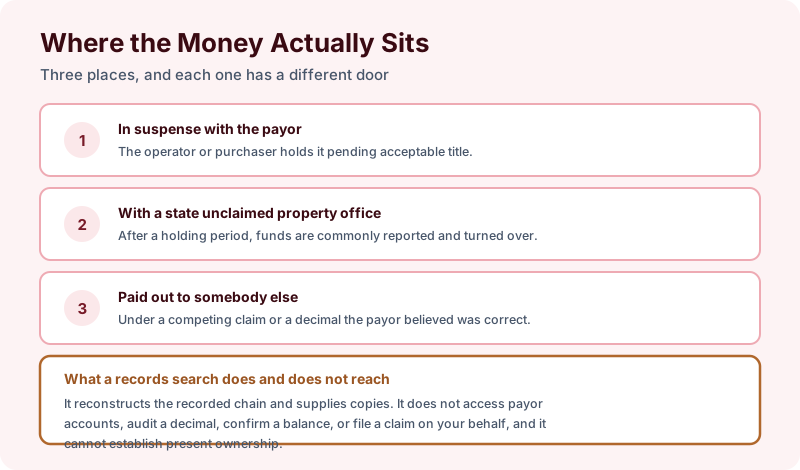
Three places, each with a different door. In suspense with the payor, held pending title the payor considers acceptable. With a state unclaimed property program, since after a holding period funds are commonly reported and turned over to the state, where they can usually be searched by name. Or paid out to someone else, under a competing claim or a decimal the payor believed was correct, which is a harder conversation and one for counsel.
Worth knowing: states generally set deadlines for when payment must begin after first production and some provide interest on amounts held too long, but those rules vary and they interact with whether the payor considers title marketable. That is another reason the record comes first.
One practical caution belongs here. Letters offering to recover unclaimed funds in exchange for a share of them arrive in the same mail as leasing and purchase offers, and some of them are asking for an assignment of the interest rather than a fee for locating money. Read what the enclosed document conveys before signing anything, which is the same discipline our note on selling mineral rights applies to purchase offers.
Closing the gap
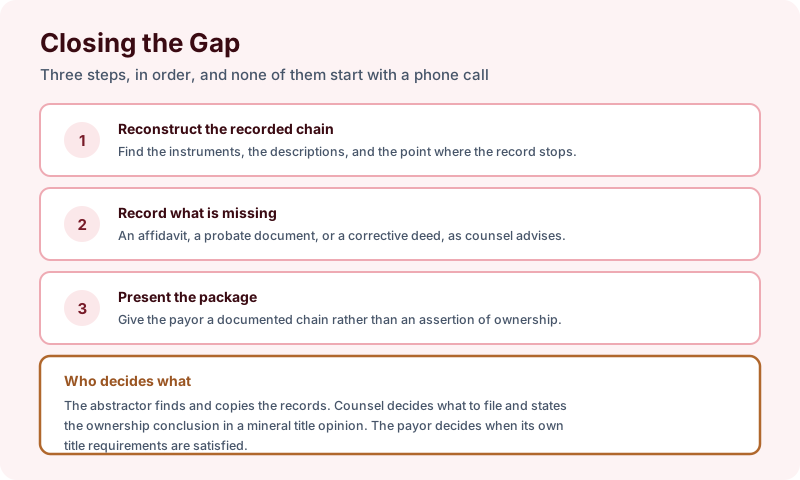
The sequence is the same almost every time. Reconstruct the recorded chain and find the exact point where it stops. Record what is missing, whether that is an affidavit, a probate document, or a corrective deed, as counsel advises. Then present the payor with a documented chain rather than an assertion of ownership, which is what moves a file out of suspense.
The division of labor is worth stating. The abstractor finds and copies the records. Counsel decides what to file and states the ownership conclusion in a mineral title opinion. The payor decides when its own title requirements are met.
And the limits: a search reports what was recorded and indexed over the term searched, as of its date. It does not access payor accounts, audit a decimal, confirm a balance, or file a claim for you. It cannot establish present ownership, it does not report production, and it does not value the interest. Recording practice varies by county, and an empty result reflects the record rather than proving nothing is owed.
Two inputs make this work faster. Names, including every version an owner used and the names of the deceased in the family line, since the chain runs through people rather than parcels. And the county, along with the tract description or the well and unit name from any statement or letter you still have.
The takeaway
If payments stopped or never started, assume a gap in the recorded chain until you have looked, because that is what it usually is. Reconstruct the chain first, then cure it, then go back to the payor. Start the order online, or send us the address and the county and we will tell you which term fits and what a search of that scope would and would not cover before anything is ordered.