

· AFX Research
When an Oil and Gas Lease Expires, and What a Top Lease Does
Primary and secondary terms, the clauses that hold a lease past its expiration, and why an old lease can sit unreleased in the county index for decades.
Mineral owners ask a version of this question constantly. A lease was signed in 2007, nothing was ever drilled, and the paperwork is still showing up in the county index. Is it over? The honest answer is that expiration and release are two different events, and the county record reliably shows only the second one. Understanding the difference is what keeps an owner from signing a new lease on top of an old one without knowing what they are doing.
How a lease term works
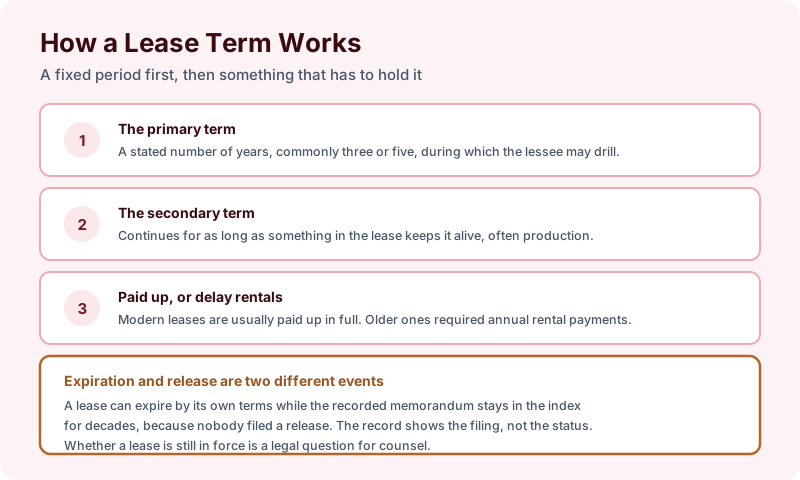
Nearly every oil and gas lease has two terms. The primary term is a fixed number of years, commonly three or five, during which the lessee has the right to drill but no obligation to. The secondary term is open ended and lasts as long as something in the lease keeps it alive.
Payment structure varies with the lease’s age. Modern leases are usually paid up, meaning the bonus covers the whole primary term. Older ones required annual delay rental payments, and a missed payment could terminate the lease on its own terms. Our note on the lease versus the mineral deed covers how different these instruments are from a conveyance.
The consequential point is the last one. A lease can expire by its own terms while the recorded memorandum stays in the index for decades, because nobody ever filed a release. A search shows you what was filed. It does not show you whether the lease is still in force, which is a legal conclusion.
What keeps it alive
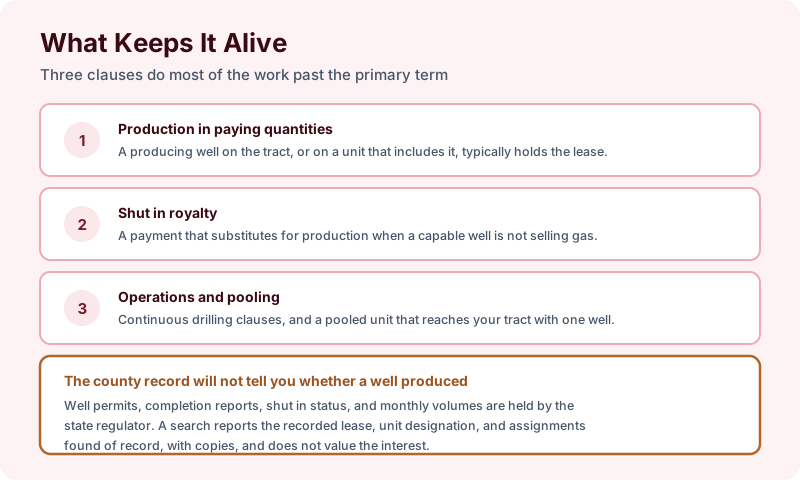
Three clauses do most of the work. Production in paying quantities is the classic one: a producing well on the tract, or on a unit that includes the tract, generally holds the lease indefinitely. Shut in royalty substitutes a payment for production when a well is capable of producing but is not selling, which is common with gas wells waiting on a pipeline connection. Operations and pooling clauses extend a lease through continuous drilling activity, and a pooled unit can hold your acreage with a single well located on someone else’s tract entirely, as our note on pooling and unitization describes.
That last mechanism is why owners are often surprised. The tract looks untouched, and it is, but a unit designation recorded years ago tied it to a well a mile away.
None of the production facts live at the county recorder. Well permits, completion reports, shut in status, and monthly volumes are held by the state oil and gas regulator. A records search reports the recorded lease, any unit designation, the assignment chain, and any release found of record, with copies, and it does not report production or value the interest.
What a top lease is
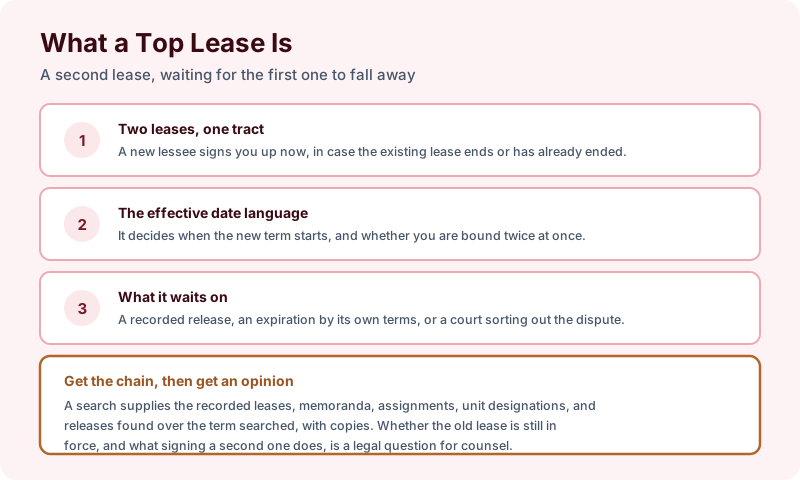
A top lease is a second lease taken on the same tract while an earlier one may still be in force. Companies use them to lock up acreage they expect to become available, and they are entirely ordinary in active areas. What matters to the owner is the drafting. The effective date language decides when the new term begins, and a poorly drafted top lease can leave an owner apparently bound to two lessees at the same time.
Read what the new lease waits on, too: a recorded release, an expiration by the old lease’s own terms, or a dispute that gets sorted out between the companies. Then compare the terms to the offer described in our note on what to check in a leasing letter, because a top lease is negotiable in the same ways a first lease is.
Before signing anything, get the recorded chain. Our search packages run 20, 30, and 50 years, and for lease history the shorter terms are frequently enough, though a tract with an old severance benefits from more depth. Recording practice varies by county, and an empty result is not proof that nothing exists. Present mineral ownership, and whether a lease survives, are matters for a mineral title opinion written by counsel.
The takeaway
An old lease in the index is not proof of a live lease, and silence from an operator is not proof of expiration. Pull the recorded documents, check the state regulator for well and production status, and let your attorney read the two together before you sign a new lease over the top of an old one.
Start the order online, or send us the address and the county and we will tell you which term fits and what a search of that scope would and would not cover before anything is ordered.