

· AFX Research
Well Plugging and Abandonment, What Reaches the Land Record
A plugged well is a closed hole, not a released lease. What the operator files, what the state keeps, and why an old lease with no recorded release still clouds a sale.
Table of Contents
A buyer walks a quarter section and sees a patch of gravel, a slight depression and nothing else. The well that was there came off production in 1994 and was plugged in 1997. That looks like a closed chapter, and in one sense it is, because the hole in the ground is genuinely sealed. In another sense nothing closed at all, because the lease that authorized the well may still be sitting on the county index with no release filed against it, which is a live encumbrance on the land as far as a title examiner is concerned. The distinction is the same one drawn in when an oil and gas lease expires, seen from the operator’s end.
What plugging actually means
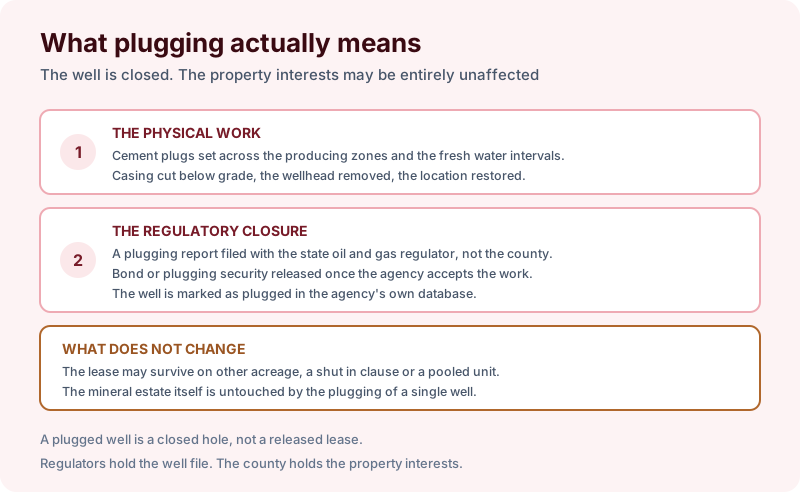
Plugging and abandonment is a defined engineering procedure. Cement plugs are set across the producing zones and across the fresh water intervals, the casing is cut below grade, the wellhead is removed and the location is restored to something like its former contour.
Then a regulatory sequence follows. The operator files a plugging report with the state oil and gas regulator, an inspector signs off, and the plugging bond or other security is released. The well is marked as plugged in the agency’s own database, which is a public record, but it is a state record rather than a county one.
What does not change is the property picture. The mineral estate is entirely untouched by the plugging of one well. The lease may survive on other acreage, under a shut in clause, or because the tract was pooled into a unit that is still producing somewhere else, which is the mechanism described in shut in royalties and when a lease stays alive.
What reaches the land record
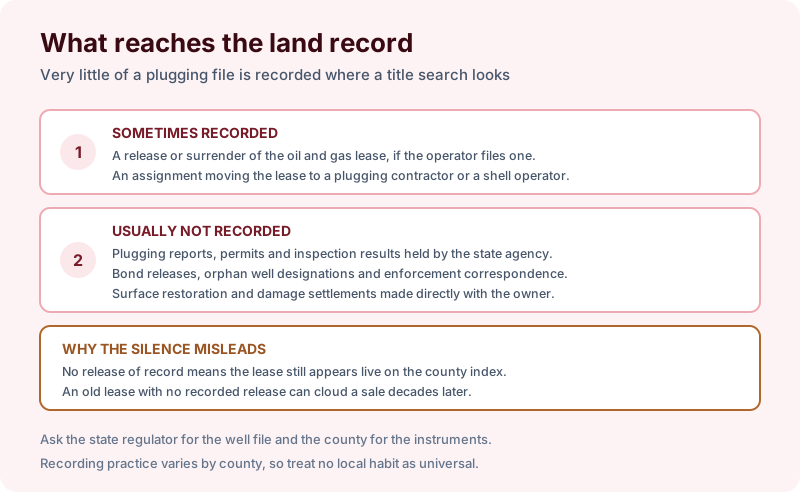
Very little of a plugging file is recorded where a title search looks. Occasionally the operator files a release or surrender of the lease, which is the document that actually clears the county index. Occasionally there is an assignment instead, moving a depleted lease to a plugging contractor or a thinly capitalized successor.
Everything else stays with the regulator. Plugging reports, permits, inspection results, bond releases, orphan well designations and enforcement correspondence. Surface restoration and damage settlements are usually private agreements between the operator and the surface owner, which is the territory covered by surface use agreements and damage payments.
The silence misleads in a specific way. With no recorded release, the lease continues to appear on the county index exactly as it did when it was signed. A landman looking at the abstract forty years later sees a live instrument, and clearing it may require tracking a long dead operator or bringing an action, none of which is quick.
Why this matters to a surface owner as well
Two practical exposures follow. An unplugged or improperly plugged well can become an orphan well if the operator dissolves and the bond falls short, and states differ on what happens next. And a buyer’s lender may treat an unreleased lease as an exception even when everyone agrees the well is dead, because the recorded position and the practical position are not the same thing.
Recording practice varies by county and regulatory practice varies by state, so neither the local habit nor the neighbor’s experience should be treated as universal.
Scoping the search
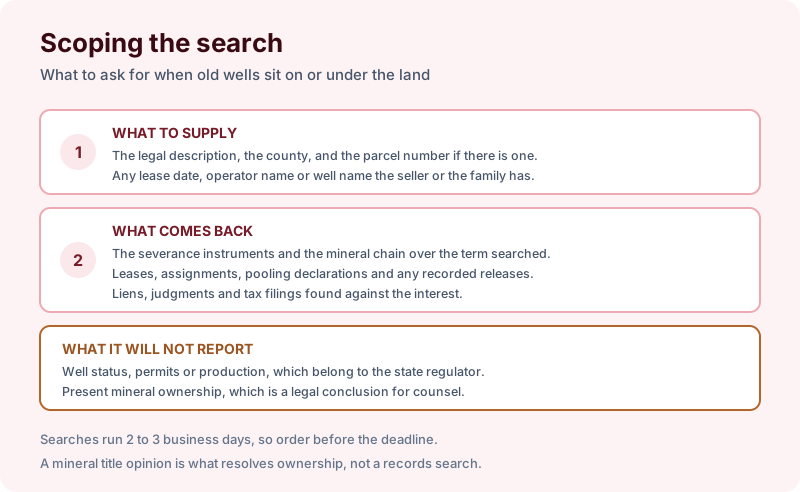
Give us the legal description, the county, the parcel number if there is one, and any lease date, operator name or well name the seller or the family can produce. What comes back is the severance instruments, the mineral chain over the term searched, the leases, assignments, pooling declarations and any recorded releases, along with liens and judgments found against the interest. Our process page explains how that is done.
What the search cannot report is well status, permits or production, all of which belong to the state regulator. It also cannot establish present mineral ownership, because interests pass at death with nothing filed in the county. That remains a legal conclusion, written up as a mineral title opinion by counsel.
The takeaway
Plugging closes a hole and files a report with a state agency. Releasing a lease is a separate act, done at the county, and it is skipped often enough that unreleased leases are one of the most common clouds on rural title. Search the county for the instruments and ask the regulator for the well file, because neither one answers the other’s question. Start the order online, or send us the address and the county and we will tell you which term fits and what a search of that scope would and would not cover before anything is ordered.