

· AFX Research
Shut In Royalties, and When a Quiet Lease Is Still Alive
How a shut in payment keeps an oil and gas lease in force with no production, the conditions the clause carries, and what the county record can and cannot settle.
Table of Contents
Nothing has happened on your land for years. No trucks, no activity, no checks. It is reasonable to assume the lease you or a relative signed has long since expired, and reasonable is not the same as correct. A lease can stay in force for a very long time with nothing visible happening, and the most common mechanism is a shut in royalty.
Understanding it matters because the answer changes what you can do. A live lease means you cannot lease to anyone else, and it is the reason when an oil and gas lease expires is the question owners ask most often.
A payment standing in for production
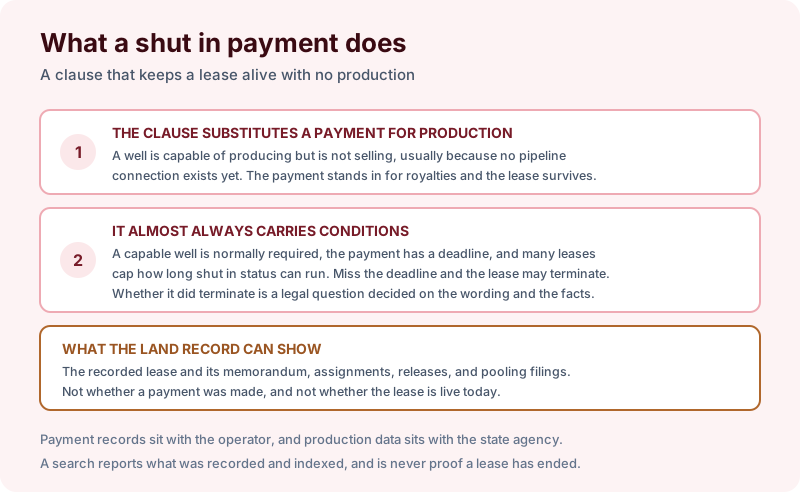
Most leases run for a fixed primary term and then continue only for as long as there is production. A shut in clause creates an exception. Where a well is capable of producing but is not selling, commonly because no pipeline connection exists or prices make sales uneconomic, the operator pays a shut in royalty and the lease is treated as though production were happening.
It is a sensible provision. Drilling a well and finding gas with nowhere to send it is a real situation, and without the clause the operator would lose the lease through no fault of its own. The trade is that the owner receives a modest annual payment instead of royalties, often a figure set decades ago and never adjusted, while the acreage stays committed.
The clause almost always carries conditions. A well capable of production is normally required, which means a dry hole does not qualify. The payment has a deadline, sometimes annual and sometimes tied to the date production stopped. Many leases cap how long shut in status can be maintained. Miss a deadline and the lease may terminate by its own terms, though whether it actually did is a legal question decided on the exact wording and the facts.
Why a quiet lease may not be a dead one
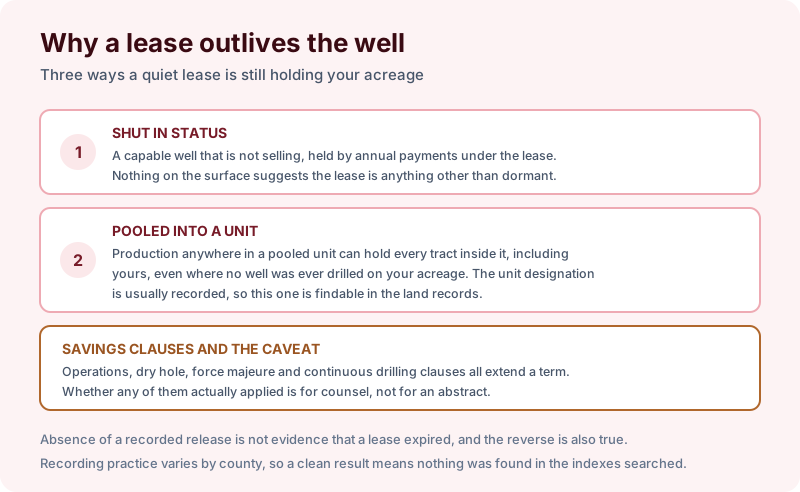
Shut in status is one route. Pooling is the other, and it surprises people more. Production anywhere inside a pooled unit can hold every tract in that unit, including yours, even where no well was ever drilled on your acreage and nothing was ever visible from your road. Unit designations are usually recorded, so this one is findable, and it is worked through in pooling and unitization explained. What you receive in that situation is a share proportional to how much of the unit your tract represents, which is a separate calculation from the royalty fraction in the lease itself.
Then there are the savings clauses. Operations clauses, dry hole clauses, force majeure, and continuous drilling provisions each extend a term in defined circumstances. Whether any of them actually applied on your lease is not something an abstract decides.
Where the answers actually live
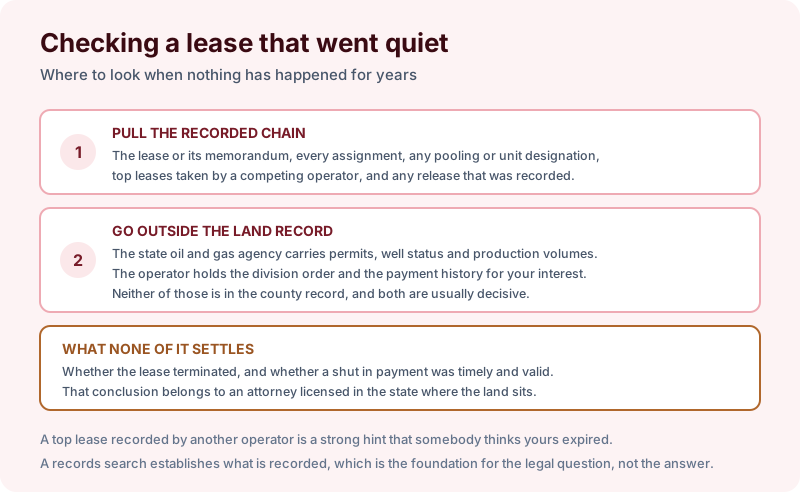
Start with the recorded chain. The lease or its memorandum, every assignment, any pooling or unit designation, and any release that was filed. A top lease recorded by a competing operator is worth noticing, since it usually means somebody else believes your lease has expired.
Then go outside the county. The state oil and gas agency carries permits, well status, and production volumes. The operator holds the division order and the payment history for your interest, which is the only place a shut in payment is documented at all. Neither of those is in the land records, and both are frequently decisive. That division of sources is the same one described in division orders explained.
What none of it settles is whether the lease terminated. Absence of a recorded release is not evidence that it expired, and the presence of an old lease is not evidence that it survives. That conclusion belongs to an attorney licensed in the state where the land sits, working from the recorded facts.
The takeaway
Silence on the surface tells you nothing about the status of a lease. Pull the recorded chain, check the state agency for well status, ask the operator for the payment history, and read the shut in clause before assuming anything. Order the search today, or send us the legal description and the county and we will tell you what a search of that scope would and would not cover before anything is ordered.