

· AFX Research
Water Rights Versus Mineral Rights: Two Different Estates
Water and minerals are severed separately, held under different law, and recorded in different offices. What the county shows about each, and what it cannot.
Table of Contents
The question arrives in two forms. A rural buyer wants to know whether the 1952 mineral reservation took the water too, and a surface owner facing a drilling operation wants to know whether the operator can pump from their well. Both are reasonable, and both run into the same structural fact: water and minerals are separate estates governed by separate bodies of law, and only one of them is primarily a land records question. Our note on mineral rights versus surface rights covers the vertical split; this is the part of that split that the deed records handle badly.
Two estates, two bodies of law
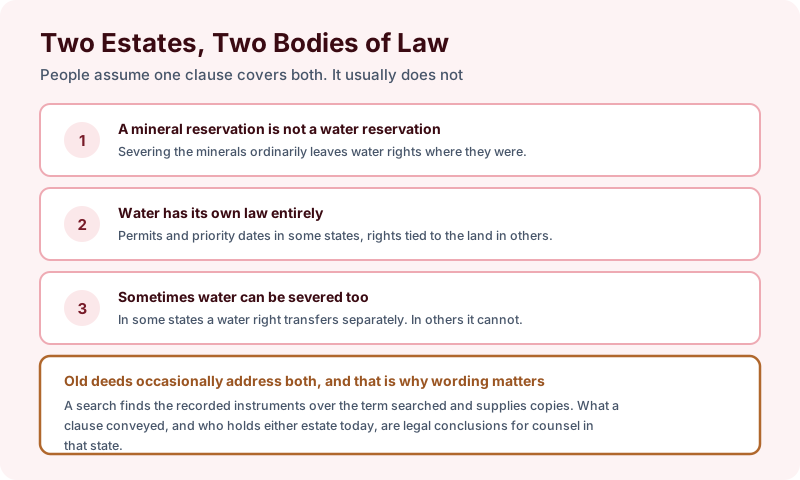
Start with the general position. Severing the minerals ordinarily leaves water rights where they were, because water is not usually treated as a mineral. A reservation of oil, gas, and other minerals is not a reservation of the water.
Water then follows its own rules. Some states run permit systems with priority dates and defined quantities, administered by a state engineer or a water resources department. Others tie rights to ownership of land adjoining a watercourse, with no permit for many uses. Groundwater and surface water are frequently handled under different regimes within the same state.
In some states a water right can be severed from the land and transferred on its own, which makes it a distinct asset that a buyer of the surface may or may not be receiving. In others that is not possible. Old deeds occasionally address water explicitly, which is exactly why the wording of the instrument matters more than any general rule, the point our note on reservation clauses in old deeds develops.
Three offices hold the answer
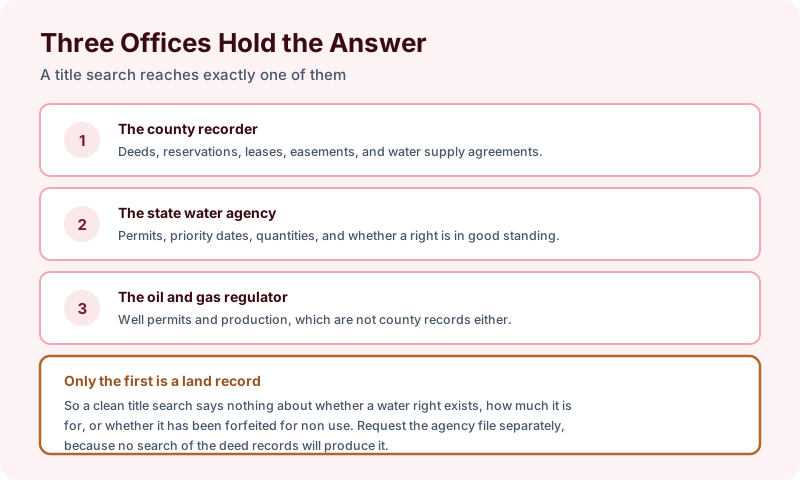
The county recorder holds deeds, reservations, leases, easements, and water supply agreements. A search finds those, with copies.
The state water agency holds the permit file: the priority date, the authorized quantity, the point of diversion, and whether the right is in good standing. That is the authoritative record for a water right in a permit state, and it is not a land record.
The oil and gas regulator holds well permits and production, which are not county records either, and which a mineral search does not report.
The consequence is worth stating plainly. A clean title search tells you nothing about whether a water right exists, how much it is for, or whether it has been forfeited for non use. That request goes to the agency, separately.
Where the two actually collide
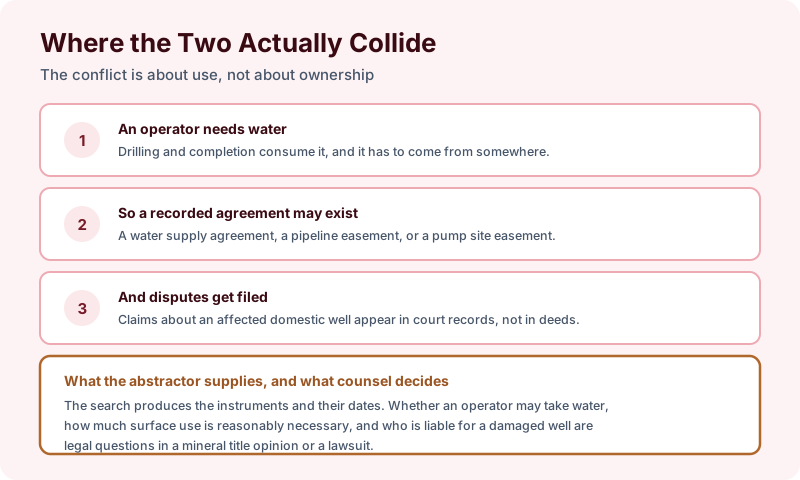
The real conflict is about use rather than ownership. Drilling and completion consume water, so an operator has to source it, and that produces recorded instruments worth searching for: a water supply agreement with a landowner, a pipeline easement, or a pump site easement. Those are the same family of documents covered in our note on surface use agreements and damage payments.
Disputes about a domestic well affected by nearby operations show up in court records rather than in deeds, and that is a separate index.
What a search shows and does not
The search reports what was recorded and indexed over the term searched, with copies: the severing instrument and its exact wording, any recorded conveyance or reservation of water, water supply agreements, pipeline and pump easements, and oil and gas leases. Choose a search term long enough to reach the severance, because the clause that governs is usually the oldest document in the file. Turnaround is 2 to 3 business days.
It cannot establish who owns the minerals today, since interests pass at death with nothing filed locally and the last grantee named is not necessarily the present owner. Present ownership is a legal conclusion belonging in a mineral title opinion written by counsel. It does not report the water permit file, the priority date, the quantity, or whether a right remains valid, and it does not report well permits or production. Recording practice varies by county, so a clean result reflects the record rather than proving nothing exists.
The takeaway
Treat these as two separate searches with two separate deliverables: the county for what the deeds say, and the state agency for whether a water right exists and is alive. Start the order online, or send us the address and the county and we will tell you which term fits and what a search of that scope would and would not cover before anything is ordered.