

· AFX Research
Uranium and Radioactive Mineral Rights, and What to Check
Most reservations predate the industry entirely, so whether uranium went with the minerals turns on a sentence written before anybody wanted the substance.
Table of Contents
A landowner in the Four Corners region is approached about uranium rights under acreage her family has held since 1919. The minerals were reserved out in a 1921 deed using the standard formula of the period, which names oil and gas and then says “and other minerals.” Whether that clause captured uranium is a live question, and the answer differs across state lines in ways that have nothing to do with geology. This is the same interpretive problem as salt and potash rights, applied to a substance that had no commercial value when the words were written.
Whether uranium went with the minerals
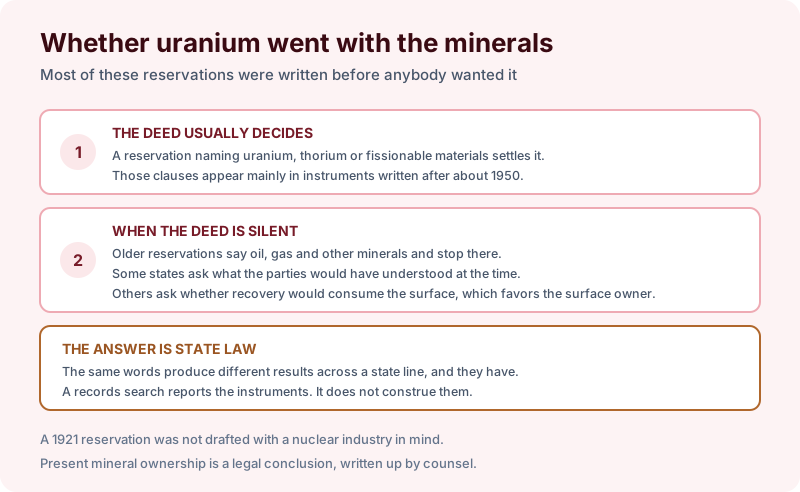
Where the instrument names uranium, thorium or fissionable materials specifically, the question is settled. Those clauses exist, and they appear almost entirely in instruments written after about 1950, when the Atomic Energy Commission procurement program made the substance worth reserving.
Before that, reservations use the standard formula and stop. When the deed is silent, states resolve it along familiar lines. Some apply an ordinary meaning test, asking what the parties would have understood “minerals” to include at the time, which on a 1921 deed is a genuinely difficult historical question. Others apply a surface destruction test, treating a substance whose recovery would consume the surface as belonging to the surface owner, which matters because much uranium production was open pit.
The same words therefore produce different owners across a state line. That is not a drafting failure; it is a century of courts answering a question the parties never contemplated. A records search reports the instruments and quotes the language. It does not construe them, which is the division described in a mineral title opinion versus a records search.
What it leaves behind
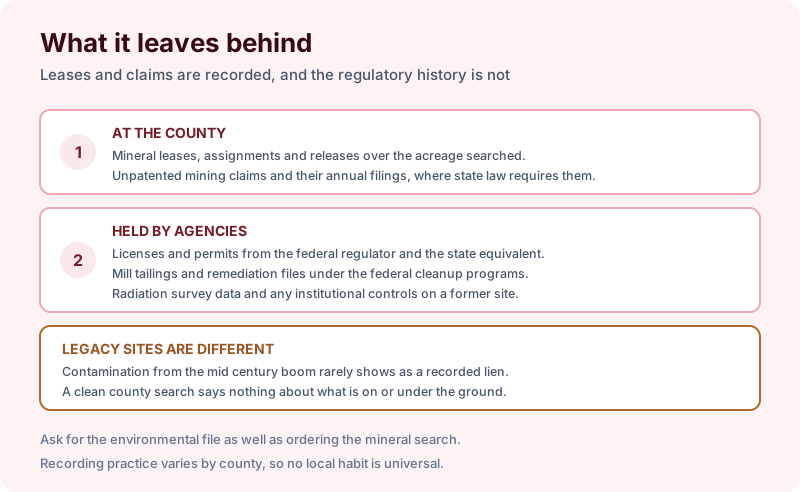
At the county you will find mineral leases, assignments and releases over the acreage, and unpatented mining claims with their annual filings where state law requires them to be recorded locally.
Held by agencies is everything operational. Licenses and permits from the federal regulator and its state counterpart. Mill tailings and remediation files under the federal cleanup programs, which cover a great many sites across the Colorado Plateau. Radiation survey data and any institutional controls placed on a former site.
Legacy sites are the part that catches people out. Contamination from the mid-century boom rarely appears as a recorded lien, because the cleanup was federally funded under programs that did not routinely record against the land. A clean county search says nothing whatever about what is on or under the ground, and on a former mill or mine site that gap is the whole question.
Why the surface owner has more to think about than royalties
Because open pit and in situ recovery both affect the surface directly, and because a former site carries obligations that outlive the mining.
In situ leach recovery injects solution through the ore body and recovers it, which makes it a groundwater matter as much as a mining one, and the restoration standard is a regulatory question rather than a lease term. Where a site has institutional controls, those can restrict excavation, water use and construction permanently, which is the kind of burden set out in mineral rights under a conservation easement. Surface damages and access are negotiated separately, as in any split estate.
Scoping the search
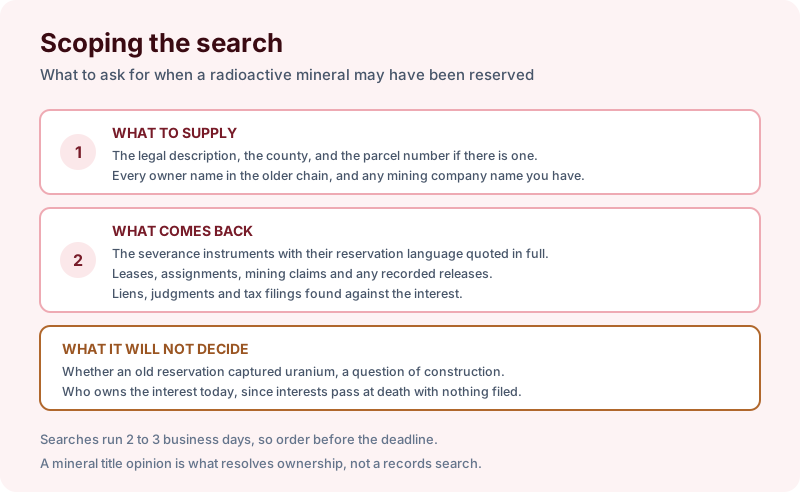
Give us the legal description, the county, the parcel number if there is one, every owner name in the older chain, and any mining company name you have. What comes back is the severance instruments with the reservation language quoted in full, the leases, assignments, mining claims and recorded releases, and the liens and judgments found against the interest. Our search packages set out the available terms.
What it will not decide is whether an old reservation captured uranium, or who owns the interest today, since interests pass at death with nothing filed in the county. Present ownership is a legal conclusion set out in a mineral title opinion.
The takeaway
The sentence that decides this was written before the industry existed, and the state you are standing in decides how to read it. Get the exact reservation language in front of counsel, and ask the agencies for the environmental file separately, because the county will not have it. Start the order online, or send us the address and the county and we will tell you which term fits and what a search of that scope would and would not cover before anything is ordered.