

· AFX Research
Mineral Rights Under a Conservation Easement, What Applies
A conservation easement binds the person who granted it. Whether it reaches the minerals turns on one date, and that date usually sits a century back in the chain.
Conserved land raises a question people ask in both directions. A mineral owner wants to know whether an easement recorded over the surface has stopped them developing. A buyer of conserved land wants to know whether somebody can still drill on it. The answer turns on a single fact, and the fact is a date rather than a doctrine. The underlying split is the one in mineral rights versus surface rights.
Minerals under conserved land
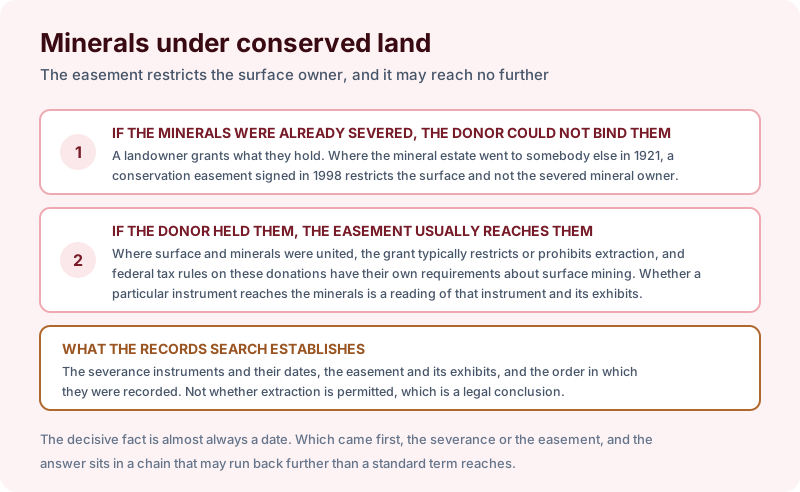
A landowner can only grant what they hold. Where the mineral estate was severed and conveyed away in 1921, a conservation easement signed in 1998 restricts the surface owner who signed it and does not bind the mineral owner who was not a party to anything.
Where the surface and the minerals were still united in the donor, the grant usually does restrict or prohibit extraction, and the federal tax rules governing these donations carry their own requirements about surface mining. Whether a particular instrument reaches the minerals is a reading of that instrument and its exhibits rather than a general rule.
So the decisive fact is almost always which came first. A records search establishes the severance instruments and their dates, the easement and its exhibits, and the order in which everything was recorded. Whether extraction is permitted is a legal conclusion drawn from that.
What it actually restricts
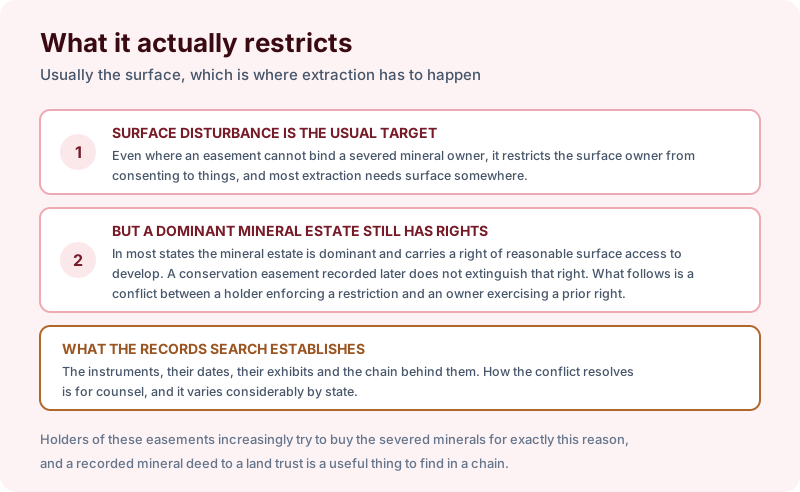
Even where an easement cannot bind a severed mineral owner directly, it restricts the surface owner from consenting to things, and most extraction needs surface somewhere. That indirect effect is real and it is frequently the practical answer.
Against it sits the dominant estate doctrine. In most states the mineral estate carries a right of reasonable surface access to develop, and a conservation easement recorded later does not extinguish a right that already existed. What follows is a conflict between a holder trying to enforce a restriction and an owner exercising a prior right, and how that resolves varies considerably by state.
One consequence worth knowing is that holders of these easements increasingly try to buy the severed minerals outright for exactly this reason. A recorded mineral deed running to a land trust is a useful thing to find in a chain, because it usually means somebody has already closed the gap.
There is a middle case that turns up often on family land. The donor held the minerals but had already leased them, so an oil and gas lease was outstanding when the easement was granted. The lease is a prior interest and the easement takes subject to it, which means the restriction bites only once that lease expires or is released. Establishing whether it ever did is ordinary chain work, and it is the question in when an oil and gas lease expires.
What to search
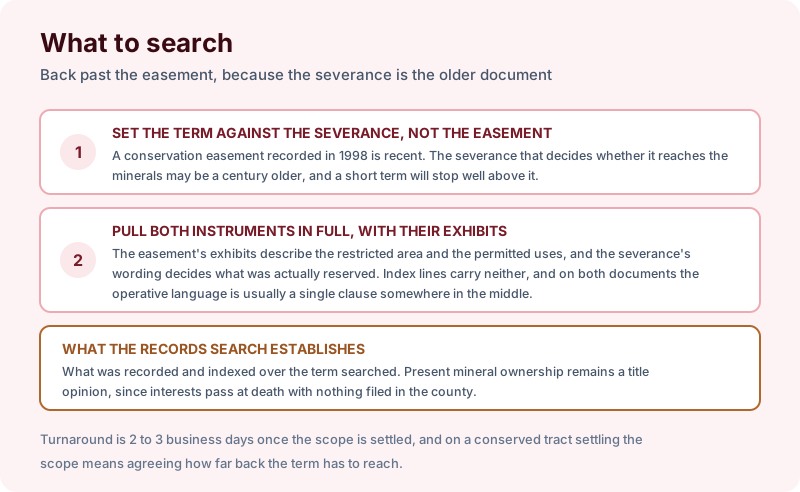
Set the term against the severance rather than the easement. An easement recorded in 1998 is recent, and the severance that decides whether it reaches the minerals may be a century older. A twenty year search will stop well above the document that answers the question, which is the usual failure with reservation clauses in old deeds.
Pull both instruments in full with their exhibits. The easement’s exhibits describe the restricted area and the permitted uses, and the severance’s wording decides what was actually reserved. On both documents the operative language is usually one clause somewhere in the middle, and an index line carries neither.
Then the standard limits. The search reports what was recorded and indexed over the term searched. Present mineral ownership remains a title opinion, because interests pass at death with nothing filed in the county. Turnaround is 2 to 3 business days once the scope is settled, and settling it here means agreeing how far back the term has to reach.
The takeaway
Start from the dates rather than from the easement. Find the severance, find the easement, and establish which was recorded first, because that ordering does most of the work. Pull both with their exhibits, and put the question of what the restriction actually permits in front of counsel in that state. Start the order online, or send us the address and the county and we will tell you which term fits and what a search of that scope would and would not cover before anything is ordered.