

· AFX Research
Division Orders Explained: What Signing One Does and Does Not Do
A division order tells an operator how to pay you. What the form actually is, what the decimal is built on, and the language worth reading before you sign it.
A well starts producing and a form arrives in the mail. It has your name on it, a decimal with a great many digits, a request for a taxpayer number, and a signature line. Signing it is how the checks start, and signing it without reading it is how people end up disputing a number after money has already moved. A division order is a smaller document than a lease, and it deserves a careful look for reasons of its own. This is the payment stage of the process our note on pooling and unitization describes.
What a division order is
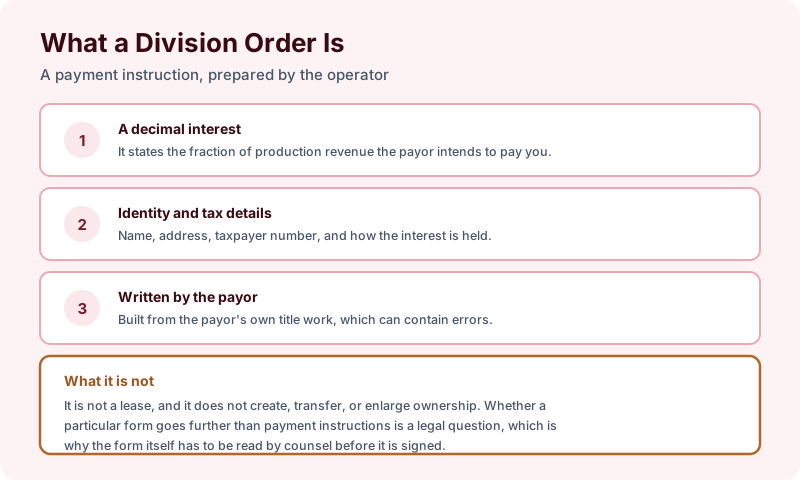
It states a decimal. The fraction of revenue from a well or unit that the payor intends to send you, carried to six or eight places.
It confirms identity and tax details. Name, address, taxpayer identification number, and how the interest is held, which is the administrative half of the form.
It is written by the payor. The operator or purchaser prepares it from their own title work, which was done by someone who has never met your family and who may be working from an incomplete chain. Errors are ordinary rather than exceptional.
And here is what it is not. A division order is not a lease, and in the general case it does not create, transfer, or enlarge ownership. Some forms, though, include ratification, warranty, or lease amendment language that reaches further than payment instructions, and whether a particular form does is a legal question for counsel in that state. That is the reason to read the actual document rather than assume the category.
Before you sign it
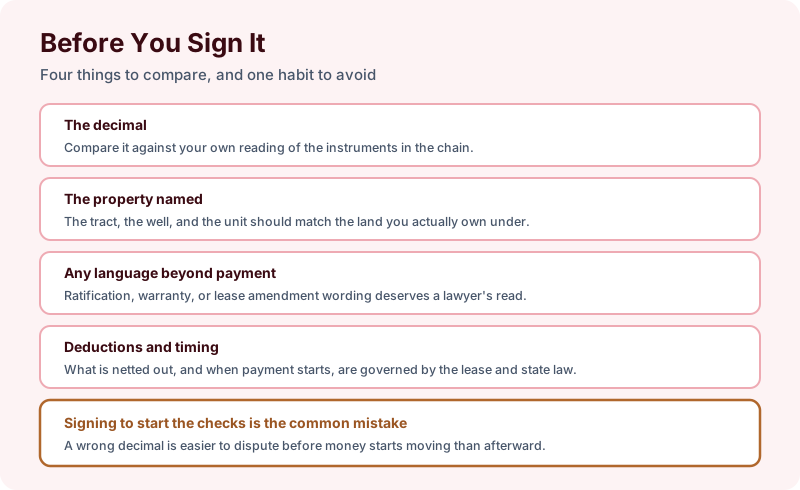
Compare four things. The decimal, against your own reading of the instruments in the chain, which is where net mineral acres come in. The property named, since the tract, well, and unit should correspond to land you actually own minerals under. Any language beyond payment terms. And the deductions and payment timing, which are governed by the lease and by state law rather than by the form.
The common mistake is signing in order to start the process and planning to check afterward. A decimal is easier to question before payments begin than after a year of statements has established a pattern, and asking the payor for the title basis of the decimal is a normal request rather than an aggressive one.
It is also worth knowing that payment can be suspended for reasons that have nothing to do with the form. A gap in the recorded chain, an unprobated estate, or conflicting claims will put an interest in suspense until the paperwork catches up.
A practical note on timing. States generally set deadlines for when payment has to begin after first production, and some provide for interest on amounts held too long, but those rules vary and they interact with whether the payor has what it considers marketable title. Knowing that the delay may be a title question rather than an accounting one changes who you call about it.
What the record contributes
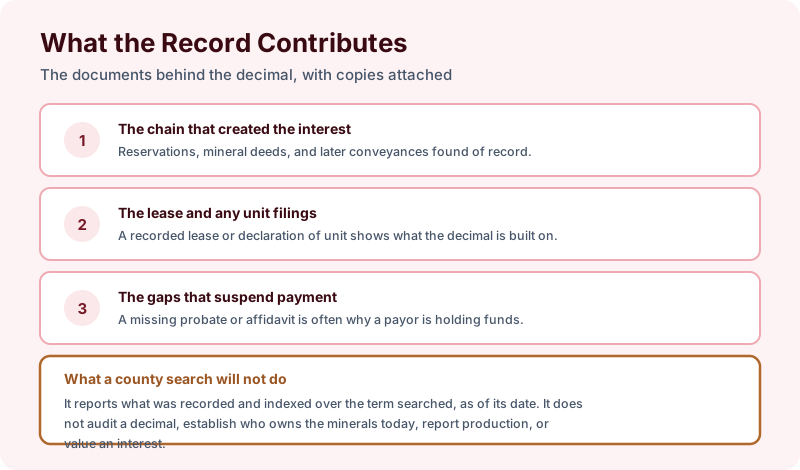
A county search gives you the documents behind the decimal. The reservations, mineral deeds, and later conveyances that created and divided the interest. Any recorded lease, memorandum, or declaration of unit that shows what the payment is calculated on. And the gaps, which are frequently the explanation for a suspended payment and the thing that has to be cured before funds are released.
What a search will not do is audit the decimal. It reports what was recorded and indexed in that county over the term searched, as of its date, with copies attached. It cannot establish who owns the minerals today, since interests pass at death with nothing filed locally, and present ownership is a legal conclusion in a mineral title opinion. It does not report wells or production, which sit with state regulators, and it does not value an interest. Recording practice varies by county, and an empty result reflects the record rather than proving anything.
The takeaway
Treat the division order as a proposal about your interest rather than a statement of fact about it. Gather the recorded chain, have counsel read the form and the decimal against it, and then sign. Start the order online, or send us the address and the county and we will tell you which term fits and what a search of that scope would and would not cover before anything is ordered.