

· AFX Research
Term Mineral Interests, and How to Tell When One Has Ended
A term interest reverts automatically when it runs out and nobody files anything. The index keeps showing the holder for decades, and the record misleads by omission.
Table of Contents
A 1958 deed conveys the minerals under a quarter section for twenty years, and so long thereafter as oil or gas is produced. A searcher in 2026 finds that deed, finds no termination, and reports an outstanding mineral interest in the name of a grantee who has been dead for forty years. The interest may have expired in 1978 and the record will never say so, because a term interest ends by its own terms and nothing gets filed when it does. This is the quietest misreading in mineral title work.
What a term interest is
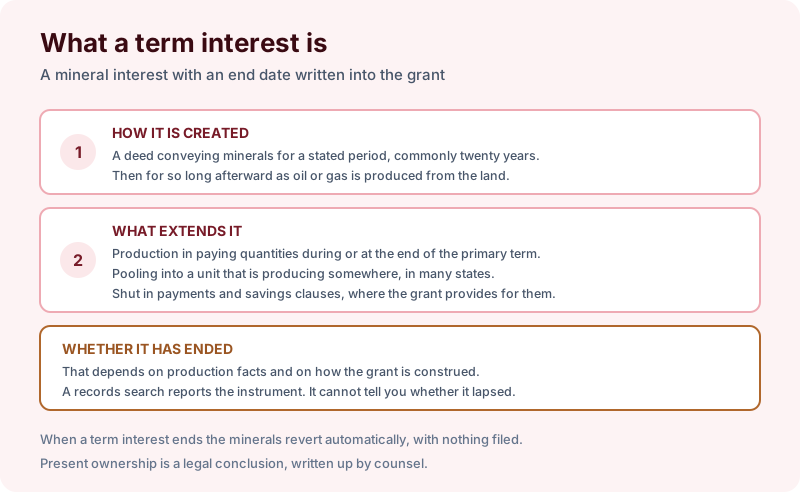
It is created by a deed conveying minerals for a stated period, commonly twenty years, and then for so long afterward as oil or gas is produced from the land. The first part is the primary term and the second is the extension, and the drafting of that second clause is where the whole question lives.
What extends it is production in paying quantities during or at the end of the primary term. In many states, pooling into a unit that is producing somewhere will do it, which is the mechanism in pooling and unitization. Shut in payments and savings clauses extend it where the grant provides for them, which is the same analysis as in shut in royalties.
Whether it has ended depends on production facts and on how the grant is construed together. A records search produces the instrument. It cannot tell you whether the interest lapsed, because that is partly a question about what happened at a wellhead and partly a question of law.
Why a lapse is invisible
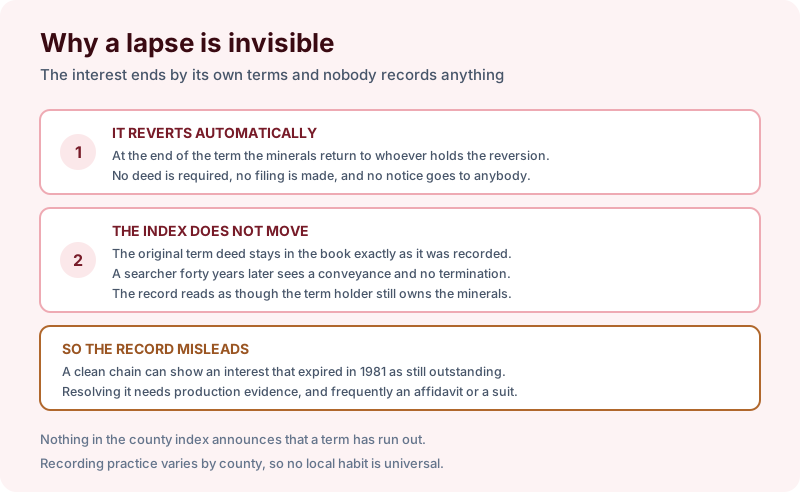
It reverts automatically. At the end of the term the minerals return to whoever holds the reversionary interest, no deed is required, no filing is made, and nobody is notified. The reversion was retained by the original grantor and has itself passed down through however many estates since.
The index does not move. The original term deed stays in the book exactly as recorded, a searcher decades later sees a conveyance and no termination, and the record reads as though the term holder still owns the minerals.
So the record misleads by omission. A clean chain can show an interest that expired in 1981 as still outstanding, and resolving it requires production evidence plus frequently a recorded affidavit or a suit. That is the same curative route as in quiet title actions and mineral interests.
How the question actually gets answered
Three sources, read together.
The grant language, because the extension clause determines what would have kept it alive. A clause requiring production from the land itself is narrower than one accepting production from a unit including the land.
The production history, held by the state regulator rather than the county, showing whether a well produced and when it stopped.
The leasing record, because a term holder who leased during the primary term and whose lessee never drilled has a different position from one whose lessee produced for eleven years.
Where the answer is that the term ended, the practical step is usually a recorded affidavit of non-production, which does not change the law and does put the facts in the chain where the next searcher will see them.
Scoping the search
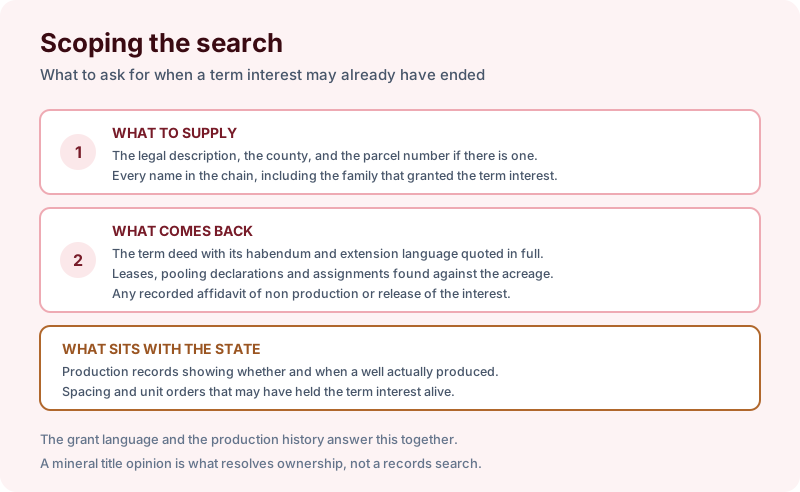
Give us the legal description, the county, the parcel number if there is one, and every name in the chain including the family that granted the term interest. What comes back is the term deed with its habendum and extension language quoted in full, the leases, pooling declarations and assignments found against the acreage, and any recorded affidavit of non production or release.
What sits with the state is the production record showing whether and when a well actually produced, and the spacing and unit orders that may have held the interest alive. Present mineral ownership remains a legal conclusion set out in a mineral title opinion written by counsel.
The takeaway
Term interests are the one case where the record reliably overstates what is outstanding, because the ending event is silent. Read the extension clause, pull the production history, and treat an unterminated term deed as a question rather than an answer. Start the order online, or send us the legal description and the county and we will tell you which term fits and what a search of that scope would and would not cover before anything is ordered.