

· AFX Research
Quiet Title Actions and Mineral Interests: What the Record Gives
A quiet title suit runs on a list of everyone with a possible claim, and the record is where that list starts. What a search delivers, and what still has to be traced.
Table of Contents
Severed minerals accumulate uncertainty in a way surface title rarely does. An interest splits among five children, then among their children, and after eighty years nobody can say with confidence who owns what. Add a tax deed, a dormancy statute, or a reservation whose wording is ambiguous, and eventually somebody wants a court to settle it rather than another opinion. That is what a quiet title action is for, and the record work in front of it determines whether the result is worth having. The starting condition is usually the fragmentation described in our note on inherited mineral rights.
What the action needs first
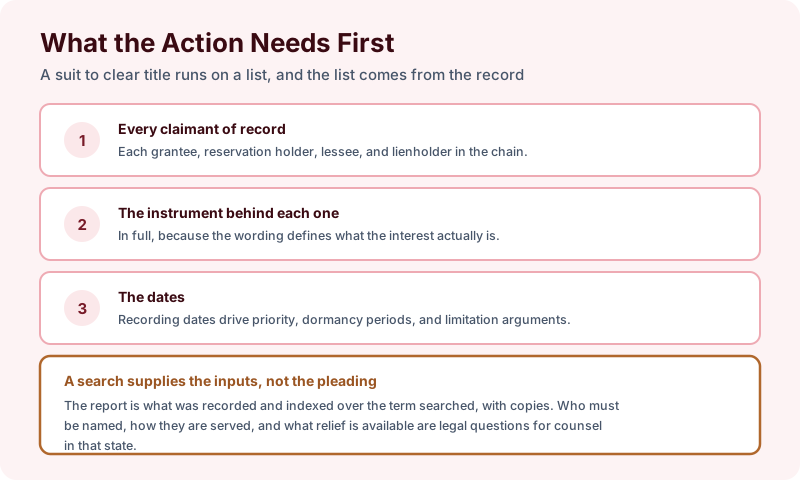
Three inputs, all of them from the record. Every claimant of record, meaning each grantee, reservation holder, lessee, and lienholder appearing anywhere in the chain, not merely the current apparent owner. The instrument behind each one, in full, because the wording is what defines the interest and a summary will not support a pleading. And the dates, since recording dates drive priority, dormancy periods, and any limitation argument.
The deliverable a search produces is exactly that: names, documents, and dates. Who must be named as a defendant, how they are served, and what relief is available are legal questions for counsel in that state.
Where the record stops
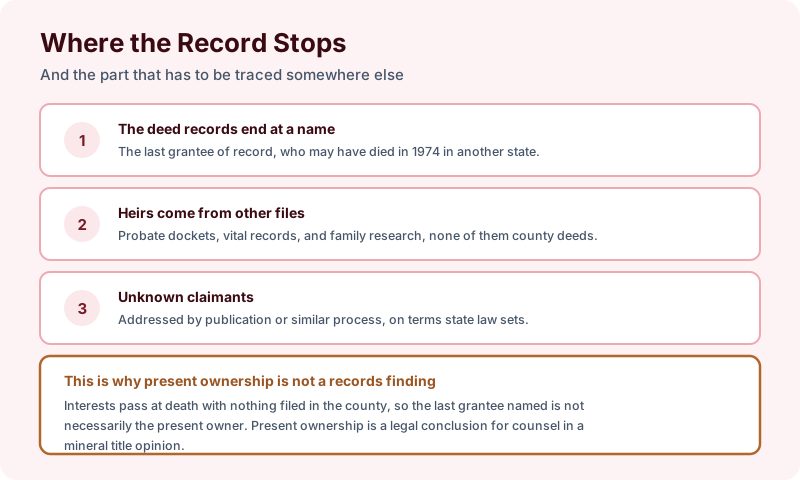
The deed records end at a name. That person may have died in 1974 in a state nobody in the family lives in now, and the county where the minerals sit has no filing about it.
From there the work moves to other files entirely: probate dockets, vital records, and family research. None of those are county deed records, and none of them come out of a title search. Where claimants genuinely cannot be identified, state law provides for addressing unknown parties by publication or a similar process, on terms that vary.
This is the same limit we state on every one of these files. Interests pass at death with nothing filed locally, so the last grantee named is not necessarily the present owner, and present ownership is a legal conclusion belonging in a mineral title opinion written by counsel.
What the judgment becomes
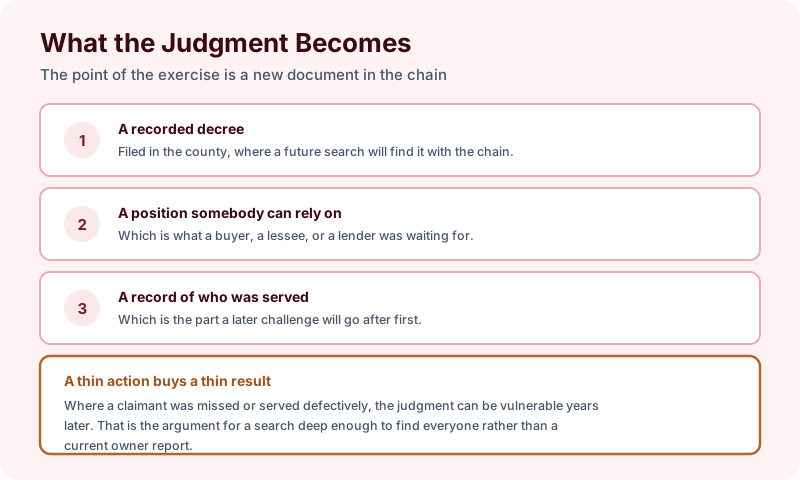
A decree recorded in the county, where every future search will find it sitting with the chain. A position a buyer, a lessee, or a lender can actually rely on. And a record of who was served, which is the part any later challenge will go after first.
That last item is the reason to be thorough at the start. Where a claimant was missed or served defectively, the judgment can be vulnerable years later, which is a poor outcome after paying for the action. A search deep enough to find everyone costs a fraction of the suit. Two neighboring situations often prompt one of these actions: a lapsed or dormant interest, covered in our note on dormant mineral acts, and a tax deed in the chain, covered in our note on tax sales and severed mineral interests.
What a search shows and does not
The search reports what was recorded and indexed over the term searched, with copies: the severing instrument and its wording, every conveyance and reservation after it, leases, royalty deeds, pooling designations, liens, tax deeds, and any prior decree. Choose a search term that reaches the severance, because a short search returns the recent instruments and misses the parties who matter. Turnaround is 2 to 3 business days.
It cannot identify heirs, confirm who is living, establish present ownership, or tell you whether service was adequate. It does not reach probate or court files, and it does not report well permits or production, which state regulators hold rather than recorders. Recording practice varies by county, so a clean result reflects the record rather than proving no claimant exists.
The takeaway
Before counsel drafts anything, get a search deep enough to name every claimant of record with the instrument and date behind each one, because the quality of that list is what the judgment will eventually rest on. Start the order online, or send us the address and the county and we will tell you which term fits and what a search of that scope would and would not cover before anything is ordered.