

· AFX Research
Tax Sales and Severed Mineral Interests: What Survives a Sale
A tax sale of the surface does not automatically carry severed minerals, and a separately assessed mineral interest can be sold on its own. What the record shows.
Table of Contents
Two versions of this question come in, and they are not the same question. The first is from a buyer at a tax sale who wants to know whether the minerals came with the surface. The second is from an heir who has just discovered that a family mineral interest was sold years ago for taxes nobody knew were owed. Both turn on the same fact, which is what the county actually assessed and what the deed actually recited, and both usually require reading documents rather than accepting a summary. Where the interest was inherited, our note on inherited mineral rights covers the chain problem that sits underneath.
Two sales, three outcomes
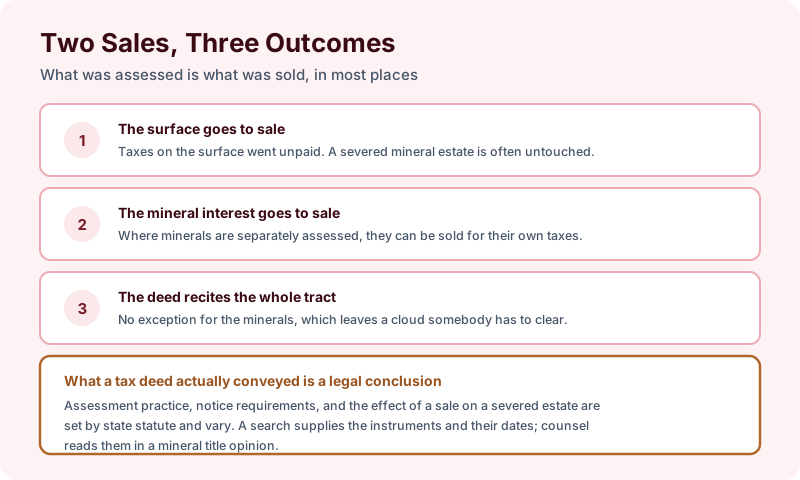
Where a mineral estate has been severed, the surface and the minerals are separate property, and in most places the taxing authority treats them that way. A sale for delinquent surface taxes then reaches the surface, and a severed mineral estate is frequently untouched by it.
Where minerals are separately assessed, they can go to sale on their own account, which is the scenario heirs almost never see coming. Whether minerals are assessed separately at all, and on what basis, varies by state and sometimes by county, and in some places an unleased and unproducing interest is not assessed at all.
The third outcome is the one that generates litigation. A tax deed reciting the entire tract, with no exception for a previously severed mineral estate, does not necessarily convey minerals the county never taxed, and it does leave a cloud on the record that somebody eventually has to clear. What such a deed actually conveyed is a legal conclusion, not a records finding.
Where the paper trail runs
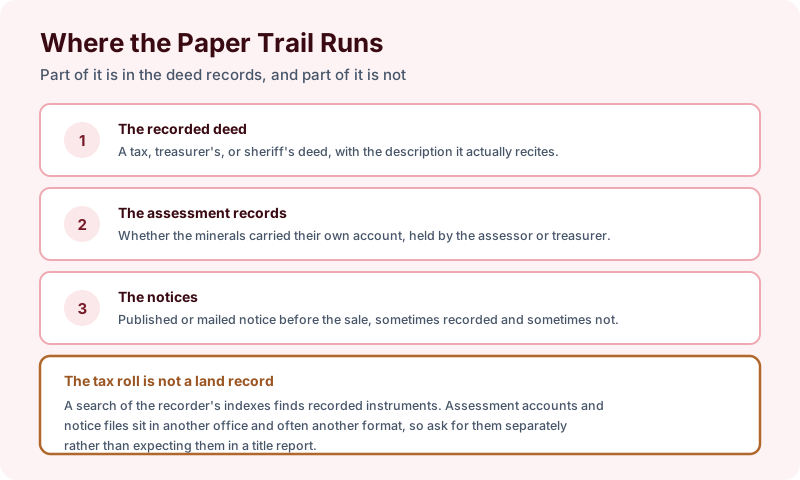
Part of the trail is in the deed records and part of it is not, which is the practical trap here.
The recorded portion is the tax, treasurer’s, or sheriff’s deed, along with any certificate of purchase and any redemption instrument, and a search finds those with the description each one recites. The unrecorded portion is the assessment side: whether the minerals carried their own account, what was billed, and to whom notice was sent. That lives with the assessor or the treasurer, in another office and often another format.
Ask for the assessment history separately rather than expecting it inside a title report. A report that says a tax deed exists is only half of what a decision needs.
Why heirs are the ones who lose
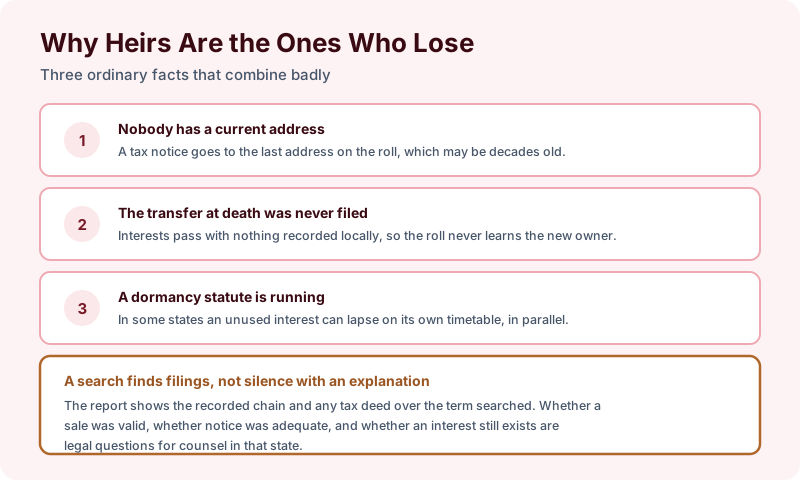
Three ordinary facts combine badly. The tax notice goes to the last address on the roll. The transfer at death was never recorded in the county, so the roll never learned who the new owner was. And in some states a dormancy statute is running in parallel, which our note on dormant mineral acts covers in detail.
None of those requires anyone to act in bad faith. It is simply what happens when an interest is held by people who live somewhere else, produces nothing, and generates a small bill sent to a house that was sold in 1971.
What a search shows and does not
A search reports what was recorded and indexed over the term searched, with copies: the severing instrument and its exact wording, the chain after it, any tax deed or certificate, redemptions, and later conveyances. Choose a search term long enough to reach the severance, since the wording of that old clause frames everything, a point our note on reservation clauses in old deeds develops. Turnaround is 2 to 3 business days.
It cannot tell you whether a tax sale was valid, whether notice satisfied the statute, or whether an interest still exists today. It cannot establish present ownership, because interests pass at death with nothing filed locally, so the last grantee named is not necessarily the present owner. Present ownership is a legal conclusion belonging in a mineral title opinion written by counsel. The search also does not report well permits or production, which state regulators hold, and it does not value anything. Recording practice varies by county, so a clean result reflects the record rather than proving nothing happened.
The takeaway
Get the severing instrument, the tax deed, and the assessment history together, because each one answers a different piece and none of them answers alone. Start the order online, or send us the address and the county and we will tell you which term fits and what a search of that scope would and would not cover before anything is ordered.