

· AFX Research
Dormant Mineral Acts: When a Severed Interest Can Lapse
Some states let an unused mineral interest be reunited with the surface. What usually counts as use, what the record shows, and why the conclusion is a legal one.
Table of Contents
A severed mineral interest is ordinarily permanent. It was carved out of the surface estate by an instrument, it passes to heirs, and it stays severed however many generations go by without anyone touching it. A number of states, though, have decided that permanence has limits, and have enacted statutes allowing a mineral interest that has gone unused for long enough to be extinguished or reunited with the surface. If the severance itself is what you are trying to establish, begin with mineral rights and surface rights.
Why these statutes exist
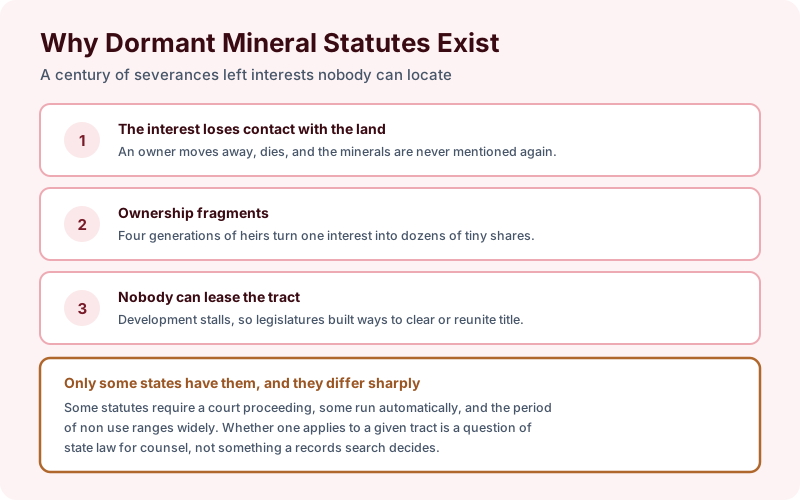
The problem they were written to solve is real. A mineral interest severed in 1912 passes to children who moved away, then to grandchildren who never knew it existed, and after four generations it may be split among dozens of people scattered across the country, none of whom can be located. Nobody can lease the tract, because nobody can sign for the whole of it, and the surface owner has an asset under their feet that no one can use.
Dormant mineral statutes attack that in different ways. Some require a court proceeding, some operate through a recorded notice and an opportunity to respond, and some run more automatically once a defined period of non use has passed. The period varies widely from state to state, and plenty of states have no such statute at all.
What usually counts as use
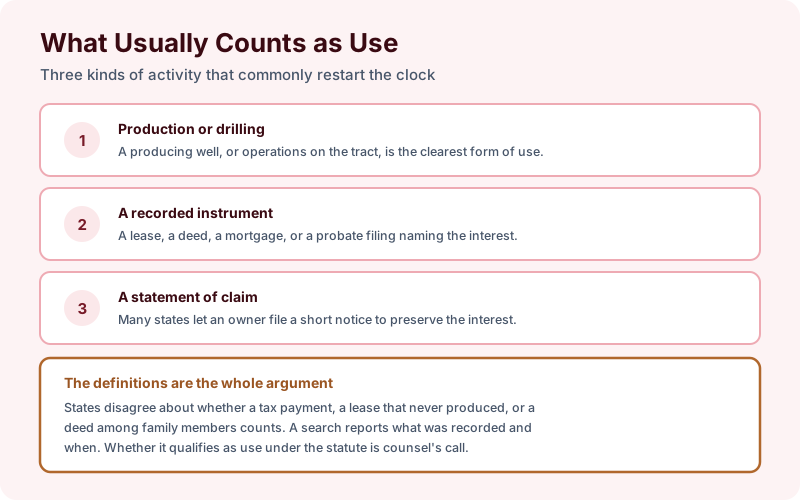
Three categories show up in most statutes. Actual production or drilling on the tract is the clearest. A recorded instrument naming the interest, such as a lease, a deed, a mortgage, or a probate filing, commonly qualifies. And many states let an owner file a short statement of claim whose only purpose is to preserve the interest, which is the cheapest protection available to anyone who knows they hold minerals they are not developing.
The definitions are where the arguments happen. States disagree about whether paying taxes on the interest counts, whether a lease that was signed but never produced counts, and whether a deed between family members that recites the minerals is enough. A records search can tell you what was filed and when. Whether a particular filing satisfies a particular statute is a legal question.
What this means from each side
For a surface owner, a dormant statute may offer a path to clear the mineral estate and make the tract leasable, which is generally worth a conversation with a lawyer in that state before anything else. The path almost always requires notice, and defective notice is the most common reason these proceedings fail.
For an heir or a mineral owner, the exposure runs the other way. An interest you did not know about can be lost, quietly, while nothing arrives in the mail because the last address in the record is fifty years old. If you have learned that your family holds minerals somewhere, that is the moment to find out whether anything has been recorded recently and whether a preservation filing is available.
What the search can tell you
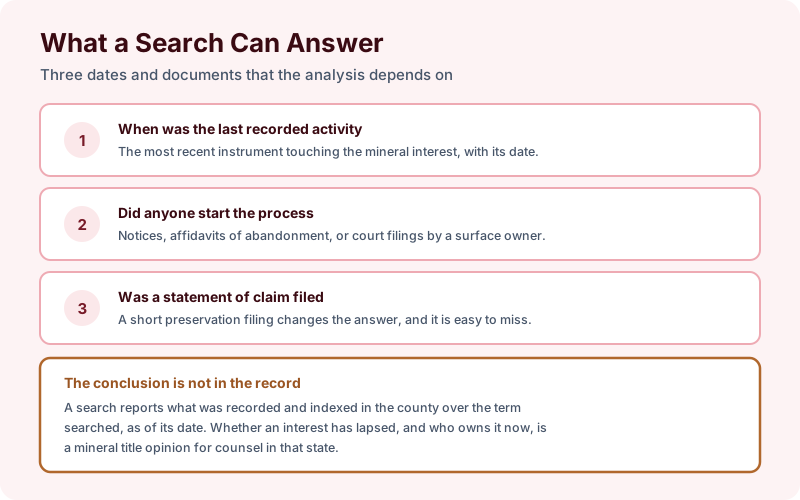
The records work answers three concrete questions: the date and nature of the most recent instrument touching the mineral interest, whether any notice, affidavit of abandonment, or court filing has been recorded by a surface owner, and whether a statement of claim is on file. Those three facts are what any analysis under a dormant statute is built on, and the dates are the part people get wrong from memory.
A search reports what was recorded and indexed in the county over the term searched, as of its date, with copies of the instruments attached. It cannot establish who owns the interest today, since interests pass at death with nothing filed locally, and it does not report wells or production, which sit with state regulators rather than the recorder. Whether an interest has lapsed is a mineral title opinion for counsel. Our search terms let the depth match the tract, and turnaround is 2 to 3 business days.
The takeaway
If you hold minerals you are not using, find out what the record says about them and when it last said anything, because in some states silence has a cost. Start the order online, or send us the address and the county and we will tell you which term fits and what a search of that scope would and would not cover before anything is ordered.