

· AFX Research
Spousal Joinder on a Mineral Deed or an Oil and Gas Lease
A spouse who owns nothing on paper may still have to sign. Where that requirement comes from, why the mineral estate is treated differently, and how the gap gets cured.
Table of Contents
A landman sends a lease and asks that your husband or wife sign it too, and the interest came to you from your grandmother. It is a reasonable thing to query, and the answer is genuinely different from one state to the next. It is also the sort of defect that survives quietly in a chain for forty years, the way an unrecorded severance does in reservation clauses in old deeds, until somebody finally examines it.
Who has to sign it
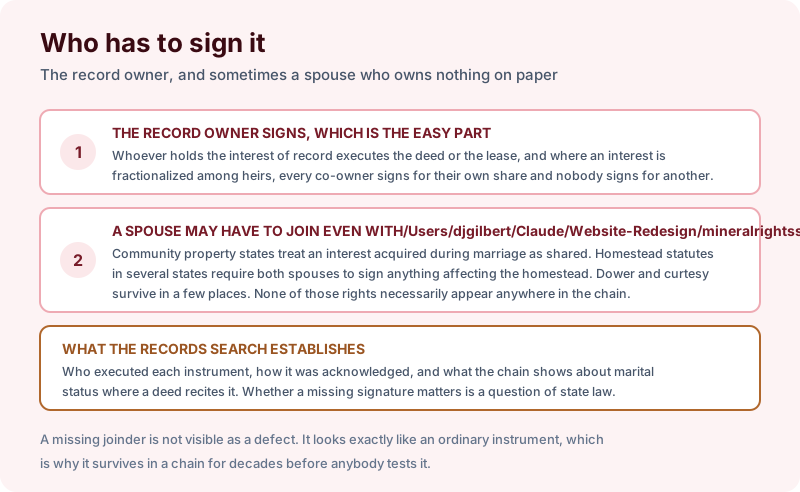
The record owner signs, which is the easy part. Where an interest has been fractionalized among heirs, every co-owner signs for their own share and nobody signs for anybody else, which is why net mineral acres and fractional interests matter so much to how many signatures a lease actually needs.
A spouse may have to join even while owning nothing on paper. Three separate doctrines can produce that. Community property rules treat an interest acquired during marriage as shared regardless of whose name appears on the deed. Homestead statutes in several states require both spouses to sign anything affecting the homestead. Dower and curtesy survive in a handful of places. None of those rights necessarily appear anywhere in the chain of title.
A records search establishes who executed each instrument, how it was acknowledged, and what the chain says about marital status where a deed recites it. Whether a missing signature actually matters is a question of state law. The awkward part is that a missing joinder is not visible as a defect. It looks exactly like an ordinary instrument, which is why it survives so long before anybody tests it.
Where the requirement comes from
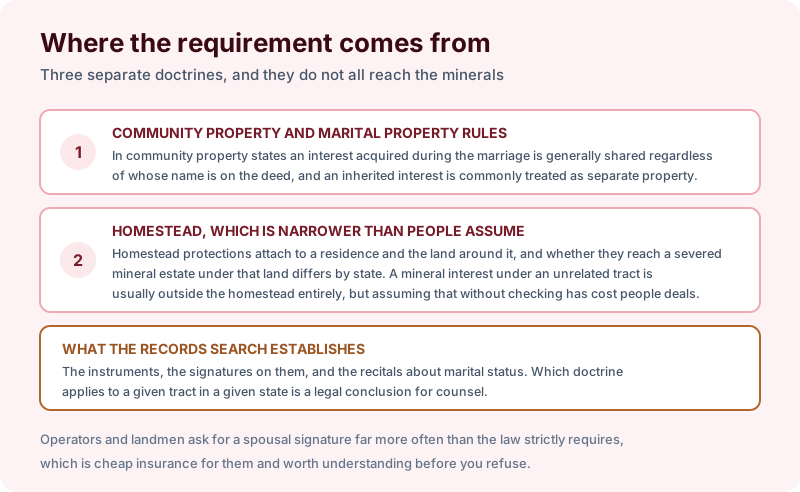
In community property states an interest acquired during the marriage is generally shared no matter whose name is on the instrument, while an interest received by gift or inheritance is commonly separate property. That distinction does a great deal of work on mineral interests specifically, because so many of them are inherited.
Homestead is narrower than people assume and it is where the mineral estate gets interesting. Homestead protections attach to a residence and the land around it, and whether they reach a severed mineral estate beneath that land differs by state. A mineral interest under an unrelated tract fifty miles away is usually outside the homestead entirely. Usually is doing real work in that sentence, and assuming it without checking has cost people deals.
What the search supplies is the instruments, the signatures on them and the recitals about marital status. Which doctrine applies to a given tract in a given state is a legal conclusion for counsel. Worth knowing as a practical matter is that operators and landmen ask for a spousal signature considerably more often than the law strictly requires. It is cheap insurance for them, and understanding that is useful before deciding to refuse.
Checking it in the chain
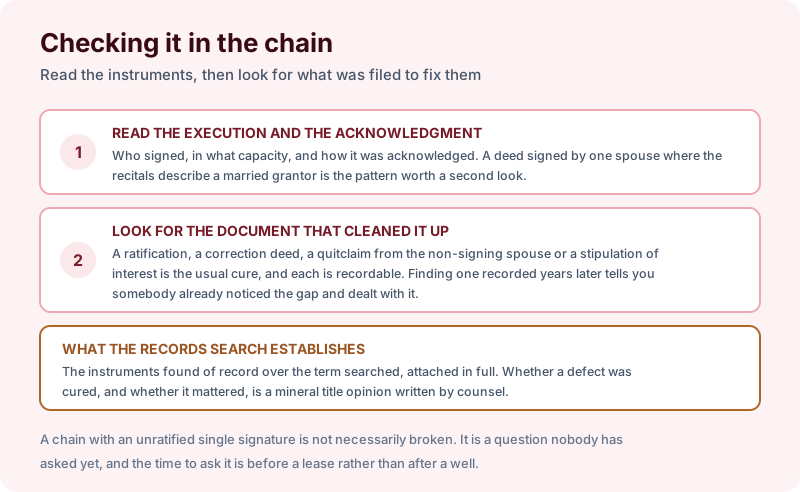
Read the execution and the acknowledgment rather than the index line. Who signed, in what capacity, and how it was acknowledged. A deed signed by one spouse where the recitals describe a married grantor is the pattern worth a second look.
Then look for the document that cleaned it up, because frequently there is one. A ratification, a correction deed, a quitclaim from the non-signing spouse, or a stipulation of interest is the usual cure, and each of those is recordable. Finding one recorded years after the original instrument tells you somebody already noticed the gap and dealt with it, which is genuinely useful information.
The search reports the instruments found of record over the term searched, attached in full. Whether a defect was cured, and whether it mattered in the first place, is a mineral title opinion. Recording practice varies by county, so never read one county’s habits as a rule.
The takeaway
If you are being asked to get a signature you do not think is required, the question is worth a short conversation rather than a refusal, and the answer depends on the state and on how you acquired the interest. If you are examining a chain, an unratified single signature is not necessarily a break. It is a question nobody has asked yet, and the time to ask it is before a lease rather than after a well. Start the order online, or send us the address and the county and we will tell you which term fits and what a search of that scope would and would not cover before anything is ordered.