

· AFX Research
Post Production Costs, and Why Your Royalty Check Shrank
What gets deducted between the wellhead and the sale, why two states can read the same lease differently, and which documents actually answer the question.
Table of Contents
A royalty owner reads the lease, sees one eighth, does the arithmetic against the production figures, and finds the check is meaningfully smaller than expected. The usual explanation is not fraud and not an error. It is post production costs, and whether they may be charged against your share is one of the most litigated questions in oil and gas law.
What happens between the well and the sale
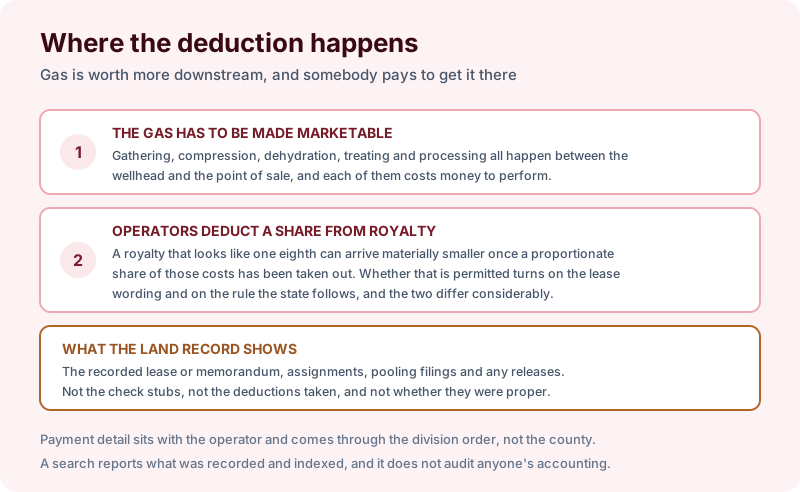
Gas does not come out of the ground ready to sell. It gets gathered, compressed, dehydrated, treated to remove impurities, and frequently processed to strip out liquids. Each of those steps costs money, and each of them happens downstream of the wellhead.
Operators commonly deduct a proportionate share of that expense from royalty, on the reasoning that the royalty owner benefits from the higher downstream price and should contribute to the cost of getting there. Whether that reasoning holds for your lease is the whole question.
The scale can be substantial. On dry gas in a basin far from market, deductions have in some cases consumed most of the gross value, leaving a royalty owner with a fraction of what the headline fraction suggested. On oil the issue arises less often, because crude is usually marketable closer to the wellhead.
Two rules, two different answers
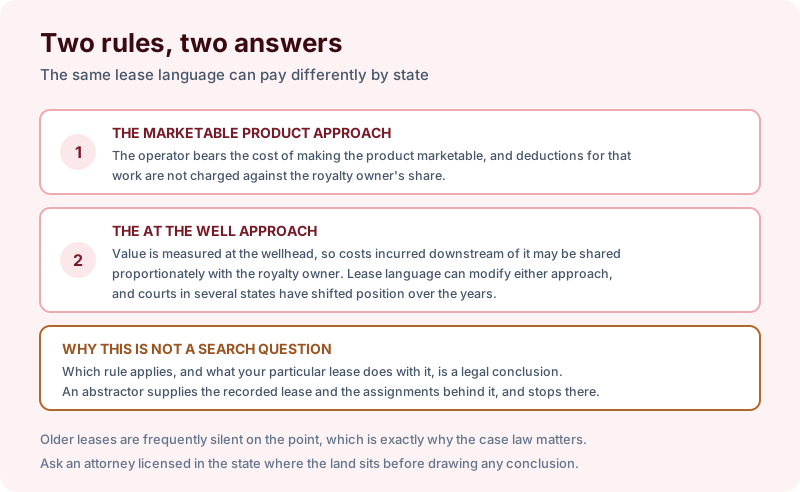
States divide broadly into two camps. Under a marketable product approach, the operator bears the cost of making the product marketable and those costs are not charged to the royalty owner. Under an at the well approach, value is measured at the wellhead, so costs incurred beyond it may be shared proportionately.
Lease language can modify either position, and courts in several states have moved over the years. Older leases are frequently silent on the point, which is precisely why the case law ends up doing the work. None of this is a records question, and an abstractor who offered you a view on it would be overstepping. What the search supplies is the recorded lease and the chain of assignments behind it, which is what an attorney needs to start from.
Where the answers actually live
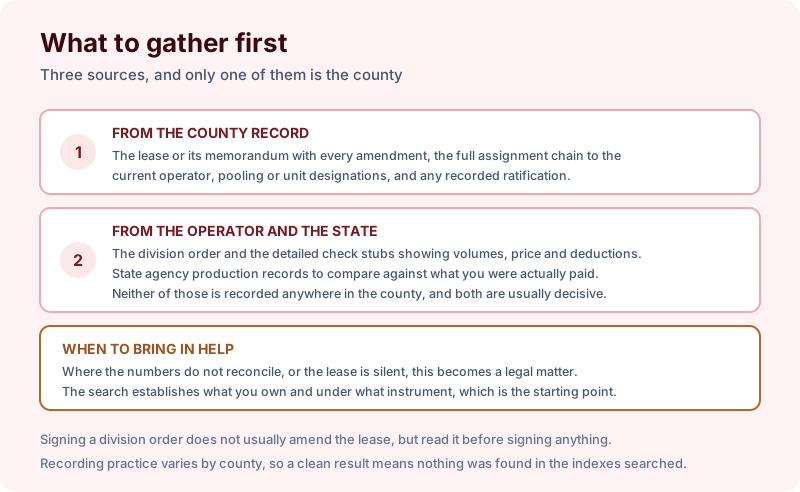
Three sources, and only one is the county.
From the land records, the lease or its memorandum with every amendment, the full assignment chain to whoever operates today, any pooling or unit designation, and any recorded ratification. That last one matters, because a ratification signed decades ago may have adopted terms the original lease did not contain. The same is true of an amendment signed by a predecessor in your family, which binds you whether or not anyone ever mentioned it.
From the operator, the division order and the detailed check stubs showing volumes, price received, and each deduction taken. From the state agency, production records you can compare against what you were actually paid. Neither of those is recorded anywhere, and both are usually decisive. The relationship between them is set out in division orders explained.
A note on division orders. Signing one does not usually amend the lease, and in several states a statute says so explicitly. It is still worth reading before signing, because the language occasionally attempts more than it should.
What the record cannot do
It cannot tell you what was deducted, whether the deduction was proper, or whether the price used was arm’s length. It establishes what you own, under which instrument, and in what fraction, which is the foundation and not the answer. Getting the fraction right matters on its own account, since an error there produces a discrepancy that looks exactly like an improper deduction, and the arithmetic behind it is covered in net mineral acres and fractional interests. Recording practice varies by county, and a clean result means nothing was found in the indexes searched.
Where the numbers do not reconcile, the next step is an attorney licensed in the state where the land sits, working from the lease the search produced. That sequencing is the same one described in mineral leasing letter, what to check.
The takeaway
The deduction is usually lawful somewhere and unlawful somewhere else, and the difference is the lease wording read against that state’s rule. Get the recorded lease and every amendment and ratification, get the check stubs from the operator, compare against the state’s production data, and then ask a lawyer. Order the search today, or send us the legal description and the county and we will tell you what a search of that scope would and would not cover before anything is ordered.