

· AFX Research
Partitioning a Fractional Mineral Interest: The Options
Co-owners who cannot agree have limited routes, and dividing a mineral estate in kind is rarely one of them. What the record establishes about the parties first.
Table of Contents
Fractional mineral ownership works until somebody wants out. One cousin wants to lease, another refuses on principle, a third needs cash, and a fourth cannot be found at all. At that point the question becomes whether the interest can be split up, and the answer is more constrained than most co-owners expect, because a mineral estate is a poor candidate for physical division. The arithmetic behind all of this is the subject of our note on net mineral acres and fractional interests, and it is worth understanding before anybody files anything.
Two kinds of partition
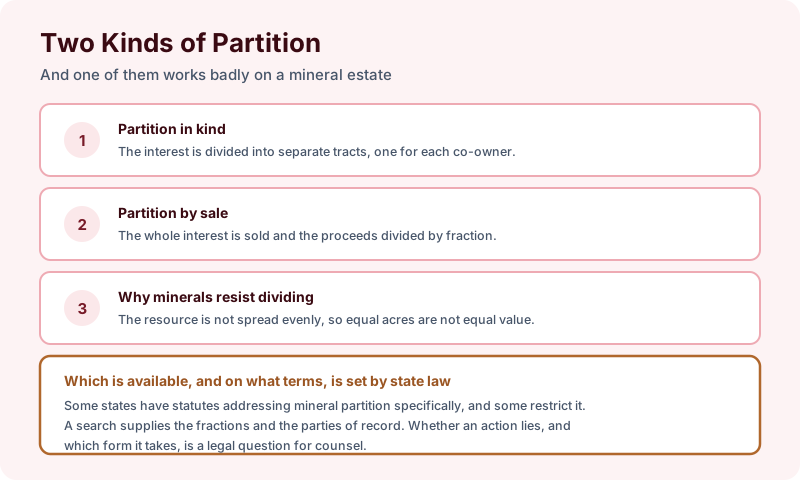
Partition in kind divides the interest into separate tracts, one for each co-owner. Partition by sale sells the whole interest and divides the proceeds by fraction.
The reason the first works badly here is geological. Oil, gas, and hard minerals are not distributed evenly under a tract, so equal acres are not equal value, and a division that looks fair on a plat can hand one owner everything and another nothing. That is why partition by sale is the more common outcome on mineral estates.
Which remedy is available, and on what terms, is set by state law. Some states have statutes addressing mineral partition specifically, and some restrict it. A search supplies the fractions and the parties of record; whether an action lies and which form it takes is a legal question for counsel.
What the record establishes
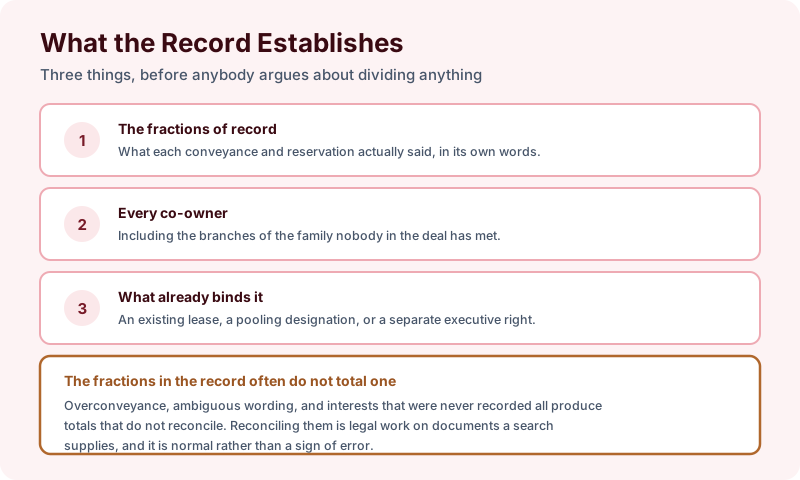
Three things, before anybody argues about dividing anything.
The fractions of record, taken from what each conveyance and reservation actually said in its own words rather than from what the family believes. Every co-owner, including branches nobody in the deal has met, which is the same tracing problem described in our note on inherited mineral rights. And what already binds the interest: an existing lease, a pooling designation, or a separately held executive right, the last of which is covered in our note on executive rights.
Expect the fractions not to total one. Overconveyance, ambiguous wording, and interests that were never recorded all produce totals that fail to reconcile, and that is normal on old mineral chains rather than a sign the search went wrong. Reconciling them is legal work performed on documents the search supplies.
Three routes that avoid court
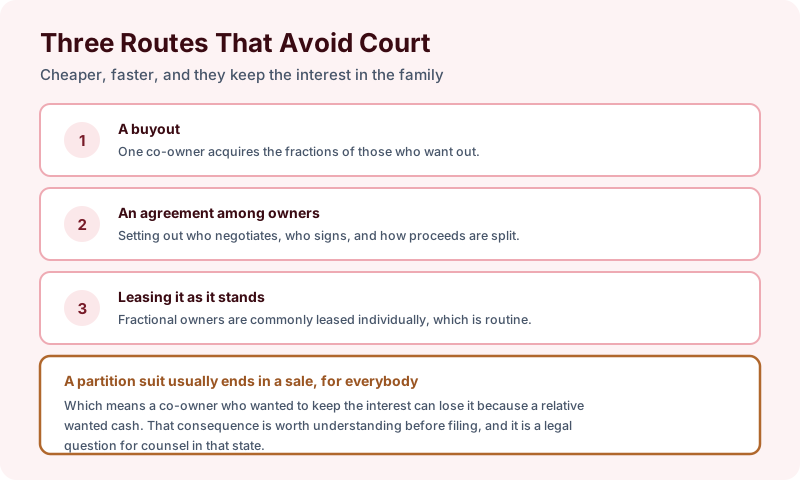
A buyout, where one co-owner acquires the fractions of those who want out, which is often the cheapest resolution by a wide margin. An agreement among the owners setting out who negotiates, who signs, and how proceeds are divided, which addresses the practical problem without touching ownership. And leasing it as it stands, since operators routinely lease fractional owners individually and a small undivided interest is not an obstacle to that.
The reason to consider all three first is the consequence of the alternative. A partition suit commonly ends in a sale of the entire interest, which means a co-owner who wanted to keep it can lose it because a relative wanted cash. That outcome deserves to be understood before filing rather than after.
What a search shows and does not
The search reports what was recorded and indexed over the term searched, with copies: the severing instrument, every conveyance and reservation with its fraction, leases, royalty deeds, pooling designations, liens, and any prior decree. Choose a search term long enough to reach the severance, because the fractions only make sense read forward from there. Turnaround is 2 to 3 business days.
It cannot establish who owns the minerals today, since interests pass at death with nothing filed locally and the last grantee named is not necessarily the present owner. Present ownership is a legal conclusion belonging in a mineral title opinion written by counsel. It does not value an interest, and it does not report well permits or production, which state regulators hold. Recording practice varies by county.
The takeaway
Before anybody talks about partition, get the record picture: the fractions as written, every co-owner of record, and whatever lease or executive right already applies. That usually reveals a cheaper route than a lawsuit. Start the order online, or send us the address and the county and we will tell you which term fits and what a search of that scope would and would not cover before anything is ordered.