

· AFX Research
Executive Rights: Who Has the Power to Sign a Mineral Lease
The right to lease minerals can be owned separately from the right to be paid for them. What the executive right is, who holds it, and how the record shows it.
Table of Contents
A mineral interest is not one thing. It is a bundle of separable rights, and the most consequential of them is the power to sign a lease. Landowners discover this when a leasing agent explains that a relative who owns a small fraction will be negotiating on behalf of everyone, or that a check will arrive under terms nobody else was asked about. Understanding which stick you hold is the practical follow up to what a leasing letter tells you.
The bundle, and the stick that matters
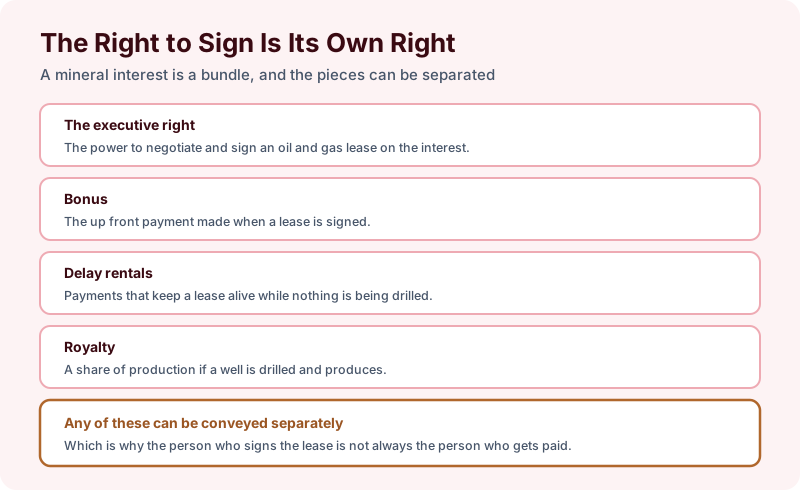
The executive right is the power to negotiate and execute an oil and gas lease covering the interest. Alongside it sit the right to receive bonus money when a lease is signed, the right to delay rentals that keep a lease alive while nothing is drilled, and the right to royalty, a share of production if a well produces.
Any of these can be conveyed or reserved separately from the others. A deed can pass a royalty share while keeping the leasing power, or hand the leasing power to one heir and the income to several. That is the whole reason the person who signs is not always the person who gets paid, and it is a distinction that does not appear in a county index summary. Our note on types of mineral rights covers the categories.
Who signs, and who gets paid
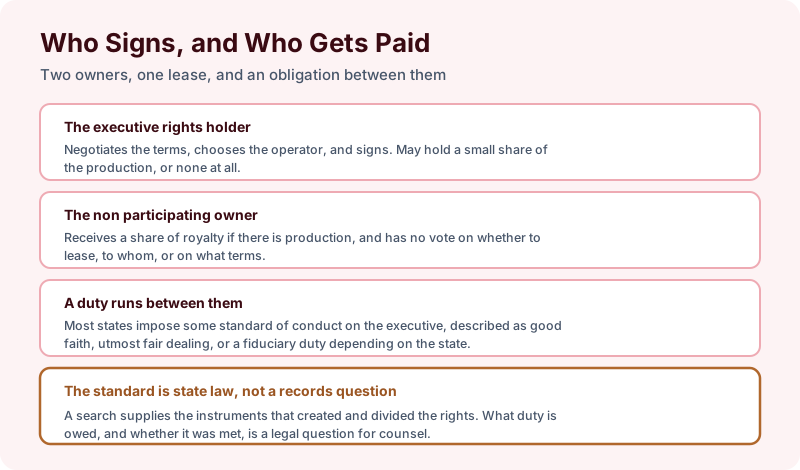
The holder of the executive right chooses the operator, negotiates the royalty fraction and the term, and signs. They may hold a large share of the production, a small one, or none.
A non participating royalty owner receives a share if there is production and has no vote on whether to lease, to whom, or on what terms. That is an uncomfortable position by design, and the law recognizes it: most states impose some standard of conduct on the executive when they lease, described variously as good faith, utmost fair dealing, or a fiduciary duty depending on the jurisdiction. What that standard requires, and whether a particular lease met it, is a legal question for counsel in that state rather than something a records search resolves.
One practical consequence. When an operator wants certainty, it commonly asks non participating owners to sign ratifications of the lease. Being asked to ratify is a signal about what somebody thinks your interest is, and it is worth understanding before signing rather than after.
Where it shows up in the record
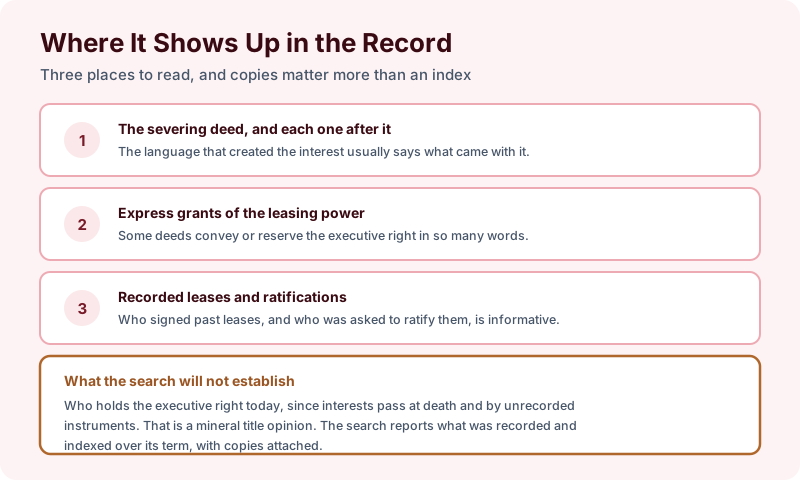
Three places are worth reading. The deed that severed the minerals, and every conveyance after it, since the language that created the interest usually says what came with it. Express grants or reservations of the leasing power, which some deeds spell out in so many words. And recorded leases and ratifications, because who signed past leases, and who was asked to ratify them, tells you how the parties have understood the interest.
That is why copies matter more than an index entry here. An abstract line reading mineral deed, one half interest does not tell you whether the executive right travelled with it. The instrument does.
Send the legal description and the county, along with any names you have from a leasing letter or a family record, and ask for a term deep enough to reach the severance. What comes back is the instruments found of record over the term searched, as of the search date, with copies attached. What does not come back is who holds the executive right today. Interests pass at death, and by instruments that may never be recorded in that county, so the last grantee named in the record is not necessarily the present owner. Present ownership and the allocation of these rights are legal conclusions belonging in a mineral title opinion written by counsel. The search also does not report wells or production, which sit with state regulators, and it does not value an interest. Recording practice varies by county, and an empty result reflects the record rather than proving nothing exists.
The takeaway
Before you respond to a leasing agent, find out whether you hold the right to sign or only the right to be paid, because the two lead to very different conversations. The instruments that answer it are recorded, and reading them is where to start. Start the order online, or send us the address and the county and we will tell you which term fits and what a search of that scope would and would not cover before anything is ordered.