

· AFX Research
Nonparticipating Royalty Interests, and What They Do Not Include
What an NPRI holder actually owns, the leasing and bonus rights that stay behind with the mineral owner, how the fractions compound, and what a search can establish.
Table of Contents
A nonparticipating royalty interest, almost always written NPRI, is a share of production carved out of the mineral estate and handed to somebody who has no say in whether that production ever happens. It is real property, it is inheritable, and it can sit in a family for four generations without anybody quite understanding what it is.
The name is doing a lot of work. The holder participates in the revenue. The holder does not participate in any of the decisions, and that distinction is the whole of it.
What the holder gets
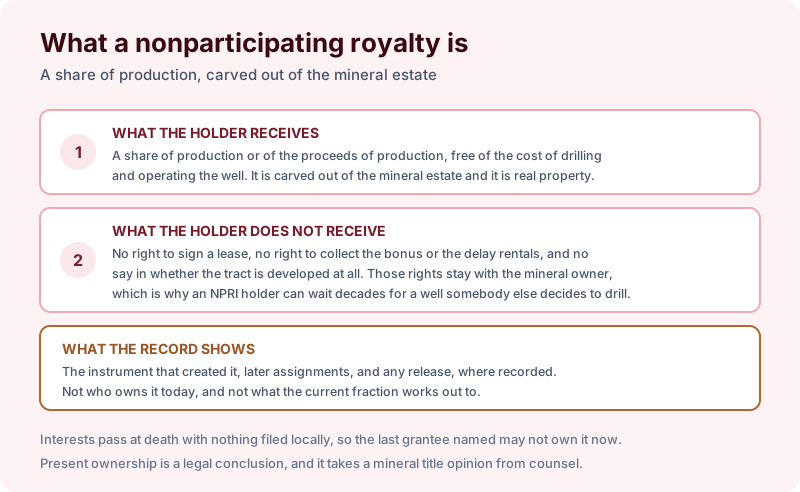
A share of production, or of the proceeds of production, free of the cost of drilling and operating the well. That last part is the attractive feature. An NPRI holder does not fund the dry hole, does not pay for the workover, and does not take a call asking for a contribution.
What stays behind
Four rights normally travel with a mineral interest. The right to lease, called the executive right. The right to receive the lease bonus. The right to receive delay rentals. And the right to receive royalty. An NPRI is what you get when somebody separates the fourth from the other three.
So the NPRI holder cannot sign a lease, cannot negotiate its terms, cannot collect the bonus that is paid on signing, and has no vote on whether the tract is developed at all. Those belong to whoever holds the executive rights, and the practical consequence is that an NPRI can sit dormant for decades while somebody else decides nothing is worth drilling.
There is a real tension in that arrangement, and courts in several states have recognized it by imposing some duty on the executive to consider the nonparticipating holder’s interests when leasing. How far that duty reaches varies considerably from state to state, and it is a question for counsel rather than one the record answers.
How it differs from the things it gets confused with
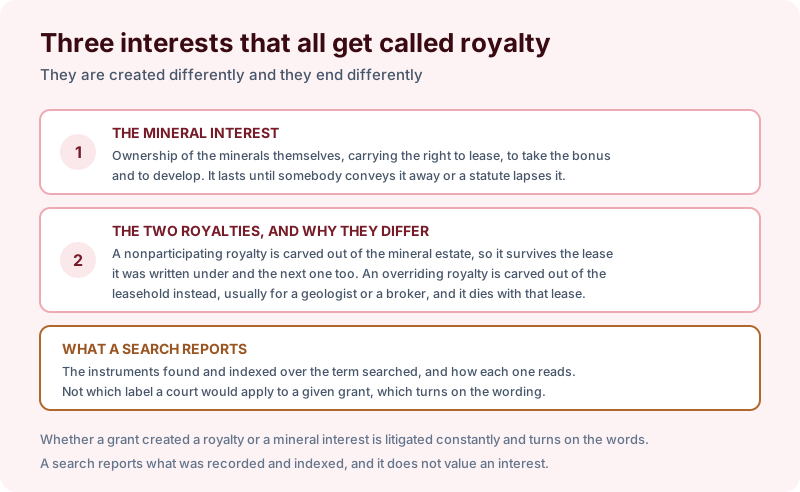
Three interests get loosely called royalty, and the differences matter enormously.
A mineral interest is ownership of the minerals, with the leasing and bonus rights attached. An NPRI is carved out of that mineral estate, which is why it survives the lease it was written under and survives the next one too. An overriding royalty is carved out of the leasehold instead, usually created for a geologist or a landman who put a deal together, and it dies when that lease dies.
That last difference is the one that catches people. An override looks like a royalty on the check stub and behaves nothing like one when the lease expires. Overriding royalty interests are worth understanding separately for exactly that reason.
Tracing one through the record
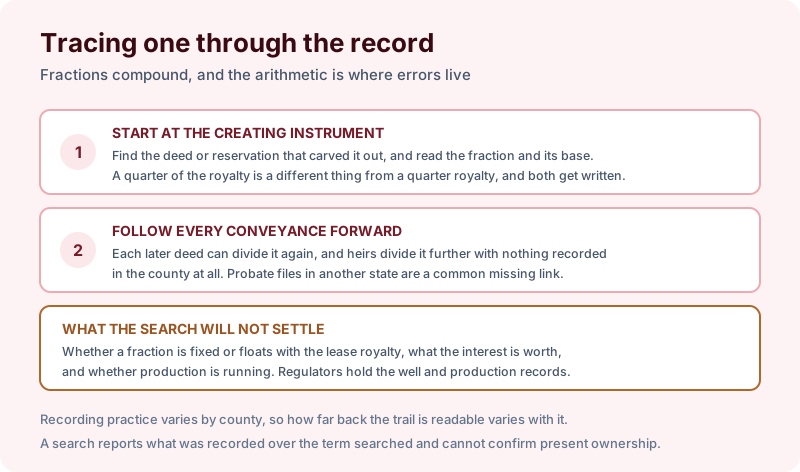
The search starts at the instrument that created the interest, and reading that instrument carefully is most of the job. A grant of “one quarter of the royalty” and a grant of “a one quarter royalty” are different things, and both phrasings appear in real deeds. The first is a share of whatever royalty the lease provides. The second is a fixed fraction of production regardless of the lease. On a lease paying an eighth, those two readings differ by a factor of four.
From there every later conveyance can divide the interest again, and heirs divide it further with nothing recorded in the county at all. A probate file in a state nobody thought to search is the single most common break in an NPRI trail, which is the same problem that runs through inherited mineral rights.
What a search establishes is what was recorded and indexed over the term searched. It cannot confirm who owns the interest today, because interests pass at death with nothing filed locally and the last grantee named is not necessarily the present owner. It does not report well permits or production, which sit with the state regulator rather than the recorder, and it does not value anything. Present ownership is a legal conclusion and it takes a mineral title opinion written by counsel.
The takeaway
An NPRI is a claim on money with no claim on the decisions that produce it. Whether it is worth anything depends on somebody else’s willingness to drill, and whether you actually hold it depends on a chain that the county record can show you only in part. Read the creating instrument for the fraction and its base, then trace forward and expect the gaps to be in probate.
Start the order online, or send us the address and the county and we will tell you which term fits and what a search of that scope would and would not cover before anything is ordered.