

· AFX Research
Overriding Royalty Interests and How They Differ from Minerals
An override is carved out of the lease rather than the mineral estate, so it pays like a royalty and dies with the lease. How they are created and how to find them of record.
Table of Contents
Somebody inherits a small interest in an Oklahoma tract and the paperwork calls it an overriding royalty. It pays like a royalty, it is described in acres and fractions like a mineral interest, and it turns out to be neither. An override is a real property interest carved out of somebody else’s lease, and the difference from a royalty interest and a mineral interest decides whether it is worth anything in five years.
Three interests, one tract
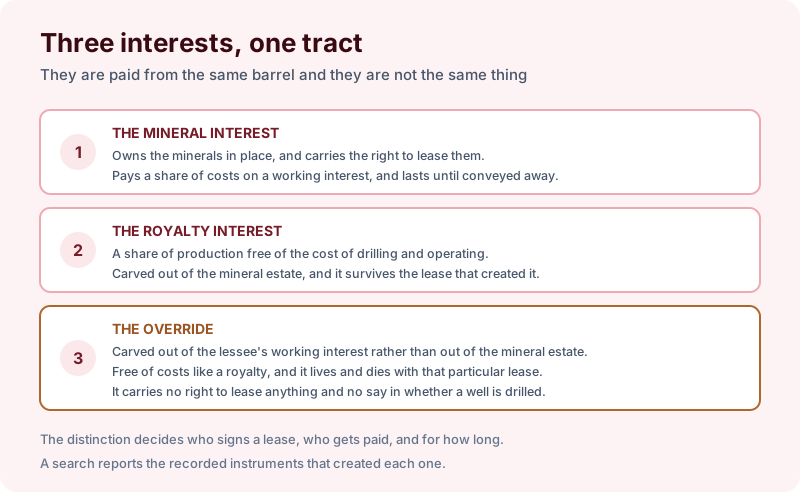
A mineral interest owns the minerals in place and carries the right to lease them. That right to lease, sometimes called the executive right, is the part that gives the holder any say in what happens, and it is covered in executive rights and who signs the lease.
A royalty interest is a share of production free of drilling and operating costs, carved out of the mineral estate. It survives the lease that prompted it, because it was taken out of the ownership underneath rather than out of the lease itself.
An overriding royalty interest is carved out of the lessee’s working interest. It is free of costs, like a royalty, and it carries no right to lease and no say in whether a well is ever drilled. Crucially, it exists only for as long as that particular lease exists.
Where overrides come from
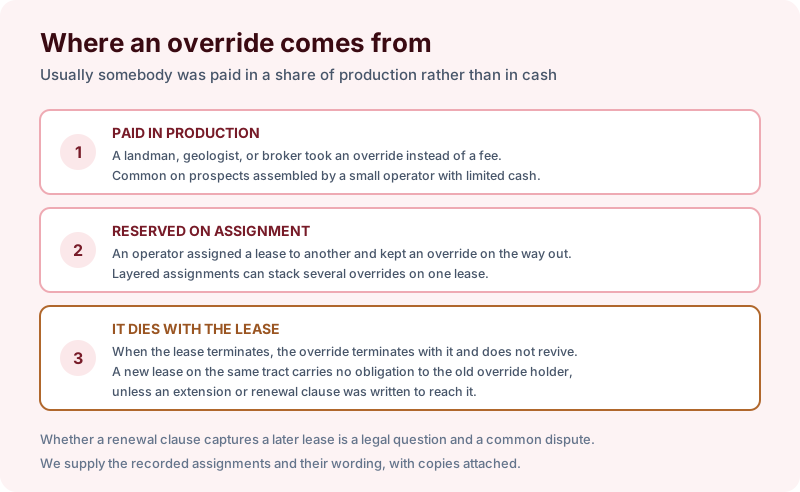
Most were created because somebody was paid in production rather than in cash. A landman who assembled the acreage, a geologist who generated the prospect, or a broker who put the deal together took an override instead of a fee, which is a common arrangement for a small operator short on money and long on acreage.
This is worth understanding if you have inherited one, because it explains a pattern that otherwise looks like an error. An override holder may own a share of production on a tract while owning no minerals under it at all, and may never have owned any. The interest came from work done, not from land held, and it will not show up in a search of the mineral chain because it was never part of that chain.
The other common route is a reservation on assignment. An operator sells a lease to another company and keeps an override on the way out. Where a lease has passed through several hands, each assignment can add another override, and the burden accumulates down the chain.
Then the hard part. When the lease terminates, the override terminates with it. It does not revive, and a new lease taken on the same tract carries no obligation to the old override holder, unless an extension or renewal clause was written broadly enough to reach it. Whether a particular clause does reach a later lease is a well worn dispute and a legal question, not a records question.
Finding one in the record
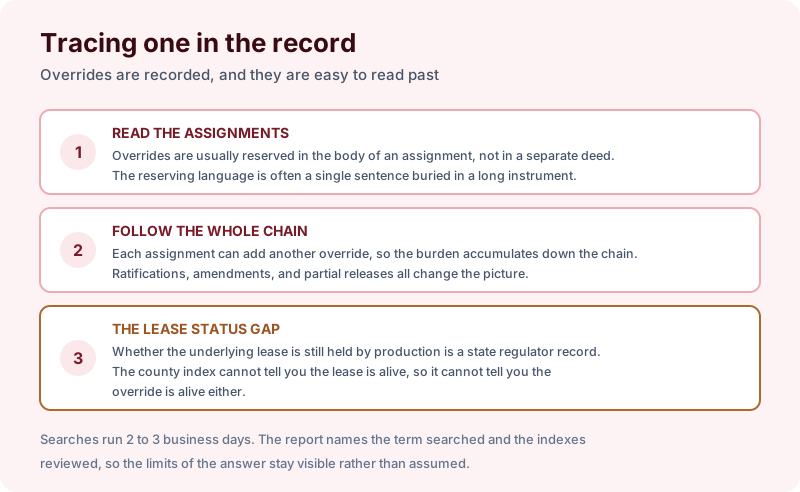
Overrides are recorded, and they are easy to read straight past. They are usually reserved in the body of an assignment rather than granted by a separate instrument, and the reserving language is often one sentence inside a long document. Anyone skimming for deeds will miss it.
So the work is to follow the whole assignment chain rather than the most recent instrument, and to pick up the ratifications, amendments, and partial releases along the way. What the county cannot tell you is whether the underlying lease is still held by production, because that is a state regulator record. The index cannot confirm the lease is alive, so it cannot confirm the override is either. Recording and indexing practice varies by county as well, so an assignment filed in one book here may sit in another two counties over.
The takeaway
An override pays like a royalty and lives like a lease, which is the whole of the difference and most of the risk. Read the assignment chain rather than the deeds, watch for reservations buried mid document, and check the lease status with the state before assuming the interest still exists. Present ownership remains a legal conclusion, drawn by counsel from the record. Searches run 2 to 3 business days. Start the order online, or send us the legal description and the county and we will tell you which term fits and what a search of that scope would and would not cover before anything is ordered.