

· AFX Research
Mineral Rights Held in a Trust or an LLC: Reading the Chain
A conveyance into a trust or a company moves the interest out of family names and out of the index most people search. What the record shows, and what it cannot.
Table of Contents
Families who own minerals for two or three generations eventually consolidate them. Fractions that have split among a dozen cousins get deeded into a family trust or into an LLC, partly for estate planning and partly so a landman has one signature to chase instead of twelve. It is sensible, and it makes the record harder to read, because the interest is now held by a name that does not appear in anyone’s family history. The starting point is usually the fragmentation described in our note on inherited mineral rights, and this is what people do about it.
What the deed into a trust says
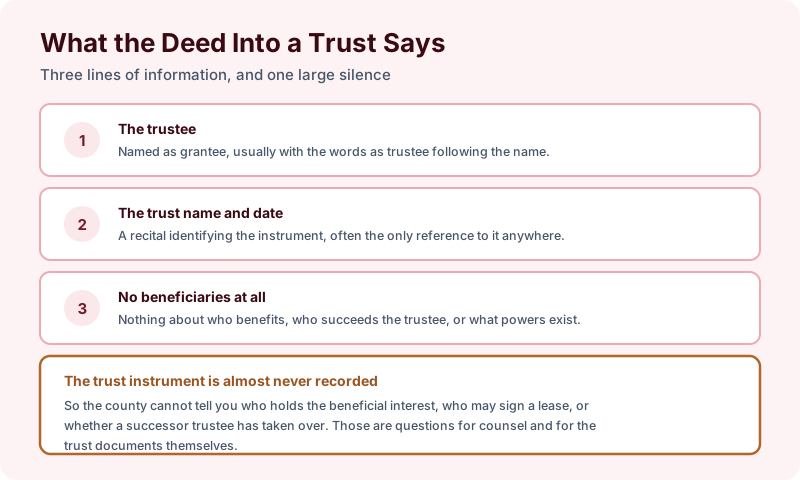
The deed gives you three things and withholds the rest. It names the trustee as grantee, usually with the words as trustee after the name. It recites the trust by name and date. And it says nothing whatsoever about who benefits.
That silence is the important part. Trust instruments are almost never recorded, so the county cannot tell you who holds the beneficial interest, who succeeded the original trustee, or whether the trustee has power to lease or to sell. A landman relying on the recorded deed alone knows who to approach and not whether that person can bind anything, and those are questions for counsel and for the trust documents. The related question of who holds the right to sign a lease at all is the subject of our note on executive rights.
When a company holds the minerals
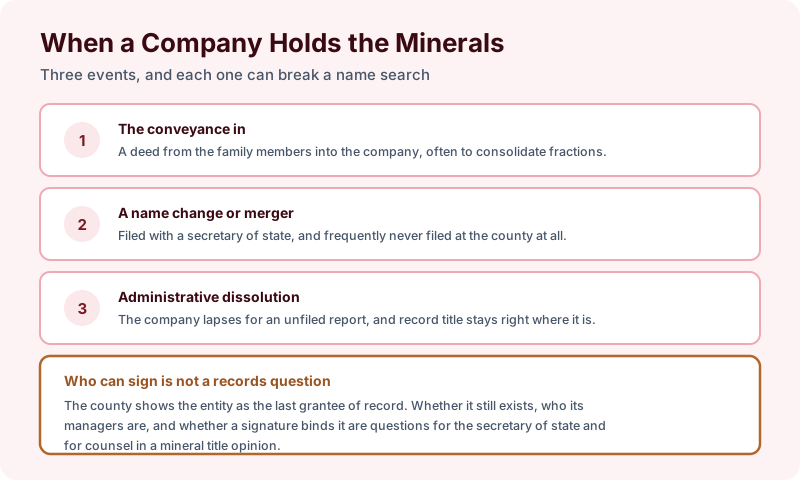
An entity introduces three events, and each one can break a name search.
The conveyance in is usually a deed from the family members to the company. A later name change or merger is filed with a secretary of state and frequently never filed at the county, which leaves the chain showing a deed to a company nobody has heard of. And administrative dissolution is the quiet one: a company lapses because an annual report went unfiled, while record title stays exactly where it was.
There is a further wrinkle worth checking. Where the company was formed in one state and the minerals sit in another, the entity records and the land records are in different places entirely, and neither office will point you at the other. None of that changes the county record, and all of it changes who can sign. Whether the entity still exists, who its managers are, and whether a given signature binds it are secretary of state and legal questions rather than records findings.
Which names to send
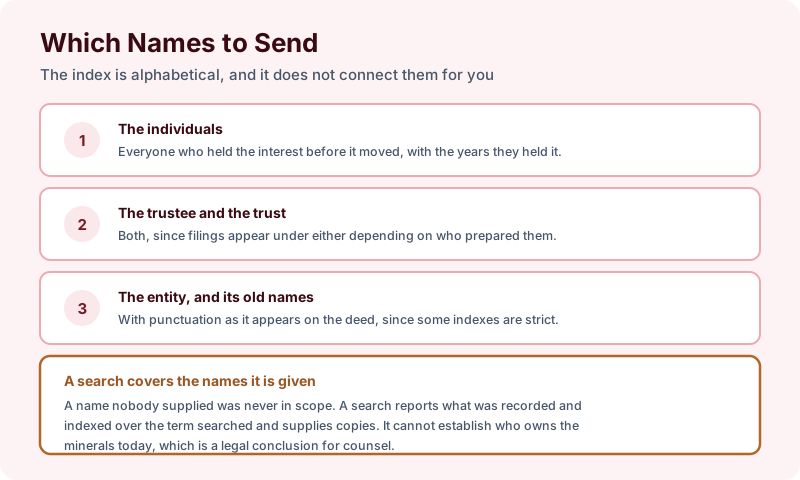
Send all three categories. The individuals who held the interest before it moved, with the years they held it. The trustee and the trust name, both, because filings appear under either depending on who drafted them. And the entity with every prior name, spelled and punctuated as it appears on the deed, since some county indexes are unforgiving about commas and abbreviations.
Choose a search term long enough to reach the original severance rather than only the transfer into the trust, because the fraction and the wording that actually govern are in the old instrument. The arithmetic those fractions produce is covered in our note on net mineral acres and fractional interests. Turnaround is 2 to 3 business days.
What a search cannot decide
It reports what was recorded and indexed over the term searched, with copies: the severing instrument, the conveyances into and out of the trust or entity, any recorded lease or royalty deed, and later corrections.
It cannot establish who owns the minerals today. Interests pass at death with nothing filed locally, beneficial interests are not recorded at all, and the last grantee named is not necessarily the present owner. Present ownership is a legal conclusion belonging in a mineral title opinion written by counsel. The search also does not report well permits or production, which state regulators hold, and it does not value an interest. Recording practice varies by county, so a clean result reflects the record rather than proving nothing exists.
The takeaway
If a trust or a company appears in the chain, get the deed that put it there, then ask for the trust instrument or the entity records directly, because the county will not have them. Start the order online, or send us the address and the county and we will tell you which term fits and what a search of that scope would and would not cover before anything is ordered.