

· AFX Research
Mineral Rights and Eminent Domain, and Who Shares the Award
How a public project reaches a severed mineral estate, which interests can claim a share of the award, and why the ownership work has to come before the negotiation.
Table of Contents
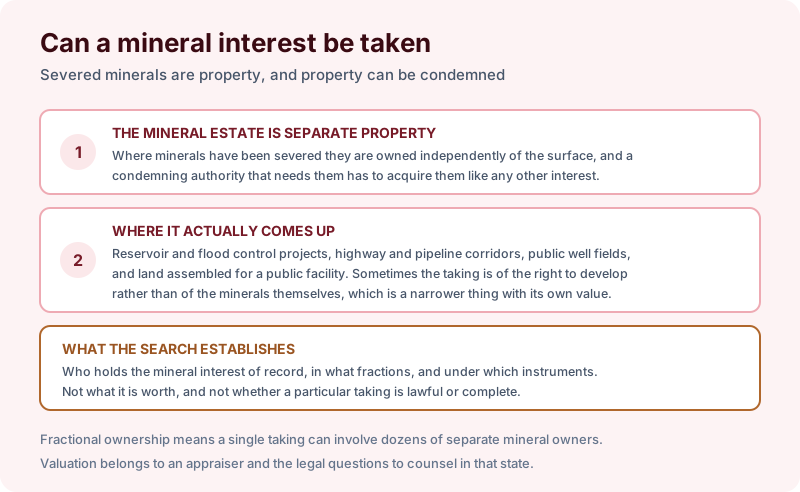
Eminent domain is usually discussed as a surface problem. A road takes a strip, a pipeline crosses a field, a reservoir floods a valley. Where minerals have been severed from the surface, the mineral estate is separate property owned by somebody else, and a project that needs it has to acquire it like any other interest.
That produces a situation most owners have never considered. You may hold a fractional mineral interest under land you have never visited, and a public project may be about to affect it. The starting point is the same as for any question in this area, which is establishing who owns the mineral rights of record.
Where it actually comes up
Reservoir and flood control projects, where the land will be permanently under water. Highway and pipeline corridors. Public well fields, where the authority wants to prevent drilling near the water supply. Land assembled for a public facility.
Coal and hard rock situations arise as well, particularly where a project crosses ground with a long mining history, which is the territory of coal and hard rock mineral rights.
A useful distinction, and one that is easy to miss, is that the taking is sometimes not of the minerals themselves but of the right to develop them. An authority may leave the mineral ownership intact while extinguishing the right of surface access to reach it, which on a practical level can be nearly as consequential and is valued quite differently.
Who shares the award
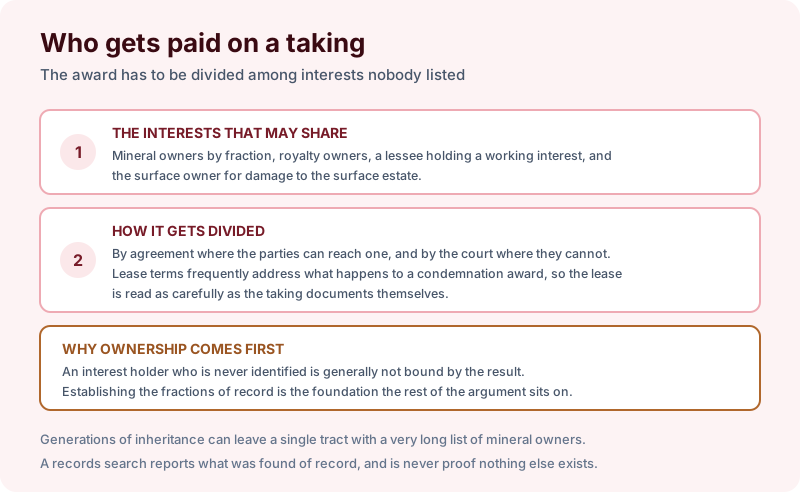
More parties than anyone expects. Mineral owners by their fractions. Royalty owners, who hold a share of production without holding the minerals. A lessee holding a working interest under an existing lease. And the surface owner, separately, for damage to the surface estate.
Division is settled by agreement where the parties can reach one and by the court where they cannot. Lease terms frequently address what happens to a condemnation award, so the lease gets read as carefully as the taking documents. Where a lease is in force, the split between lessor and lessee is usually the most contested part of the whole exercise, and it turns on wording drafted long before anyone imagined a taking.
The reason ownership work comes first is procedural. An interest holder who is never identified is generally not bound by the outcome, and on a tract where generations of inheritance have produced dozens of fractional owners, identifying everyone is genuine work. The arithmetic is the same as in partitioning a fractional mineral interest.
Scoping the search
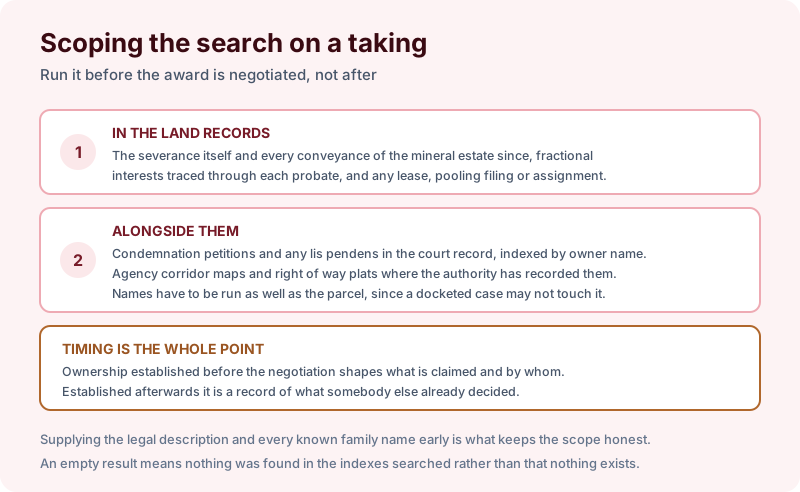
In the land records, the severance itself and every conveyance of the mineral estate since, fractional interests traced through each probate, and any lease, pooling filing, or assignment currently in force.
Alongside them, the court record. Condemnation petitions and any lis pendens are indexed by owner name rather than by parcel, so names have to be run as well as the legal description. Agency corridor maps and right of way plats appear in the land records where the authority has recorded them, and in many places nothing is recorded until a case is actually filed.
Timing is most of the value
Ownership established before the negotiation shapes what gets claimed and by whom. Established afterwards, it is a record of what somebody else already decided. The gap between those two positions is usually larger than the cost of the search by a wide margin, particularly where the interest is fractional and the owner would otherwise have no reason to know a project existed.
What the search will not do is value anything. What a mineral interest is worth, and whether a particular taking is lawful or procedurally complete, belong to an appraiser and to counsel licensed in that state. A records search reports what was found of record in the offices searched as of its date, recording practice varies by county, and an empty result is never proof that nothing exists.
The takeaway
A severed mineral estate is property, it can be condemned, and the award has to be divided among interests that may never have been listed anywhere in one place. Establish the fractions of record early, run names as well as the parcel, read the lease for its condemnation clause, and get valuation and legal advice from people licensed to give it. Order the search today, or send us the legal description and the county and we will tell you what a search of that scope would and would not cover before anything is ordered.