

· AFX Research
Coal and Hard Rock Mineral Rights: What the Record Shows
Coal, iron ore, and limestone were severed long before oil and gas leasing existed. Why the deed language matters more here, and how to scope the search.
Table of Contents
Most mineral rights questions that arrive here are about oil and gas, because that is what generates leasing letters. Coal and hard rock minerals are a quieter category and in some counties a much older one. A farm in Appalachia may carry a coal severance from the 1890s. A parcel in the Great Lakes iron ranges may carry an ore reservation from a company that has been out of business for eighty years. Limestone, sand and gravel, and dimension stone show up in the same way. The severance works like the one our note on mineral rights versus surface rights describes, and the search runs differently.
Not the same as oil and gas
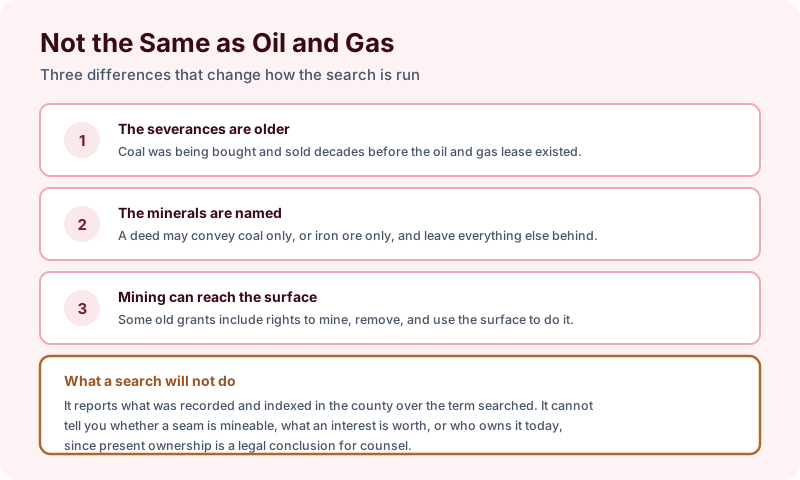
The severances are older. Coal was being bought and sold as a separate estate decades before the modern oil and gas lease existed, which means the instrument you need may predate the county’s tract index and sit only in a grantor and grantee book.
The minerals are named. An oil and gas reservation tends to be broad. A coal deed frequently conveys coal only, or iron ore only, or a listed set, leaving everything else with the surface owner. A parcel can therefore have three different mineral owners for three different substances.
Mining can reach the surface. This is the practical difference. Extraction of a solid mineral may involve open pits, strip mining, subsidence from underground works, haul roads, and processing areas, and some old grants expressly include the right to mine, remove, and use the surface to do it.
The language that decides it
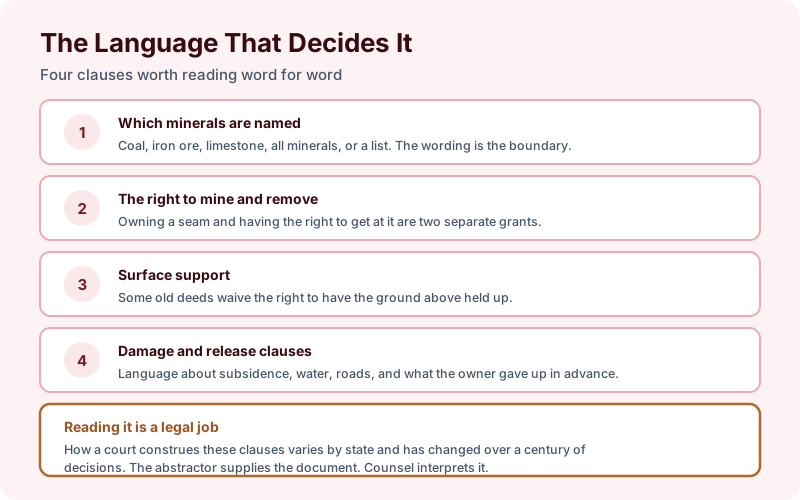
Four clauses do most of the work. Which minerals are named, since the wording sets the boundary and a term like “minerals” has been litigated for a century over whether it includes gravel, coal, or limestone. Whether the grant includes the right to mine and remove, because owning a seam and having the right to get at it are separate grants. Whether surface support was waived, which some old deeds did expressly. And the damage and release clauses, covering subsidence, water, roads, and whatever the surface owner gave up in advance.
How a court construes any of that varies by state and has shifted across generations of decisions. The abstractor supplies the document and the chain. Counsel interprets it. That division is the same one in our note on oil and gas lease versus mineral deed.
One more wrinkle: abandonment
Many states have statutes addressing long dormant mineral interests, and in coal country those provisions get used. Whether an old severance has lapsed, been preserved by a filing, or survived untouched depends on the statute and on what was filed and when, which our note on dormant mineral acts covers. A search finds the filings. It does not decide the outcome.
Scoping the search
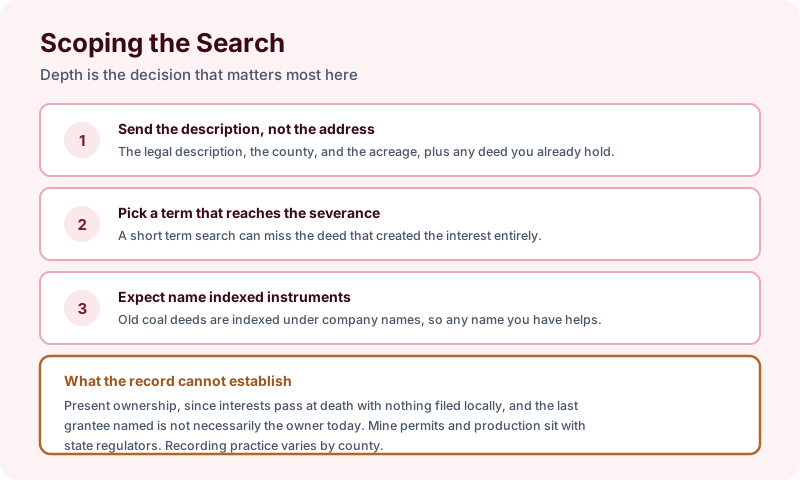
Send the legal description, the county, and the acreage rather than only a street address, along with any deed you already hold. Then pick a search term long enough to reach the severance, because a short search can return forty years of surface deeds and miss the one instrument that created the interest. Old coal and ore deeds are indexed under company names, so any name you have is worth sending. Turnaround is 2 to 3 business days.
The report is what was recorded and indexed in the county over the term searched, with copies. It cannot establish who owns the minerals today, since interests pass at death with nothing filed locally and the last grantee named is not necessarily the present owner. Present ownership is a legal conclusion, a mineral title opinion written by counsel. Mine permits and production records sit with state regulators, not the recorder, and a search does not value an interest or tell you whether a seam is mineable. Recording practice varies by county.
The takeaway
On a coal or hard rock parcel the exact wording of a very old deed is the whole case, so get the instrument itself rather than an index summary of it, and get it early. Start the order online, or send us the address and the county and we will tell you which term fits and what a search of that scope would and would not cover before anything is ordered.