

· AFX Research
Mineral Rights and Adverse Possession, What the Record Shows
Holding the surface for decades generally does not win the minerals underneath it. Why severance stops the clock, and what a county search can and cannot report.
Table of Contents
A family has farmed the same section since the 1930s. Nobody else has set foot on it, paid a tax bill on it or asserted anything about it in living memory. Then a leasing letter arrives addressed to somebody in another state, and the family learns that the minerals were reserved out in 1921 and have been passing quietly through heirs ever since. The obvious question follows almost immediately, which is whether ninety years of undisturbed use has earned the minerals along with the ground. Usually it has not, and the reason is worth understanding properly. It begins with the same instruments discussed in reservation clauses in old deeds.
Why severance changes everything
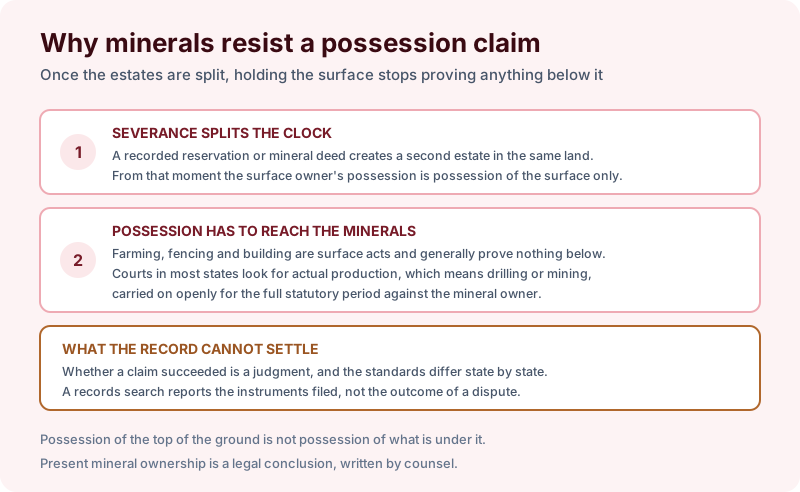
Adverse possession rests on possession that is open, notorious, hostile and continuous for a statutory period. All of those words are doing work, and the one that matters here is possession.
When a deed reserves the minerals, it creates two estates in the same piece of land. From that moment forward, the surface owner’s occupation is possession of the surface, and nothing more. The mineral estate lies below, it is not being occupied by anybody, and the fact that nobody is occupying it does not mean it has been abandoned to the person standing on top of it.
Courts in most states therefore look for actual production. To possess minerals adversely you generally have to take them, which means drilling or mining, done openly, continuously, for the full statutory period, against a mineral owner who could have objected. Plowing a field is not a mineral act. Neither is building a barn, running cattle or paying the property tax on the surface.
The exceptions that do exist
There are narrower routes, and they vary a great deal by state. Where minerals were never severed, adverse possession of the whole fee can carry the minerals with it, because there is only one estate to possess. Some states recognize a claim founded on a recorded but defective deed purporting to convey the minerals, held under color of title for the statutory term. And several states have dormant mineral acts, which are a different mechanism entirely, terminating unused interests by statute rather than by possession. That route is covered in dormant mineral acts and lapsed interests.
None of these is a general rule, and which of them applies is a question of state law rather than of what happened on the ground.
What a claim leaves in the record
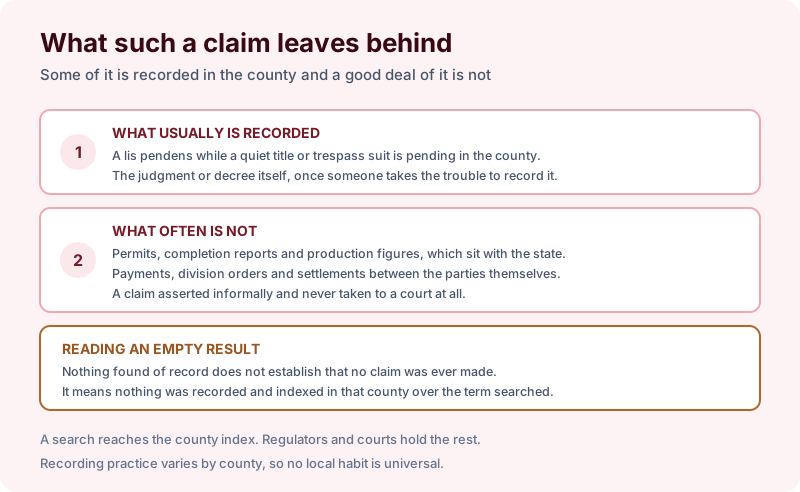
Some of it is recorded. A lis pendens while a suit is pending, and the decree afterward if somebody records it, which not everybody does. That decree is the strongest thing a search can return on the question, and it is closely related to the process in quiet title actions and mineral interests.
Much of it is not recorded. Drilling permits, completion reports and production figures sit with the state regulator rather than the county. Payments, division orders and private settlements stay between the parties. A claim asserted in a letter and never litigated leaves no trace anywhere.
So an empty result has to be read carefully. Nothing found of record does not establish that no claim was ever made. It means nothing was recorded and indexed in that county over the term searched, and recording practice varies enough between counties that no local habit should be treated as universal.
Scoping the search
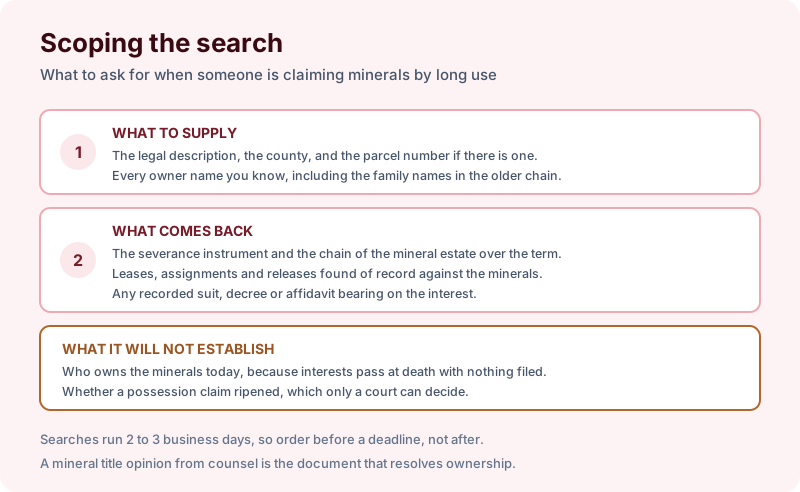
Give us the legal description, the county, the parcel number if there is one, and every owner name you know including the older family names in the chain. What comes back is the severance instrument, the mineral chain over the term searched, the leases and assignments and releases found of record, and any recorded suit or affidavit bearing on the interest. Our search packages set out the available terms.
What it will not establish is who owns the minerals today. Interests pass at death with nothing filed locally, so the last grantee named in the county is not necessarily the present owner, and whether a possession claim ever ripened is a question only a court can answer. Present ownership is a legal conclusion, set out in a mineral title opinion written by counsel.
The takeaway
Long use of the surface is a weak foundation for a claim to the minerals, because possession of one estate is not possession of the other. What a records search gives you is the documented history of the severed interest and whatever litigation reached the county index, which is the factual base any opinion has to start from. Start the order online, or send us the address and the county and we will tell you which term fits and what a search of that scope would and would not cover before anything is ordered.