

· AFX Research
Mineral Rights and a 1031 Exchange, and What Actually Qualifies
A perpetual royalty and a production payment look similar and are treated very differently. Which interests are real property, where the exchange breaks, and what to document.
Table of Contents
Somebody selling a mineral interest at a gain frequently wants to roll it into something else rather than pay the tax, and a like kind exchange is the usual route. It works often enough to be worth attempting and it fails in two predictable ways, both of which are really records problems rather than tax problems. Nothing below is tax advice. The point is what the search has to produce so that somebody qualified can give it. The underlying distinction is the one drawn in royalty interest versus mineral interest.
Which interests are real property
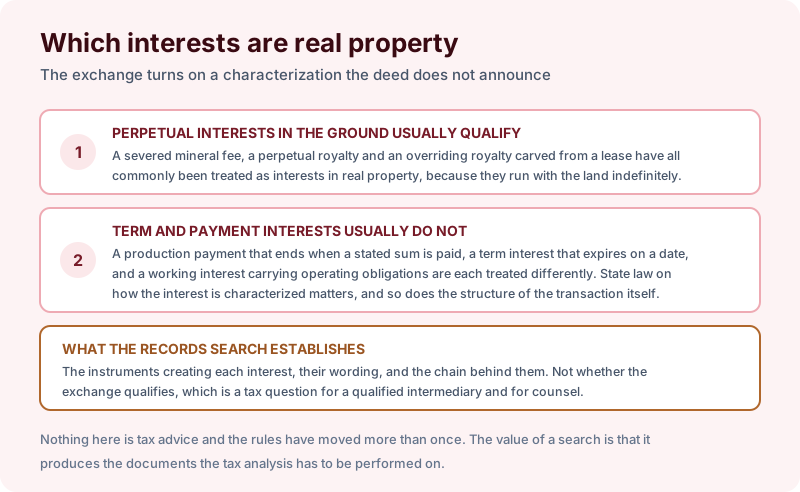
The exchange turns on a characterization the deed never announces. Perpetual interests in the ground have commonly been treated as interests in real property, which covers a severed mineral fee, a perpetual royalty and an overriding royalty carved out of a lease. They run with the land indefinitely, and that is the feature doing the work.
Interests limited by time or by a sum of money are treated differently. A production payment that terminates when a stated amount has been paid, a term interest that expires on a date, and a working interest that carries operating obligations each raise questions the perpetual interests do not.
What decides it is the wording of the instrument and the law of the state where the land sits. A records search establishes the instruments creating each interest, their exact language and the chain behind them. Whether the exchange qualifies is for a qualified intermediary and a tax adviser, working from those documents.
Where these exchanges break
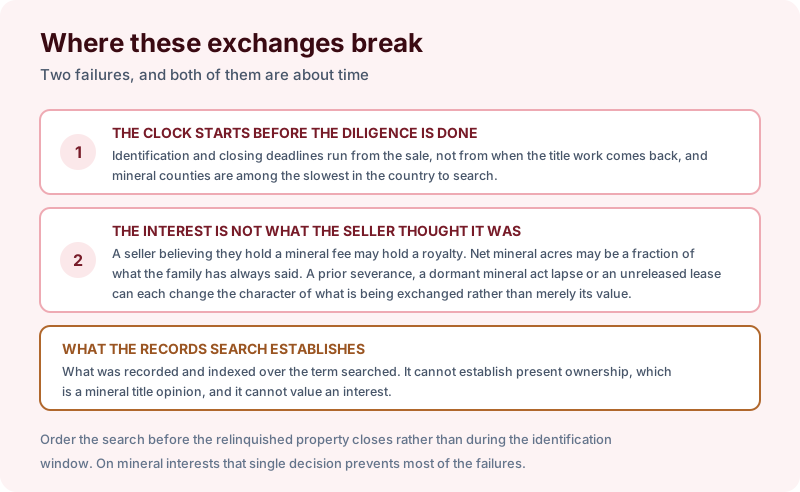
The first failure is the calendar. Identification and closing deadlines run from the sale of the relinquished property, not from the day the title work comes back, and mineral counties are among the slowest in the country to search. A seller who starts the records work after closing has already spent part of a fixed window.
The second is that the interest turns out not to be what the seller believed. Somebody certain they hold a mineral fee holds a royalty. The net mineral acres the family has always quoted are a fraction of the real number. A prior severance, a lapse under a dormant mineral act or an unreleased lease changes the character of the asset rather than merely its value, and character is exactly what the exchange depends on.
There is a third failure worth naming because it is avoidable. A seller identifies a replacement mineral interest from a listing or a broker package and never searches it before the identification window closes. The replacement can carry the same defects as anything else, an unreleased lease, a competing top lease, a fraction that does not add up, and by the time any of that surfaces the deadline has passed and the alternatives are gone.
The search establishes what was recorded and indexed over the term searched. It cannot establish present ownership, which is a mineral title opinion, and it does not value anything.
What to have in the file
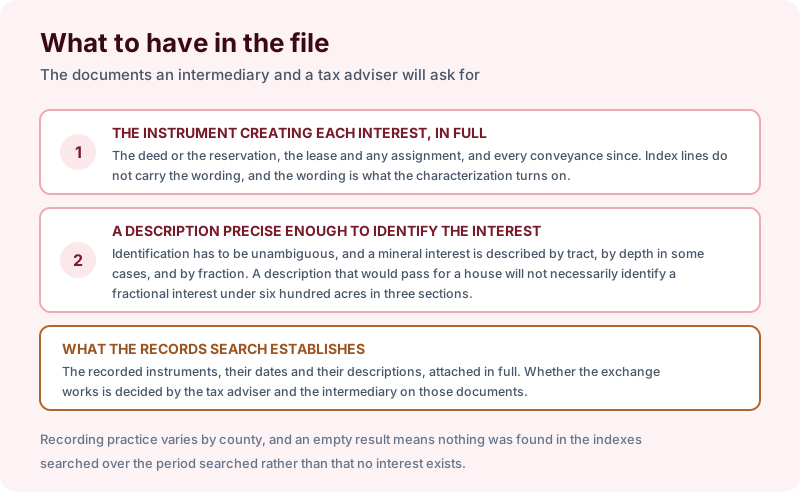
The instrument creating each interest, in full. The deed or the reservation, the lease and every assignment since. Index lines do not carry the wording and the wording is the whole question.
A description precise enough to identify the interest without ambiguity. That is harder than it sounds, because a mineral interest is described by tract, sometimes by depth, and always by fraction. A description adequate for a house will not reliably identify a fractional interest under six hundred acres spread across three sections, and net mineral acres are where the arithmetic goes wrong.
Then the honest limits. Recording practice varies by county, an empty result means nothing was found in the indexes searched over the period searched, and present ownership remains a legal conclusion.
The takeaway
Order the search before the relinquished property closes rather than during the identification window, because on mineral interests that one decision prevents most of the failures. Get the instruments in full, get the fractions checked, and put the characterization question in front of a tax adviser and an intermediary rather than assuming a royalty and a fee behave the same way. Start the order online, or send us the address and the county and we will tell you which term fits and what a search of that scope would and would not cover before anything is ordered.