

· AFX Research
Joint Operating Agreements and What Reaches the Land Record
The contract that runs a well is mostly not in the county. What a memorandum discloses, which related filings travel with it, and what to ask the operator for.
Table of Contents
Reading a chain in a producing area, you will eventually hit a short recorded instrument referring to an operating agreement dated some years earlier. The instrument itself says very little. The agreement behind it decides who pays for the well, who takes the production, and what happens to a party who declines to fund the next one. Knowing which of those questions the record can answer, and which it cannot, saves a good deal of wasted searching. It sits alongside pooling and unitization as one of the arrangements that shape a tract without appearing to.
What a joint operating agreement does
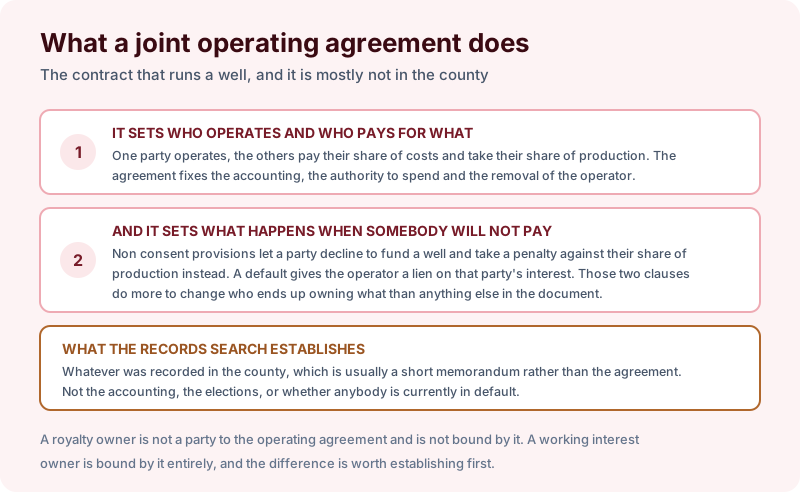
Where several parties hold working interests in the same tract, one of them operates and the rest pay their share of costs and take their share of production. The agreement fixes the accounting, the authority to spend money, and the circumstances in which the operator can be removed.
The two clauses that matter most are about money running out. Non consent provisions let a party decline to fund a proposed well and take a penalty against their share of production instead, which can mean receiving nothing until the other parties have recovered several times their cost. Default provisions give the operator a lien on the defaulting party’s interest. Between them those two clauses move more ownership than anything else in the document.
A records search establishes whatever was recorded in the county, which is usually a short memorandum rather than the agreement. It does not establish the accounting, the elections anybody made, or whether a party is currently in default. Worth settling early is which side of the line the interest you care about sits on, because a royalty owner is not a party to the agreement and is not bound by it, while a working interest owner is bound by all of it. That distinction runs through executive rights and who signs the lease as well.
What reaches the land record
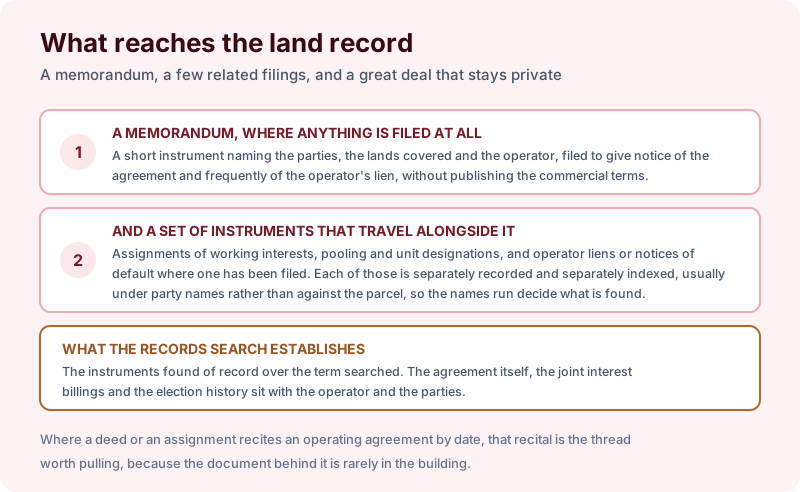
Where anything is filed at all, it is normally a memorandum. A short instrument naming the parties, the lands covered and the operator, filed to give notice of the agreement and frequently of the operator’s lien, with the commercial terms deliberately left out.
Several related instruments travel alongside it and are worth searching for separately. Assignments of working interests, pooling and unit designations, and operator liens or notices of default where one has been filed. Each is separately recorded and, importantly, usually indexed under party names rather than against the parcel, so the set of names you run decides what you find.
Where a deed or an assignment recites an operating agreement by date, that recital is the thread worth pulling. The document behind it is rarely in the building, and the recital may be the only evidence in the county that it exists.
Reading what was filed
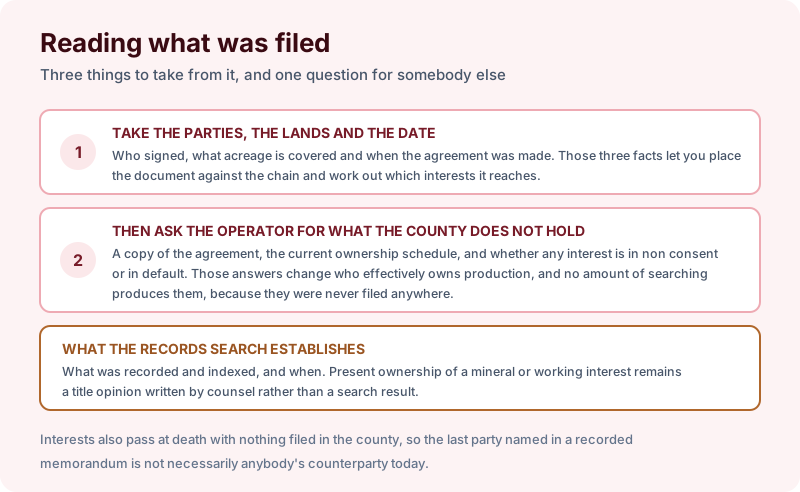
Take three facts from the memorandum. Who signed, what acreage is covered, and when the agreement was made. Those let you place the document against the chain and work out which interests it reaches, which is genuinely useful and is most of what the county can give you.
Then ask the operator for the rest. A copy of the agreement, the current ownership schedule, and whether any interest is in non consent or in default. Those answers change who effectively owns the production, and no amount of searching produces them because they were never filed anywhere.
The standard limits apply with their usual force. The search reports what was recorded and indexed and when. Present ownership of a mineral or working interest is a title opinion written by counsel rather than a search result, and interests pass at death with nothing filed locally, so the last party named in a recorded memorandum is not necessarily anybody’s counterparty today.
The takeaway
Treat a recorded memorandum as a pointer rather than as the document. Use it to establish the parties, the acreage and the date, search the party names for the assignments and liens that travel with it, and then go to the operator for the agreement and the current schedule. Whether you are bound by any of it depends on what kind of interest you hold. Start the order online, or send us the address and the county and we will tell you which term fits and what a search of that scope would and would not cover before anything is ordered.