

· AFX Research
Is Sand and Gravel a Mineral? What the Deed Language Decides
A general mineral reservation may or may not reach sand, gravel, and limestone, and the answer turns on the wording and on state law. What the recorded deeds show.
Table of Contents
The question usually arrives with a phone call. An aggregate company wants to open a pit, or a buyer of rural land has just learned the minerals were severed in 1948 and wants to know whether that reservation reaches the gravel bar along the creek. It is a fair question with an unsatisfying answer, because sand and gravel sit in the gap between the surface estate and the mineral estate, and where they land depends on the words in an old deed and on the law of one particular state. Our note on mineral rights versus surface rights covers the ordinary case where the split is clean. This is the case where it is not.
Three ways the clause reads
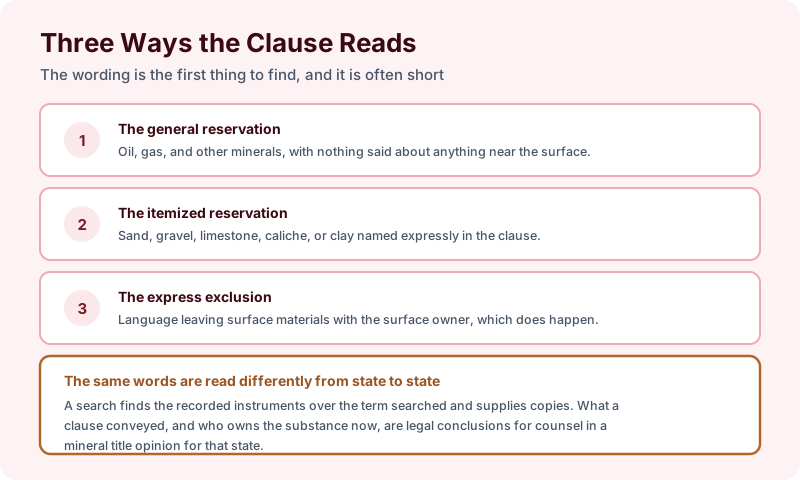
Start with the instrument, because the clause is often two lines long and it decides most of the argument.
A general reservation of oil, gas, and other minerals says nothing about anything near the surface, and that silence is where the dispute lives. An itemized reservation naming sand, gravel, limestone, caliche, or clay is far easier to read, and it does exist, particularly in deeds drafted where aggregate had commercial value. And an express exclusion, leaving surface materials with the surface owner, turns up often enough to be worth looking for rather than assuming away.
Old deeds are also inconsistent about what they even call the substance, which is one reason our note on reservation clauses in old deeds treats the exact language as the whole point.
How the question gets decided
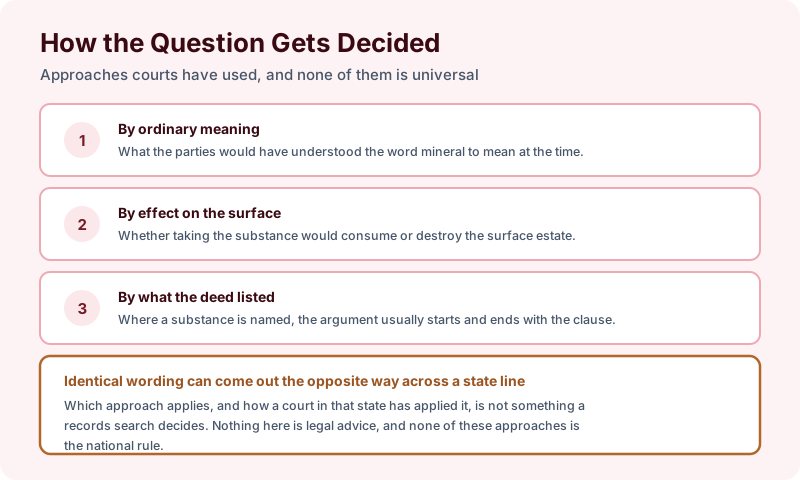
Courts have taken more than one route. Some ask what the parties would ordinarily have understood the word mineral to mean when they used it. Some ask what taking the substance would do to the surface, on the reasoning that a grant which would consume the surface estate was probably not intended to. Where a deed names the substance expressly, the analysis tends to start and finish with the clause.
The part that matters practically is that these approaches do not produce one national rule. The same sentence, on two parcels a state line apart, can come out the opposite way. That is not a records question at any point, and it is the reason these files go to counsel rather than to an abstractor for an answer.
What comes back in the report
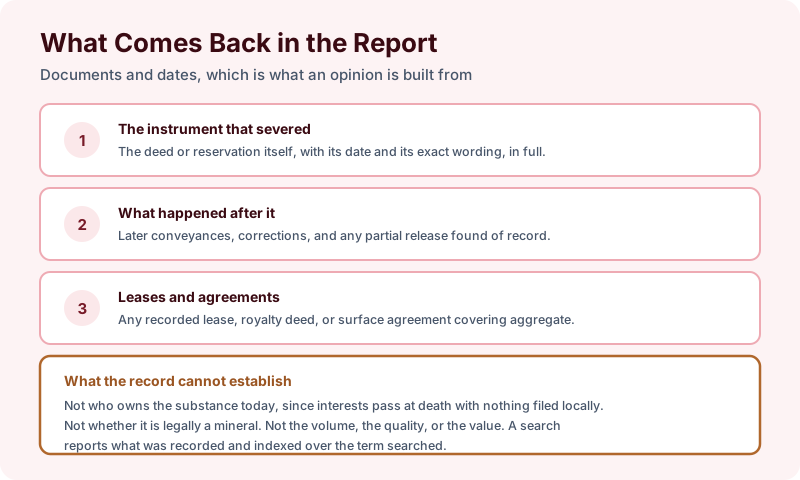
A search delivers the raw material for that opinion. The severing instrument with its date and its full wording, the conveyances and corrections that came after it, and any recorded lease, royalty deed, or surface agreement touching aggregate. Where a pit has operated before, there is frequently a recorded agreement covering access, hauling, and restoration, and those documents also tell you how prior parties read the reservation, which is useful even though it settles nothing.
Pick a search term long enough to reach the severance. Aggregate reservations are often old, so a 20 year search on a 1948 deed returns the wrong century. Turnaround is 2 to 3 business days. Where the arrangement involves surface disturbance, our note on surface use agreements and damage payments covers what those instruments usually contain.
What a search cannot decide
It cannot tell you whether sand and gravel are legally minerals under that reservation, because that is a conclusion about a document and a body of state law rather than a fact in an index.
It also cannot establish who owns the substance today. Interests pass at death with nothing filed in the county, so the last grantee named in the record is not necessarily the present owner, and present ownership is a legal conclusion that belongs in a mineral title opinion written by counsel. A search does not report reserves, quality, or value, and it does not cover state permits, which regulators hold rather than recorders. Recording and indexing practice varies by county, so a clean result reflects the record over the term searched rather than proving nothing exists.
The takeaway
Get the severing instrument in full before anyone negotiates, because the wording is the argument and a summary of it is not. Then have counsel in that state read it. Start the order online, or send us the address and the county and we will tell you which term fits and what a search of that scope would and would not cover before anything is ordered.