

· AFX Research
Geothermal Rights and the Question of Who Owns the Heat
Whether geothermal resources travel with the minerals or the surface, what the deed language does, where a geothermal interest appears in the record, and what counsel decides.
Table of Contents
A landowner gets a letter asking to lease their geothermal rights and reaches for the deed, only to find a 1951 reservation of oil, gas, and other minerals held by people they have never heard of. The question that follows is genuinely unsettled in a way most severance questions are not. Heat in the ground is not obviously a mineral, and it is not obviously part of the surface either. Our note on wind and solar versus the mineral estate covers the resources that clearly stay above ground. This one sits below it, which is exactly why it is harder.
Three positions, unevenly distributed
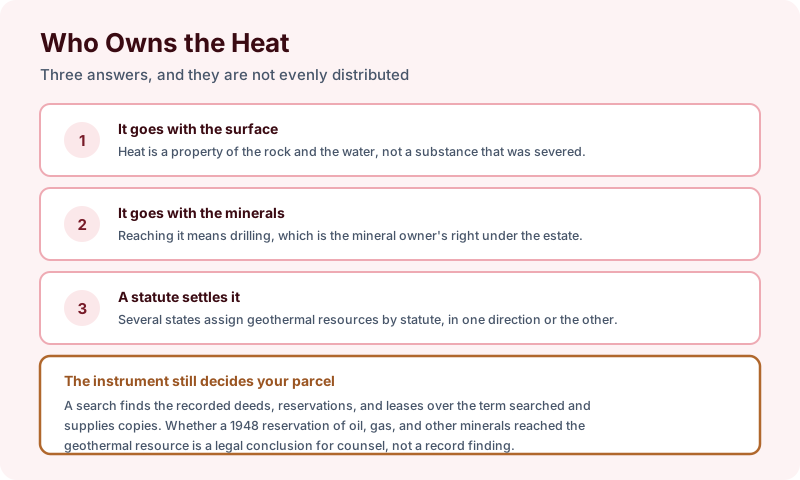
The surface owner argument is that heat is a property of the rock and the water rather than a substance somebody reserved. Nobody in 1951 was thinking about geothermal energy, and a reservation of oil, gas, and other minerals should not sweep in a resource the parties never contemplated.
The mineral owner argument is that reaching the resource means drilling, and drilling is what the mineral estate exists to permit. If the reservation is broad enough on its face, the reasoning goes, it captures what is below the surface whether or not anyone named it.
The third position is that the legislature already answered it. A number of states have geothermal statutes, and they do not all point the same way. Some treat the resource as belonging with the surface estate, some with the minerals, and some define it as its own category entirely. Which state the land sits in therefore matters as much as what the deed says, and neither question is one an abstractor resolves. A further wrinkle is that some of those statutes were written decades after the deeds they are now applied to, so whether the rule reaches back to an older reservation is itself a question with more than one answer.
Where a geothermal interest shows up
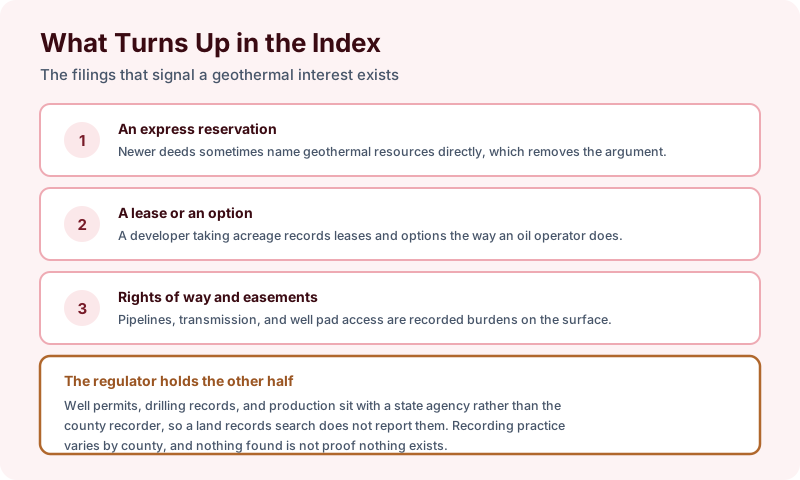
Three filings are worth hunting for. An express reservation naming geothermal resources, steam, or heat appears in some newer conveyances and removes the argument entirely. A lease or option recorded by a developer works the same way an oil and gas lease does, and it tells you somebody has already formed a view about who owns what, as our note on oil and gas lease versus mineral deed explains about the two instrument types.
Rights of way are the third, and they burden the surface regardless of who owns the heat, meaning pipeline corridors, transmission lines, and access to a well pad. Those show up as recorded easements against the parcel, and they are worth pulling even when the ownership question is still open, because they constrain what the surface owner can build regardless of how it is resolved.
What the county does not hold is the operational half. Well permits, drilling records, and production data sit with a state regulator, not the recorder, and a land records search does not report them.
Scoping the search
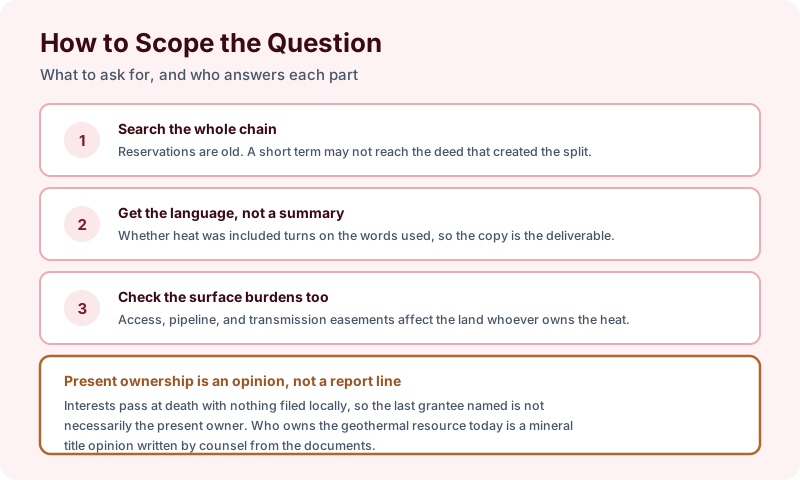
Search long. The reservation that matters is usually old, so a term that stops in 1996 can miss the instrument that created the split entirely. Our search packages run 20, 30, and 50 years at $250, $375, and $625, and on a question like this the 50-year term is generally the one that reaches the operative deed. Results come back in 2-3 business days with copies of everything found. Where the tract was carved out of a larger ranch, the search follows the parent parcel as well, since a reservation made against the original acreage carries down to every lot cut from it.
Ask for the language rather than a summary. Whether heat was included turns on the exact words in the granting or reserving clause, the point our note on reservation clauses in old deeds makes about mineral language generally. And read the limits honestly, because a search reports what was recorded and indexed over the term searched in that county. Interests pass at death with nothing filed locally, so the last grantee named is not necessarily the present owner, and whether a given reservation reached the geothermal resource is a legal conclusion, a mineral title opinion written by counsel.
The takeaway
Before signing anything a geothermal developer sends, get the chain and the actual reservation language in front of a lawyer who knows that state’s statute. Start the order online, or send us the address and the county and we will tell you which term fits and what a search of that scope would and would not cover before anything is ordered.