

· AFX Research
The Mineral Rights Search to Run Before You Buy Rural Land
Whether the minerals were severed, what fraction the seller can actually convey, whether a lease is outstanding, and how to fit the search inside an inspection period.
Table of Contents
The listing says forty acres with a creek and a barn. What it does not say, because the agent has no way to know, is whether anyone owns the ground beneath it. Rural acreage is where severed mineral estates are most common and least visible, and the moment to find out is during the inspection period rather than three years later when a landman knocks. The mechanics of the split are covered in our note on mineral rights versus surface rights; this is how to handle it as a buyer.
The three questions worth asking
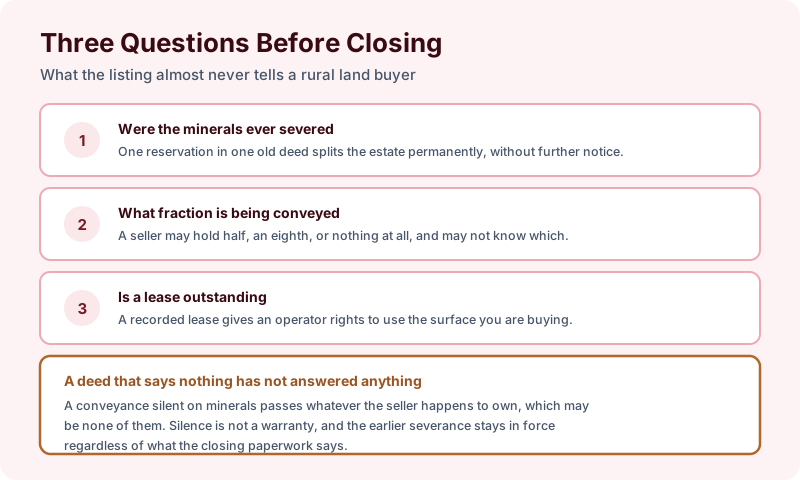
Were the minerals ever severed? One reservation in one deed, made in 1938 by a seller who is long dead, splits the estate permanently. Nothing further has to happen for that split to stay in force through every sale since. There is no expiration and no requirement that anyone mention it again, which is why a buyer can read three recent deeds and see no sign of it.
What fraction can the seller actually convey? Sellers frequently do not know. A family that has held ground for four generations may own half the minerals, an eighth, or none, and the answer lives in the wording of instruments nobody in the family has read. Our note on net mineral acres and fractional interests covers how those fractions compound.
Is a lease outstanding? A recorded oil and gas lease gives an operator rights that touch the surface you are buying, whatever the mineral ownership turns out to be.
The trap underneath all three is a quiet one. A deed that says nothing about minerals conveys whatever the seller happens to own, which may be nothing. Silence in the closing paperwork is not a warranty, and it does not undo an earlier severance.
Why it matters on the ground
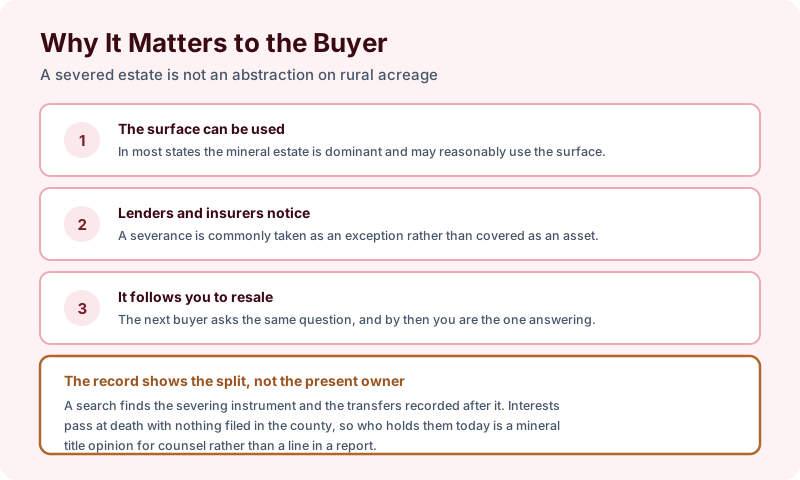
In most states the mineral estate is dominant, which means the mineral owner or their lessee may make reasonable use of the surface to reach what they own. On forty acres intended for a house and a pasture, that is not a theoretical concern. What reasonable use means, and what accommodation the surface owner is owed, varies by state and is the subject of our note on surface use agreements and damage payments.
Lenders and title insurers tend to treat a severance as an exception rather than something they cover, so the discovery often arrives late and from someone else. A commitment that lists a mineral reservation as an exception is telling you the insurer will not stand behind that part of the estate, which is useful information and is frequently the first time a buyer hears about it. And the question does not go away, because when you sell the next buyer asks it, and by then you are the one who needs the answer.
Fitting the search into the deal
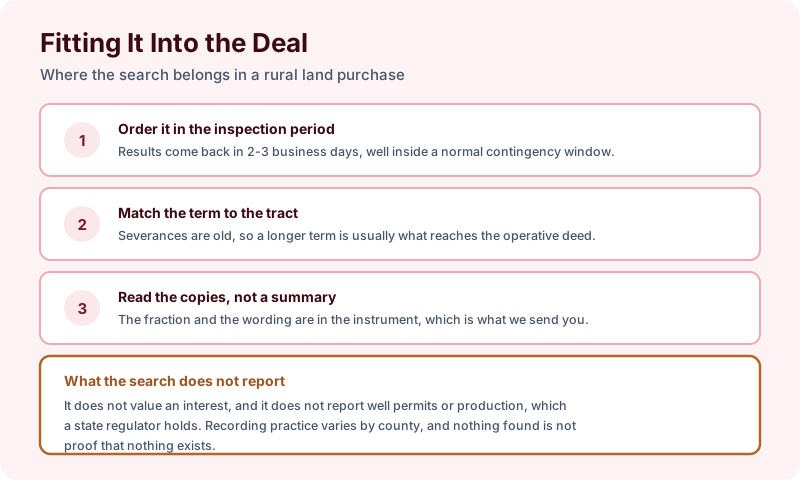
Order it when the inspection period opens. Results come back in 2-3 business days, which fits comfortably inside a normal contingency window and leaves room to ask follow-up questions before anything is waived.
Match the term to the tract rather than to the price. Our search packages run 20, 30, and 50 years at $250, $375, and $625, and on rural ground the severance is usually old enough that the longer terms are the ones that reach it. Where the parcel was cut from a larger ranch, the search follows the parent tract too, because a reservation against the original acreage carries down to every lot split from it.
Read the copies rather than a summary. The fraction and the exact wording are in the instrument, and that is what we deliver. The limits are worth stating plainly, since a search reports what was recorded and indexed in that county over the term searched, it does not value an interest, and it does not report well permits or production, which a state regulator holds. Interests also pass at death with nothing filed locally, so the last grantee named is not necessarily the present owner, and present ownership is a legal conclusion, a mineral title opinion written by counsel.
The takeaway
Treat the mineral question as part of inspection, not as paperwork for later, and get the actual severing instrument in hand before contingencies expire. Start the order online, or send us the address and the county and we will tell you which term fits and what a search of that scope would and would not cover before anything is ordered.