

· AFX Research
Allocation Wells and Production Sharing Agreements Explained
A horizontal lateral runs through four tracts that were never pooled. The operator divides production by footage, and whether that binds an owner who never signed is still being argued.
Table of Contents
Horizontal drilling created a problem the older lease forms were never written for. A lateral two miles long passes under several separately owned tracts, each with its own leases and its own royalty owners, and the production comes up through a single wellbore that cannot be attributed to any one of them.
The orthodox solution is pooling. Combine the tracts into a unit, share production across the unit, and everyone takes their proportionate share. That works where the leases grant pooling authority, and a great many older leases do not.
A well that crosses tracts nobody pooled
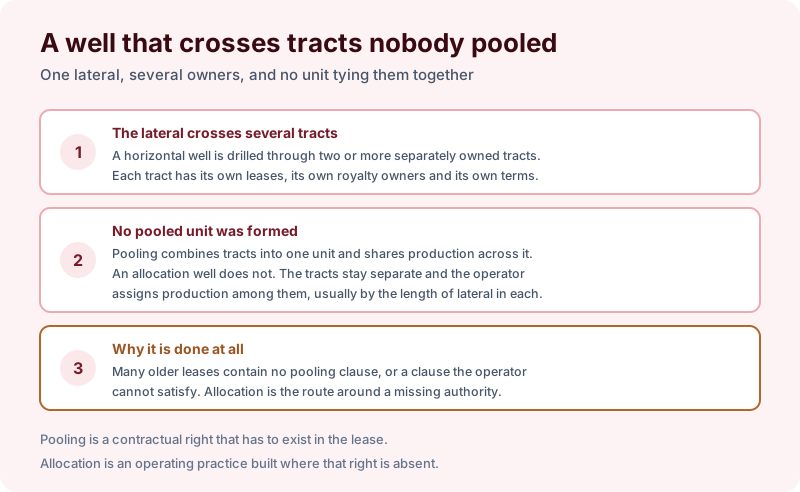
An allocation well is what operators drill when pooling is unavailable. The lateral crosses the tracts, the tracts remain legally separate, and the operator assigns production among them by a formula, nearly always the productive lateral footage lying within each one.
The difference from pooling is not cosmetic. Pooling in several states works as a cross conveyance, giving every owner in the unit an interest in production from anywhere in it. Allocation does nothing of the kind. Each tract stays its own thing, and the operator’s division of production is an operating decision rather than a right anyone granted. The distinction is worth reading alongside pooling and unitization explained.
State regulators have permitted these wells for years, and a permit settles whether the well may be drilled. It does not settle how the proceeds get divided, which is a matter of private rights the regulator has no role in.
What a sharing agreement does
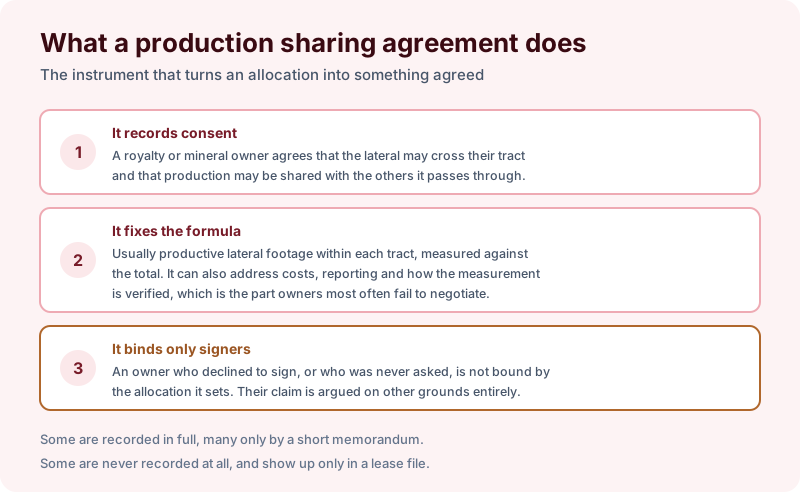
A production sharing agreement is the instrument that converts an allocation into something consented to. The owner agrees that the lateral may cross the tract and that production may be shared with the others it passes through, and the agreement fixes the formula.
Signing one is often the right decision, because the alternative may be no development at all. What gets under negotiated is everything beyond the headline split. How footage is measured and from what survey, whether the operator must furnish the as drilled data, how costs are treated, and what happens if the lateral is extended later.
Ratification is the related instrument and it is easy to confuse with this one. A royalty owner who ratifies an existing lease or unit is adopting terms already written, while a sharing agreement is negotiated for the particular well. Both get recorded, both are indexed against the owner’s name, and only one of them was ever open to negotiation.
The limit of the instrument is that it binds the parties to it. An owner who declined, or who was never located and asked, is not bound by its formula, and their entitlement is argued on other grounds. Courts in the producing states have not settled that question uniformly, and the position for an unsigned owner remains genuinely open in places.
Searching a tract under a lateral
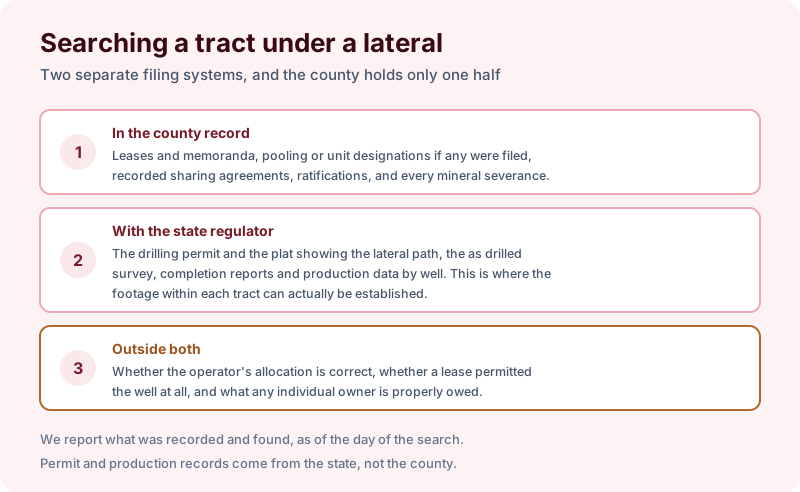
The county record carries the leases and memoranda, any pooling or unit designation that was filed, recorded sharing agreements and ratifications, and the mineral severances establishing who owns what. Finding no unit designation is itself informative, because it points toward an allocation rather than a pooled unit.
Sharing agreements are inconsistent in the record. Some are recorded in full, many appear only as a short memorandum, and some are never recorded at all. Where one exists but is not of record, the lease file is the only place it lives.
The state regulator holds the other half. The permit and plat show the lateral path, the as drilled survey shows where it actually went, and production is reported by well. That is the material that lets footage within a tract be established rather than assumed, and it is the same split described in who gets notice when a well is permitted.
What neither source settles is whether a particular owner has been paid correctly. That needs a title opinion over the tract and counsel who practices in the state, which is the boundary set out in post production costs and royalty deductions.
The takeaway
An allocation well is a practical answer to a missing pooling clause, not a legal equivalent of a unit. A sharing agreement binds whoever signs it and nobody else. Start by establishing whether a unit was ever designated, then find out what each lease actually authorized.
If you need the leases, severances and any recorded sharing agreements pulled on a tract, tell us the description or order a mineral records search.