

· AFX Research
Top Leases and Competing Lease Claims in the County Record
Two oil and gas leases can sit in the index on the same tract at once. What a top lease is, how to read the dates, and why the record alone cannot tell you which one controls.
Table of Contents
You pull the records on a tract and find two oil and gas leases covering it, signed by the same owner, held by different operators, filed three years apart. Nothing has been released. The obvious reading is that somebody made a mistake, and usually nobody did. What you are looking at is a top lease, and it is a routine instrument in leasing country. Reading it correctly means going back through when an oil and gas lease expires, because the whole point of the second lease is a bet about the first one.
A lease signed to start when another one ends
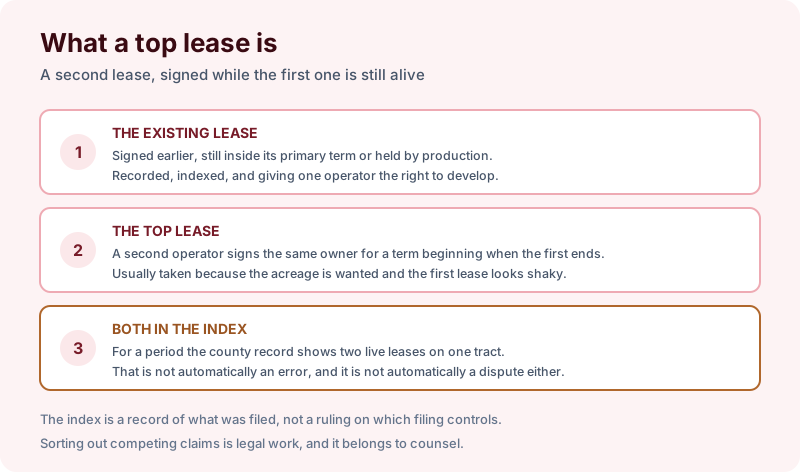
The first lease is in place and recorded, giving one operator the right to develop. A second operator wants the acreage and does not want to wait to find out whether the first lease will lapse. So it signs the mineral owner now, on a lease that by its terms takes effect when the existing one terminates.
That is a top lease. It is a bet, and the operator taking it is paying a bonus for the chance that the first lease dies. From the mineral owner’s side it is often attractive, because it is money for an interest already committed to someone else.
For a period, both leases are in the county index at the same time. That is exactly what the filings are supposed to look like, and finding two leases is not by itself evidence of a dispute.
Whether you should be pleased about that depends on which side of it you are standing on. A mineral owner holding an inherited fractional interest may simply have been paid twice for the same acreage. A buyer looking at the tract sees two operators with recorded paper and has to work out what is actually being sold.
Most of the answer is in the dates
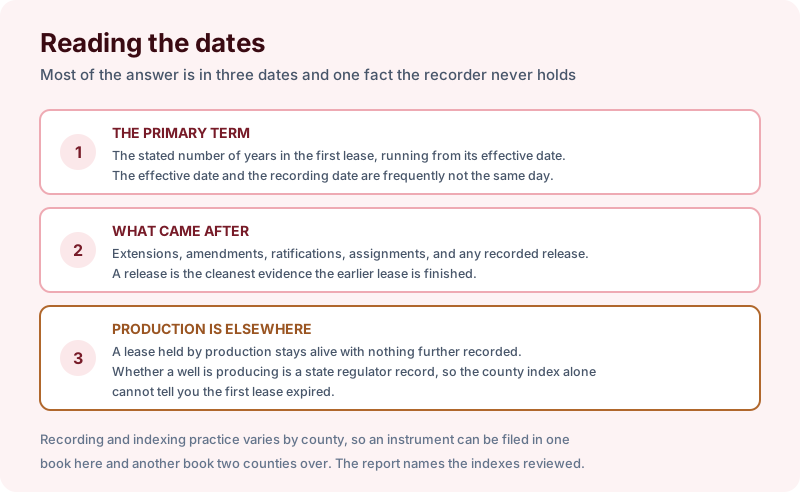
Start with the primary term stated in the first lease and the effective date it runs from. The effective date and the recording date are frequently different, sometimes by months, and using the wrong one throws the whole calculation off.
Then collect everything filed afterward. Extensions, amendments, ratifications, assignments, and above all any recorded release, which is the cleanest evidence that the earlier lease is finished. Assignments matter too, since the operator on the original document is often not the one holding it now.
Here is the gap. A lease held by production stays alive indefinitely with nothing further recorded, so the absence of a release proves nothing about expiration. Whether a well is actually producing is a state regulator record rather than a county one, and the recorder never receives it. A search of the land records cannot close that question, and any analysis that claims to has skipped a step.
What the report puts in front of counsel
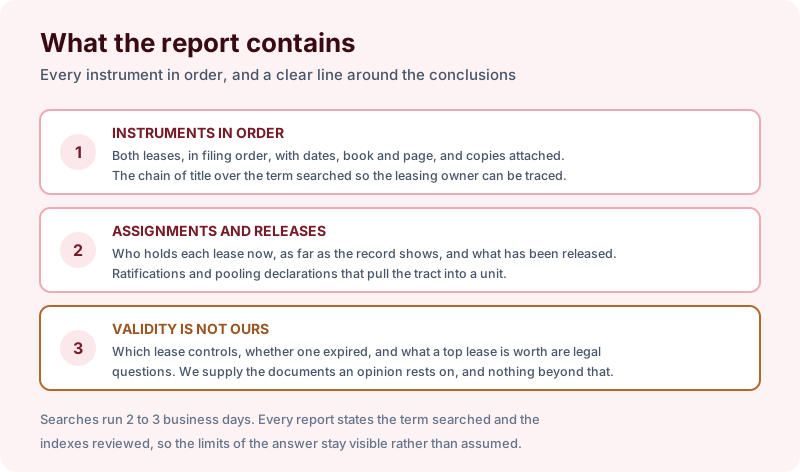
You get both leases in filing order with dates, book and page, and copies attached. You get the chain of title over the term searched, so the person who signed each lease can be traced and their interest checked. You get the assignments, releases, ratifications, and any pooling declaration that pulls the tract into a unit.
You do not get an opinion on which lease controls. Whether the first one expired, whether the top lease ever took effect, and what any of it is worth are legal questions that turn on the lease language, on production facts held elsewhere, and on state law. Recording and indexing practice also varies by county, so an instrument filed in one book here may sit in another book two counties over, and the report names the indexes reviewed for that reason. The last grantee named in a chain is not necessarily the present owner either, since interests pass at death with nothing filed locally. Our process sets the scope before the work starts.
The takeaway
Two leases on one tract is normal, and a top lease is a bet on the first one lapsing rather than a challenge to it. Gather every instrument in order, read the effective dates rather than the recording dates, and remember that production status lives with the state and not the county. Then hand it to counsel, because validity is a legal conclusion. Searches run 2 to 3 business days. Start the order online, or send us the legal description and the county and we will tell you which term fits and what a search of that scope would and would not cover before anything is ordered.