

· AFX Research
Quitclaim and Warranty Mineral Deeds, and What Each Conveys
What a general warranty, a special warranty and a quitclaim mineral deed each promise about title, how after acquired title changes the answer, and what the record can show.
Table of Contents
A mineral deed moves ownership of minerals from one person to another, and it does that job whether or not the person signing actually owns anything. The deed transfers whatever interest the grantor holds in the mineral estate, and the promises attached to the transfer are a separate matter.
Those promises are the difference between a general warranty deed, a special warranty deed and a quitclaim. All three convey. Only some of them commit the signer to stand behind what was conveyed, and in mineral country the quitclaim is everywhere. A deed is also not a lease, which is a separate distinction worth having straight.
What the warranty actually promises
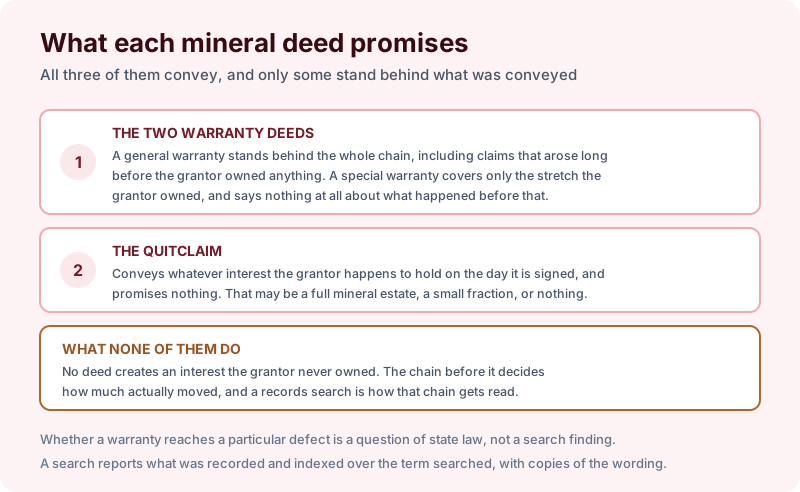
A general warranty is the strongest. The grantor warrants title against every claim, including claims arising long before the grantor owned the interest. If a 1921 reservation surfaces forty years later and halves the interest, the grantee has a promise to look back on.
A special warranty narrows that. It warrants only against claims created during the grantor’s own ownership and says nothing about the chain before it. Estates and companies use it constantly, because nobody wants to warrant a chain they had no part in.
A quitclaim promises nothing. It conveys whatever the grantor happens to hold at that moment, which may be a full mineral estate, a sixty fourth, or nothing. The wording gives it away, since a quitclaim conveys all right, title and interest rather than naming a fraction.
Why a quitclaim turns up in a mineral chain
Very often, and usually for ordinary reasons. Heirs who are not certain what they inherited sign quitclaims rather than warrant something nobody has verified. Buyers assembling fractional interests from dozens of cousins offer them, because no cousin would warrant a chain running back to a great grandparent.
There is a less friendly use as well. A quitclaim costs the signer nothing, so somebody with a speculative claim can sign one and take money for it. The deed is valid and the buyer may have received nothing. Ask what the grantor had to give, a question answered by the instruments before it rather than by the quitclaim itself, which is the tracing problem running through inherited mineral rights.
The after acquired title wrinkle
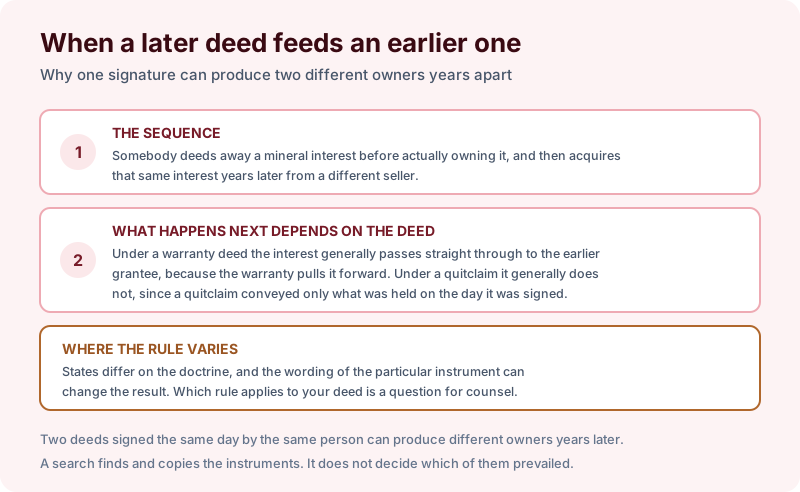
Here is where the distinction bites. Under the doctrine of after acquired title, somebody who conveys an interest by warranty deed and only later acquires that interest generally passes it straight through to the earlier grantee. The warranty pulls it forward.
A quitclaim generally does not behave that way, because it conveyed only what was held on the day it was signed. Generally, because states differ and the wording of the instrument can change the result, one more reason the reading belongs to counsel.
Two deeds signed on the same afternoon by the same person can therefore produce different owners twenty years later.
What the record can settle, and what it cannot
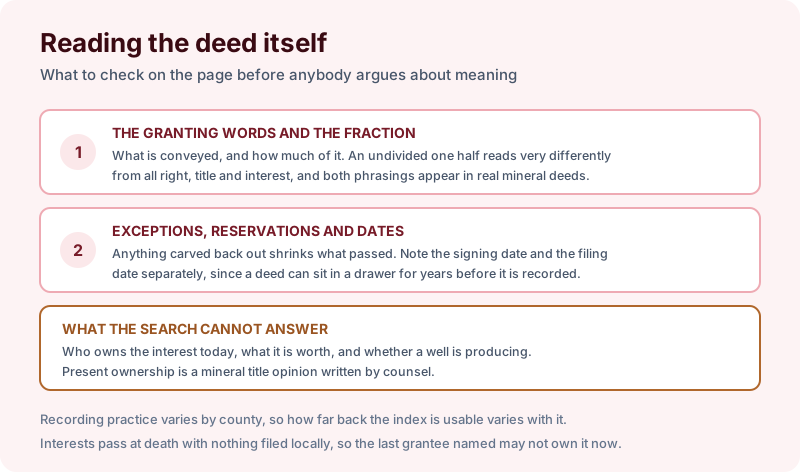
A search reports what was recorded and indexed in the county over the term searched, with copies so the wording can be read in full. For a deed question that means the granting clause, the fraction conveyed, every exception written into it, and the date it was filed. Filing date matters, because a deed held in a drawer for eleven years went on record eleven years late.
Choose a search term long enough to reach the severance rather than the most recent surface transfer. A twenty year search on a tract severed in 1948 returns deeds that answer almost nothing.
What it will not do is name the present owner. Interests pass at death with nothing filed locally, so the last grantee named is not necessarily the person who holds it now. It does not report well permits or production, which the state oil and gas regulator keeps rather than the recorder, and it does not value an interest. Present ownership, and whether a warranty reaches a given defect, is a legal conclusion and takes a mineral title opinion written by counsel. Recording practice varies by county. Turnaround is 2 to 3 business days.
The takeaway
Conveying and warranting are separate acts, and the deed in front of you may do only the first. A general warranty stands behind the whole chain, a special warranty behind one owner’s stretch of it, and a quitclaim behind nothing. None of them creates an interest the grantor never had. Trace the chain back to the severance, read the exact granting words, and let counsel say what the promise is worth.
Start the order online, or send us the address and the county and we will tell you which term fits and what a search of that scope would and would not cover before anything is ordered.