

· AFX Research
Mineral Rights Under Roads and Vacated Public Rights of Way
A public road usually sits on an easement, so the minerals beneath it stay with the abutting owner. What the dedication says, and where the strip goes when it is vacated.
Table of Contents
A section of farmland is being leased and somebody notices that a county road runs across the middle of it. The acreage in the lease description was calculated on the whole quarter section, and now the question is whether the strip under the road belongs to the landowner at all. On most roads it does, and the reason is a distinction between two things the public can hold, which the dedication document decided a century ago.
What the public actually got
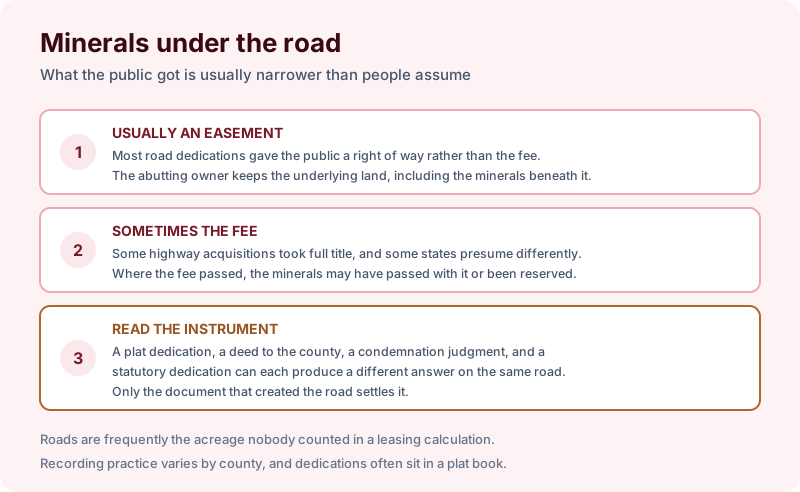
Most road dedications gave the public a right of way rather than the fee. The abutting owner keeps the underlying land, including whatever lies beneath it, and the public holds only the right to use the surface as a road.
Sometimes the fee did pass. Certain highway acquisitions took full title, some states presume differently from others, and where the fee changed hands the minerals may have gone with it or been reserved separately.
Only the instrument settles it. A plat dedication, a deed to the county, a condemnation judgment, and a statutory dedication can each produce a different answer on the same stretch of road, and reading the one that created this road is the only way to know which applies. Recording practice varies by county, and dedications frequently sit in a plat book rather than the deed index.
When the road is vacated
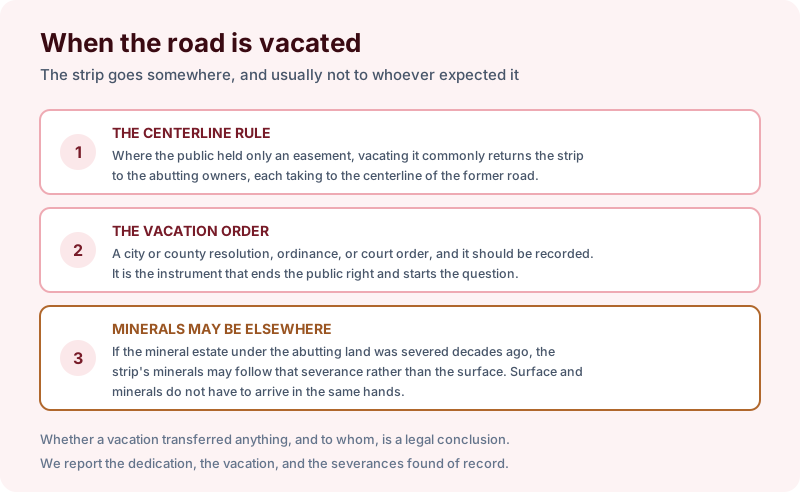
Where the public held only an easement, vacating the road commonly returns the strip to the abutting owners, each taking to the centerline of the former road. That is the usual presumption and it is a presumption rather than a rule, so the local statute matters.
The vacation itself is an instrument. A city or county resolution, an ordinance, or a court order, and it should have been recorded. It is what ends the public right and starts the ownership question.
Finding it is not always simple. Vacations are municipal acts, so the order may sit in a city clerk’s minute book rather than the county recorder’s index, and whether anyone bothered to record it varies. A road that plainly no longer exists on the ground is not evidence that a vacation was ever formally completed.
Then the complication. If the mineral estate under the abutting land was severed decades ago, the minerals in the strip may follow that severance rather than the surface. Surface and minerals do not have to arrive in the same hands, which is the central point of mineral rights versus surface rights applied to a piece of ground nobody was tracking.
Railroad corridors deserve their own mention, because they follow the same logic and reach far more acreage. A great many were acquired as rights of way rather than in fee, and when a line is abandoned the strip can revert in much the same way, carrying whatever mineral position the abutting land already had. Those corridors run for miles, so the acreage involved is not trivial.
Why the acreage is worth the trouble
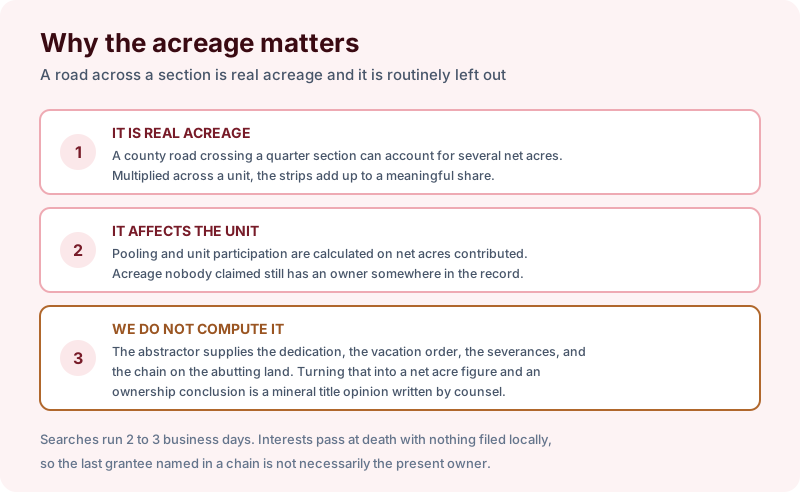
A county road crossing a quarter section accounts for several net acres, and multiplied across a unit the strips add up to a share worth arguing about. Pooling and unit participation are calculated on net acres contributed, so acreage nobody claimed still has an owner somewhere in the record, and that owner is entitled to their part. The arithmetic is the same as in net mineral acres and fractional interests.
What we supply is the dedication, any vacation order, the severances found of record, and the chain on the abutting land, with copies attached. Turning that into a net acre figure and an ownership conclusion is a mineral title opinion written by counsel. Interests also pass at death with nothing filed locally, so the last grantee named in a chain is not necessarily the present owner, and well permits and production sit with the state regulator rather than the recorder.
The takeaway
Assume the minerals under a public road belong to the abutting owner until the dedication says otherwise, then go and read the dedication. Where a road has been vacated, find the order and check whether the mineral estate was severed before it. Searches run 2 to 3 business days. Start the order online, or send us the legal description and the county and we will tell you which term fits and what a search of that scope would and would not cover before anything is ordered.