

· AFX Research
Mineral Rights Under a Lake or a Riverbed, What to Check
Navigability decides who owns the bed, and navigability is a legal test about the water at statehood rather than about whether a boat fits on it today.
Table of Contents
A family owns a ranch with a river running through it and assumes the minerals under the riverbed came with the land. Whether they did turns on a single question that has nothing to do with the ranch and everything to do with what the river was like when the state joined the Union. If the water was navigable then, the bed has probably belonged to the state ever since, and the minerals under it are leased by a state agency rather than by the family. If it was not, the bed is theirs to the centerline. There is no middle answer and the test is not intuitive.
Who owns the bed
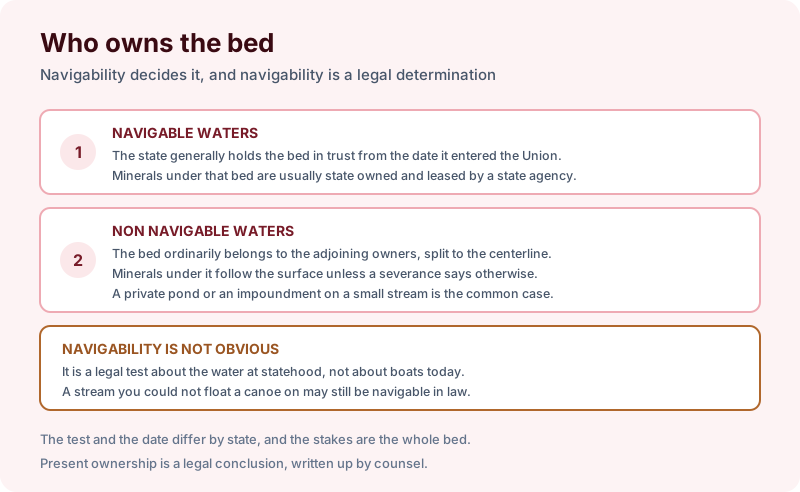
Where water was navigable at statehood, the state generally holds the bed in trust for the public, and has done since the day it entered the Union. Minerals under that bed are usually state owned, and leasing them is an agency process rather than a private negotiation.
Where water was non navigable, the bed ordinarily belongs to the adjoining owners, split to the centerline, and the minerals under it follow the surface unless a severance says otherwise. A private pond or an impoundment on a small stream is the ordinary case here.
Navigability is not obvious and it is not about boats today. It is a legal test about the character of the water at a historical moment, and a stream that would barely float a canoe now may have been navigable in law in 1876. The test and the operative date differ by state, the determination is made by courts or by statute, and the stakes are the entire bed. A records search produces the instruments and the calls in the deeds. It does not make the determination.
When the water moves
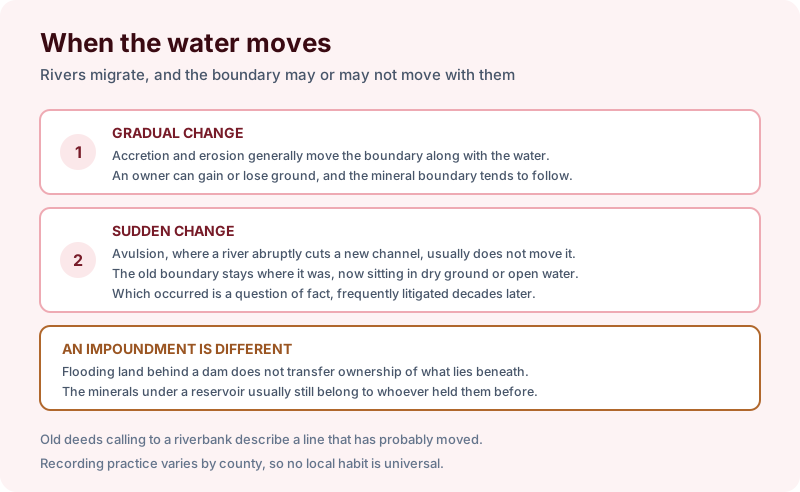
Rivers migrate, and whether the boundary migrates with them depends on how it happened.
Accretion and erosion, meaning gradual change, generally move the boundary along with the water. An owner gains ground on one bank and loses it on the other, and the mineral boundary tends to follow.
Avulsion, meaning a sudden change where a river cuts a new channel in a flood, usually does not. The old boundary stays where it was, which can leave it running through dry ground or through open water. Which of the two occurred is a question of fact, and it is frequently litigated decades after anybody witnessed it.
An impoundment behaves differently again. Flooding land behind a dam does not transfer ownership of what lies beneath it, so the minerals under a reservoir generally still belong to whoever held them before the water arrived. Old deeds calling to a riverbank are describing a line that has probably moved, which is a version of the problem in reservation clauses in old deeds.
Why this reaches ordinary landowners
Because the acreage is real. A quarter mile of riverbed across a section is meaningful acreage, and on a lakefront tract the submerged portion can exceed the dry portion. Deeded acreage that includes the bed and deeded acreage that stops at the bank are different properties.
It also decides who you negotiate with. An operator assembling a unit will lease the uplands from the owner and the bed from the state, and an owner who assumed they held both will find the royalty smaller than expected. The arithmetic behind that is set out in net mineral acres and fractional interests. Recording practice varies by county and navigability varies by state, so nothing from a neighboring state transfers.
Scoping the search
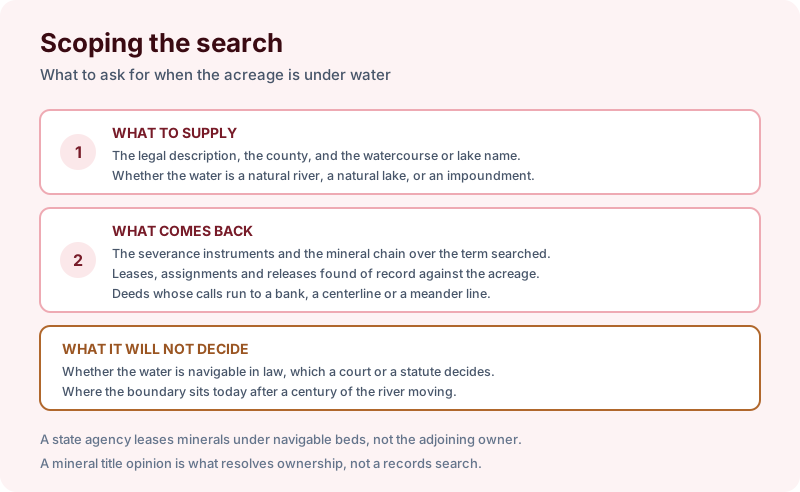
Give us the legal description, the county, the watercourse or lake name, and whether the water is a natural river, a natural lake or an impoundment. What comes back is the severance instruments and the mineral chain over the term searched, the leases, assignments and releases found of record, and the deeds whose calls run to a bank, a centerline or a meander line. Our process page explains how that is done.
What it will not decide is whether the water is navigable in law, or where the boundary sits today after a century of movement. Those are for counsel and for a surveyor, and present mineral ownership remains a legal conclusion set out in a mineral title opinion.
The takeaway
Under water, ownership turns on a historical legal test rather than on the deed in front of you, and the answer decides whether you or a state agency leases the bed. Get the deed calls read carefully and the navigability question put to counsel before anybody signs. Start the order online, or send us the legal description and the watercourse and we will tell you which term fits and what a search of that scope would and would not cover before anything is ordered.