

· AFX Research
Mineral Rights Under a Contract for Deed, and What to Check
Legal title stays with the seller until the price is paid and equitable title moves on signing, so the county index may show no sign of the buyer at all.
Table of Contents
A family has been buying a quarter section on a contract for deed since 2011, with four payments left to go. A leasing letter arrives addressed to the seller, who has not set foot on the place in fourteen years and has no intention of signing anything. Who holds the minerals, who may lease them and who gets the bonus are three separate questions, and the county index answers none of them because it shows only the seller. This is the mineral side of a structure that is otherwise familiar, and it turns on a doctrine rather than on a deed.
Who holds what during the term
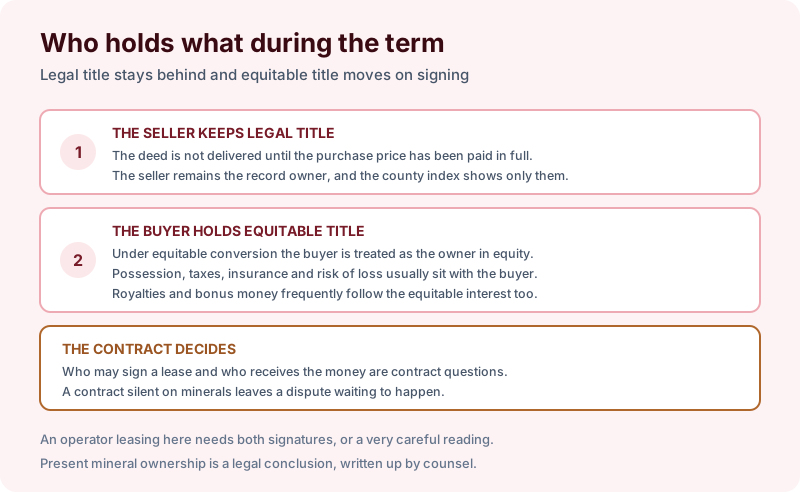
The seller keeps legal title until the purchase price is paid in full. No deed has been delivered, the seller remains the record owner, and a search of the county index returns their name.
The buyer holds equitable title from the moment the contract became enforceable. Under equitable conversion the buyer is treated as the owner in equity, takes possession, pays the taxes and insurance, and generally bears the risk of loss. In most arrangements royalties and bonus money follow that equitable interest rather than the bare legal title.
But the contract decides. Who may sign a lease, who receives the bonus and who takes the royalty are contract questions, and a contract silent about minerals is a dispute waiting to happen. An operator leasing acreage in this position needs either both signatures or a very careful reading of the instrument, and most will insist on both.
What the index shows
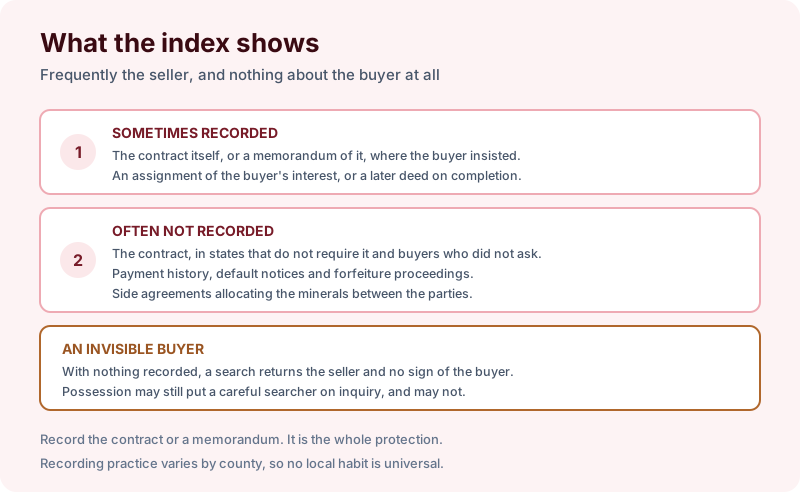
Sometimes recorded is the contract itself, or a memorandum of it where the buyer knew to insist, along with any assignment of the buyer’s interest or the deed delivered on completion.
Often not recorded is the contract, in states that do not require it and transactions where nobody asked. Payment history, default notices and forfeiture proceedings generally stay between the parties. Side agreements allocating the minerals are almost never filed.
The consequence is a buyer who is invisible. With nothing recorded, a search returns the seller and no indication that anybody else has an interest. Possession may put a careful searcher on inquiry in some states and may not in others, which is the limit described in what a records search cannot establish about present ownership.
Why this matters more on minerals than on the surface
Because the surface arrangement is visible and the mineral arrangement is not. Anybody can see who is farming the place. Nobody can see who is entitled to sign a lease.
Two practical exposures follow. A seller who signs a lease and takes a bonus on acreage they have contracted to sell creates a claim against themselves and an encumbrance the buyer did not agree to. And a buyer who signs without the seller may deliver an operator a lease from somebody who does not hold record title, which is exactly the chain problem in quiet title actions and mineral interests.
Recording practice varies by county and contract-for-deed law varies considerably by state, including on forfeiture, so nothing from a neighboring state should be assumed to apply.
Scoping the search
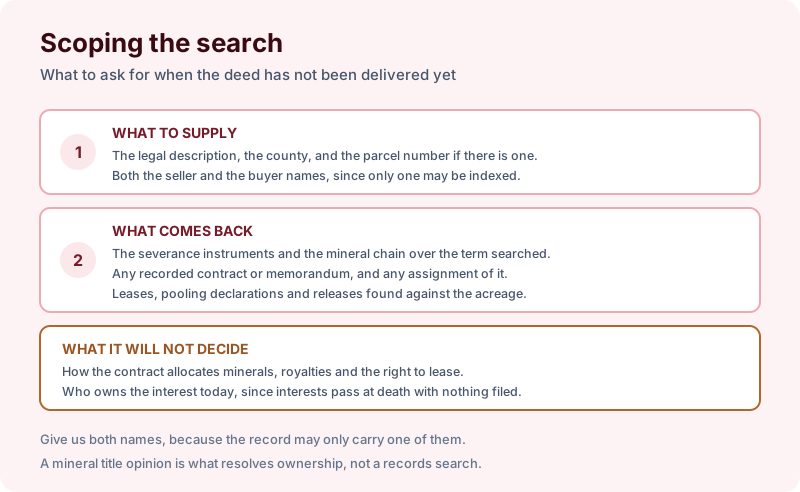
Give us the legal description, the county, the parcel number if there is one, and both the seller and buyer names, since only one of them may be indexed. What comes back is the severance instruments and the mineral chain over the term searched, any recorded contract or memorandum and any assignment of it, and the leases, pooling declarations and releases found against the acreage. Our process page explains how that is done.
What it will not decide is how the contract allocates the minerals, the royalties and the right to lease, or who owns the interest today, since interests pass at death with nothing filed. Present ownership is a legal conclusion set out in a mineral title opinion.
The takeaway
Record title and beneficial ownership sit with different people for the whole term of a contract for deed, and the index shows only one of them. Record the contract or a memorandum, settle the minerals in the contract itself, and give the searcher both names. Start the order online, or send us the legal description and both names and we will tell you which term fits and what a search of that scope would and would not cover before anything is ordered.