

· AFX Research
Lithium and Brine Rights, and Who Owns Them in Old Deeds
Lithium leasing has reached tracts whose mineral estate was severed decades ago, and brine adds a water law question on top. What the record settles and what it cannot.
Table of Contents
A letter arrives offering money for lithium rights on ground the family has held for generations. The minerals were severed in 1953, or they were not, and nobody has thought about it since the last oil lease expired. The question of who can sign is a question about wording written seventy years ago by people who were not thinking about batteries, which puts it in the same territory as reservation clauses in old deeds and, more recently, pore space.
Whether lithium is inside the reservation
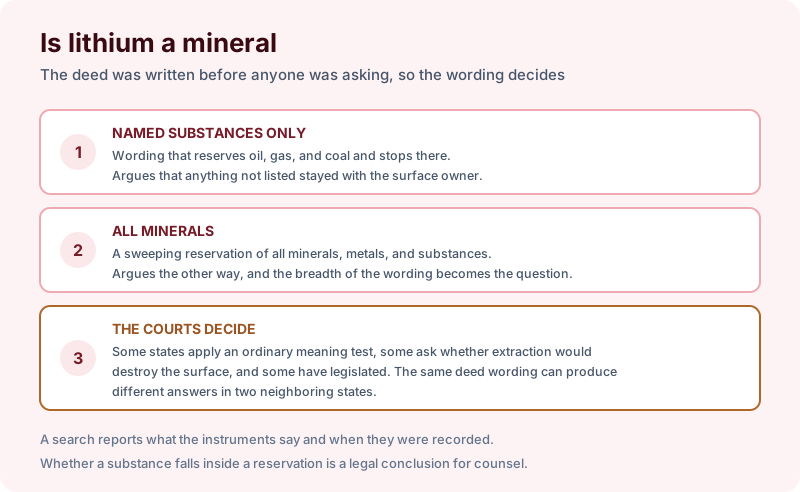
A reservation naming oil, gas, and coal and stopping there supports the argument that anything unlisted stayed with the surface owner. A sweeping reservation of all minerals, metals, and substances supports the opposite, and then the breadth of the wording becomes the fight.
Between those two poles sit the reservations that name a list and then add a catch all phrase, something like all other minerals of whatever kind. Those are the ones that generate litigation, because the list suggests the parties had specific substances in mind while the catch all suggests they meant everything. A court reading it decades later has to decide which half of the sentence was doing the work.
Where the deed is silent or ambiguous, and most are, the courts fill the gap. Some states apply an ordinary meaning test, asking whether a reasonable person in that era would have called the substance a mineral. Some ask whether extracting it would destroy the surface, which tends to pull hard rock lithium out of the mineral estate and leave brine inside it. Some have legislated. The same wording can produce opposite answers two states apart, so nothing here generalizes.
Brine drags in a second body of law
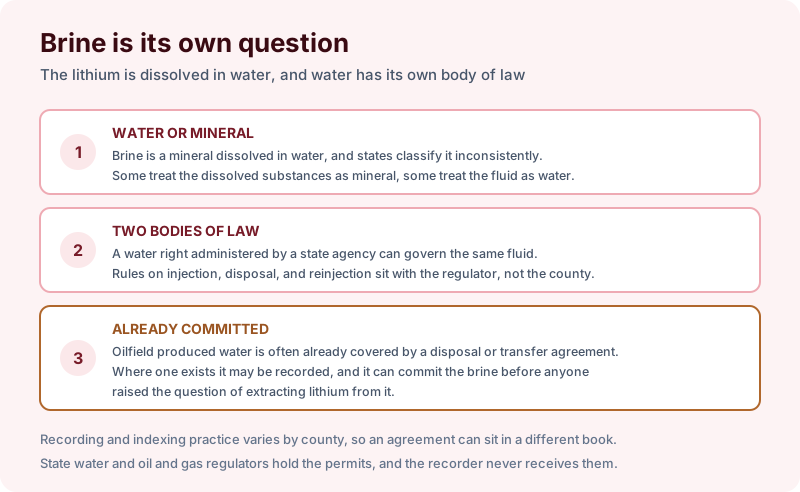
Most American lithium interest is in brine rather than hard rock, and brine is a mineral dissolved in water. States classify that inconsistently. Some treat the dissolved substances as mineral and the water as a carrier, some treat the whole fluid as water, and the choice decides whether the mineral owner or the surface owner controls it.
Where the fluid is water, a state water agency administers it, and injection, disposal, and reinjection rules sit with that regulator rather than with the county. None of it reaches the recorder.
There is also a commercial trap worth naming. On oilfield tracts, produced water is frequently already subject to a disposal or transfer agreement signed years ago for reasons having nothing to do with lithium. Where such an agreement was recorded, it can commit the brine before the question was ever asked, and it is exactly the kind of instrument a short search term will not reach.
What a search contributes
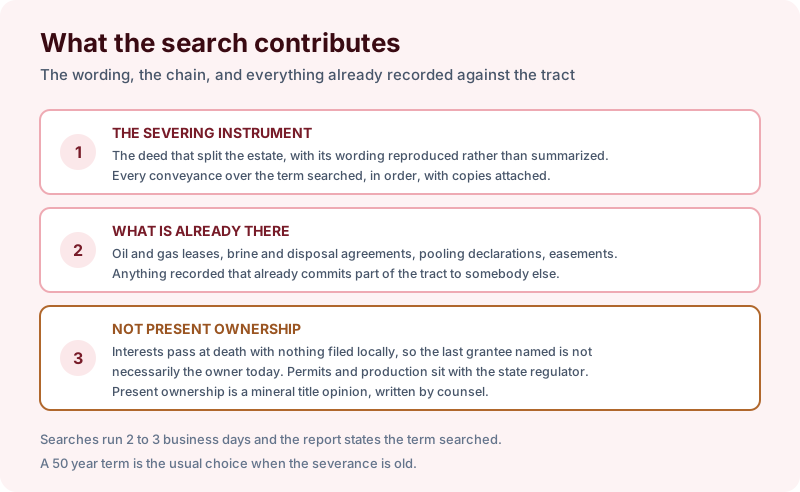
We give you the deed that severed the estate with its wording reproduced rather than paraphrased, every conveyance over the term searched in order, and copies attached so the argument is made from the document. We also give you the oil and gas leases, brine and disposal agreements, pooling declarations, and easements already recorded against the tract.
What we do not give you is present ownership. Interests pass at death with nothing filed in the county where the land sits, so the last grantee named in the record is not necessarily the owner today. Well permits and production data sit with the state regulator. Present ownership is a mineral title opinion written by counsel, working from the record we assemble, and recording practice varies by county so where an instrument was filed is a local fact. Our search packages set the term, and 50 years is the usual choice when the severance is old.
The takeaway
Whether you can lease lithium turns on wording drafted long before anybody wanted it, and on which of several state law tests applies where the land sits. Get the severing instrument and the full chain in front of counsel, along with any brine or disposal agreement already recorded, before signing anything an offer letter puts in front of you. Searches run 2 to 3 business days. Start the order online, or send us the legal description and the county and we will tell you which term fits and what a search of that scope would and would not cover before anything is ordered.