

· AFX Research
Pore Space and Carbon Storage Rights, and Who Actually Owns Them
Carbon storage projects need the empty space inside the rock, and old severance deeds almost never mention it. What the county record can settle about pore space, and what it cannot.
Table of Contents
A landman calls about storing carbon dioxide under a ranch, and the first question is not about oil at all. It is about the empty space between the grains of rock, the room left over once something has been produced out of a formation. That space has a name, pore space, and it has become valuable. It also happens to be something almost no deed written before about 2005 says a single word about, which is why answering the ownership question starts with reading the reservation clauses in old deeds rather than with any modern document.
The estate was split for a different purpose
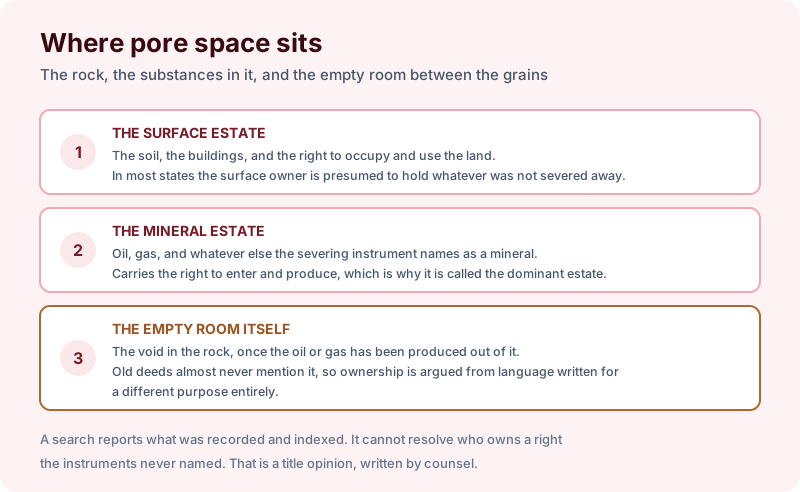
When a mineral estate was severed from a surface estate, the parties were thinking about substances that could be taken out and sold. Oil, gas, coal, sometimes a list of others. The instrument they recorded describes those substances and the right to go get them.
Pore space is the opposite kind of thing. It is not a substance to remove, it is capacity to put something in, and the value only appeared once someone wanted to inject carbon dioxide and leave it there permanently. A document drafted in 1948 was not allocating that, because nobody was buying it.
So the ownership question is usually answered by inference from wording written for another purpose entirely. That is an uncomfortable place to start, and it is where every honest analysis of this begins.
It also explains why the answer changes so much from one parcel to the next. Two neighboring tracts severed in different decades by different lawyers can end up on opposite sides of the question, purely because of how each instrument happened to be phrased. The types of mineral rights a severance can create are varied enough on their own, and pore space adds a category the drafters never had in mind.
Three wordings, three different arguments
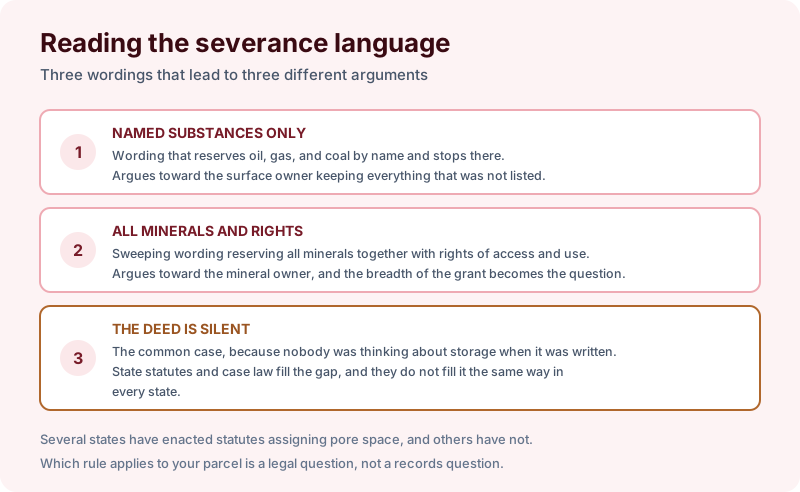
A narrow reservation naming oil, gas, and coal and stopping there tends to support the surface owner keeping whatever was not listed, on the reasoning that only the listed things were severed away. A sweeping reservation of all minerals together with rights of access, use, and occupancy gives the mineral owner a much stronger position, and the breadth of the granted rights becomes the real fight.
Most deeds say nothing either way. Into that silence come state statutes, and a number of states have now legislated on the question, generally assigning pore space to the surface owner while protecting the mineral estate’s priority to produce. Other states have not legislated at all. Which rule governs your parcel depends on where the land is, and that is not something the county index can tell you.
What a search contributes, and where it stops
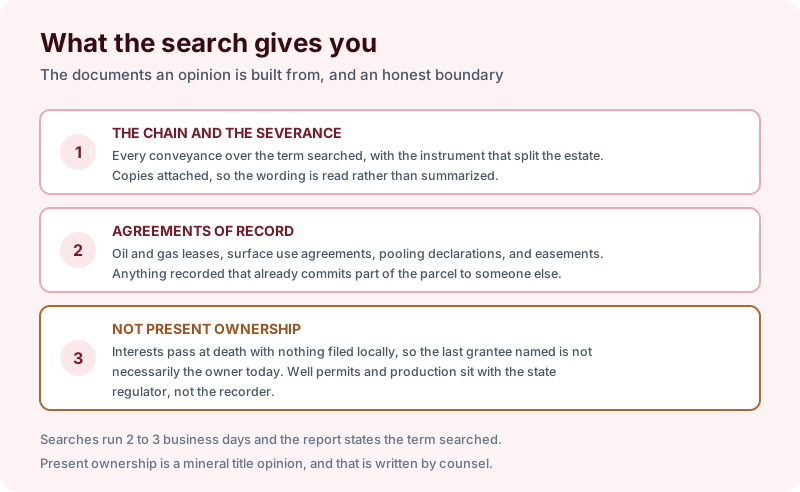
We give you every conveyance over the term searched, the instrument that severed the estate, and the exact wording it used, with copies attached so the argument is made from the document rather than from a summary. We also give you the recorded leases, surface use agreements, pooling declarations, and easements that already commit part of the parcel to somebody else, since a storage project has to be built around all of them.
What we do not give you is present ownership. Interests pass at death with nothing filed in the county, so the last grantee named in the record is not necessarily the person who owns the interest today. Well permits and production data sit with the state regulator rather than the recorder. And recording practice varies from county to county, so where an instrument was filed is a local fact. Present ownership of pore space is a legal conclusion, and it comes from a mineral title opinion written by counsel, working from the record we assemble. Our search packages set the term, and 50 years is the usual choice when the severance is old.
The takeaway
Pore space is real value described by documents that never contemplated it, so the answer lives in old severance wording and in your state’s law, not in any modern filing. Get the chain and the severing instrument in front of counsel, along with everything already recorded against the parcel, and let the opinion be written on facts. Searches run 2 to 3 business days. Start the order online, or send us the address and the county and we will tell you which term fits and what a search of that scope would and would not cover before anything is ordered.